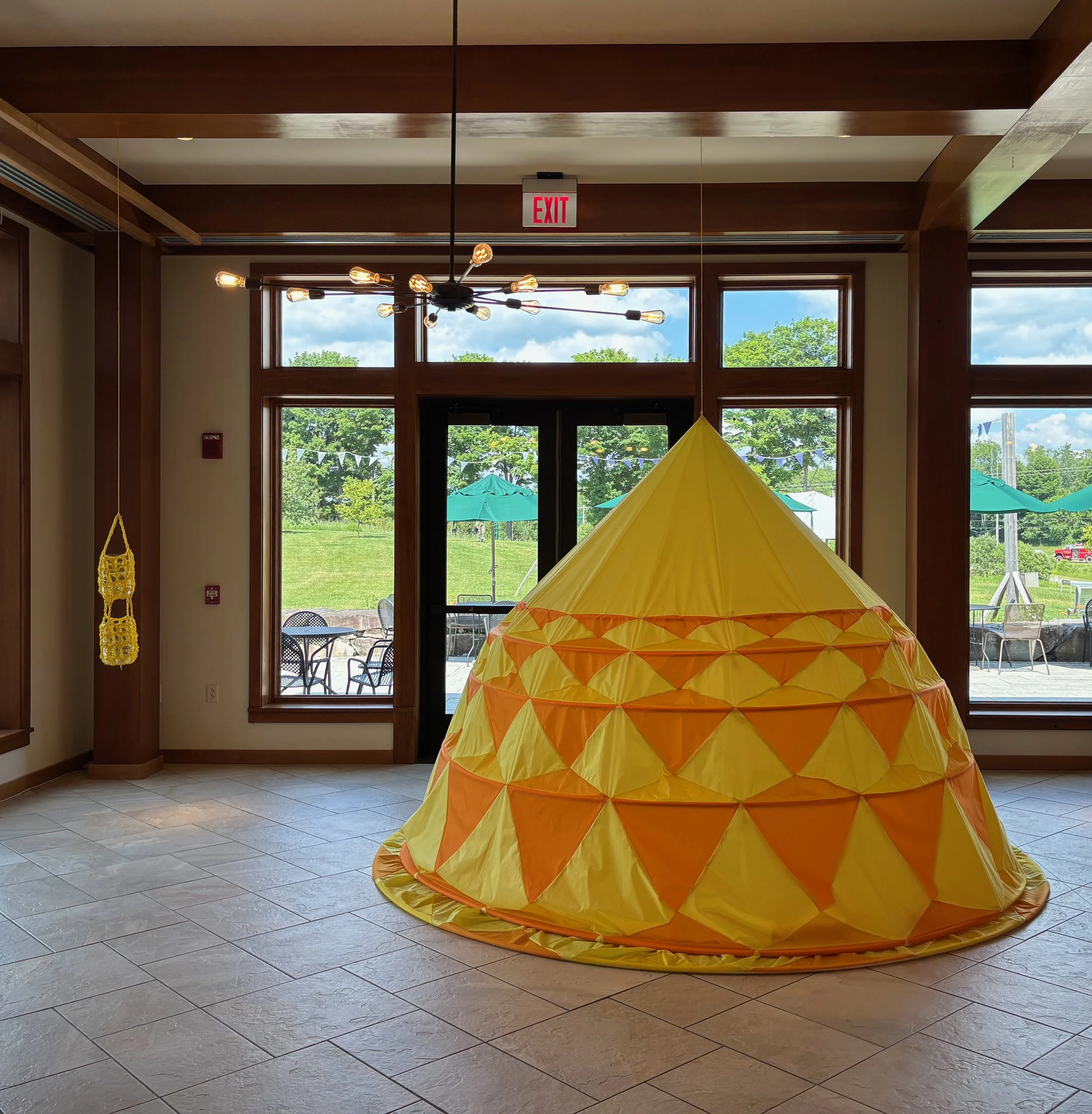
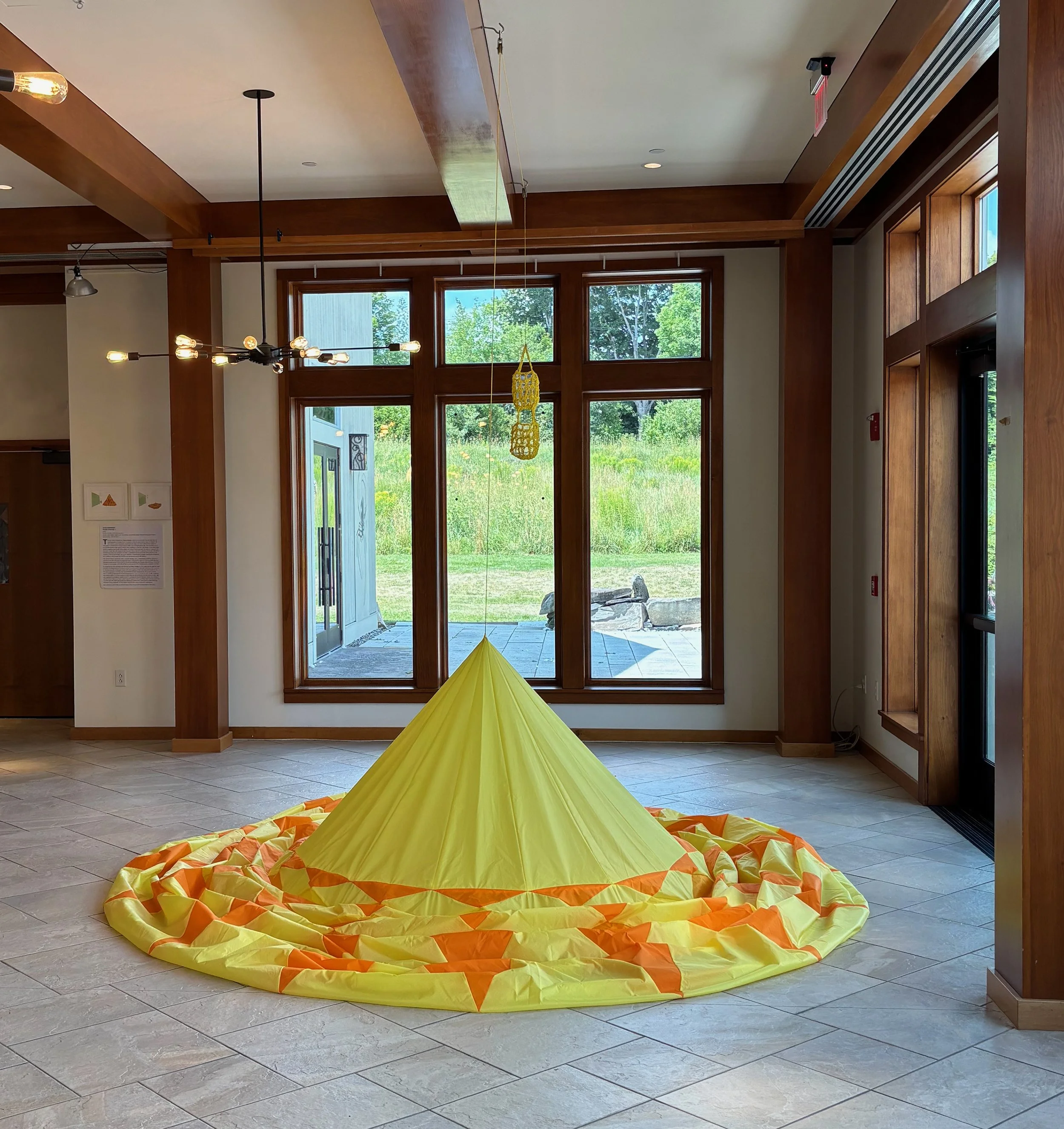
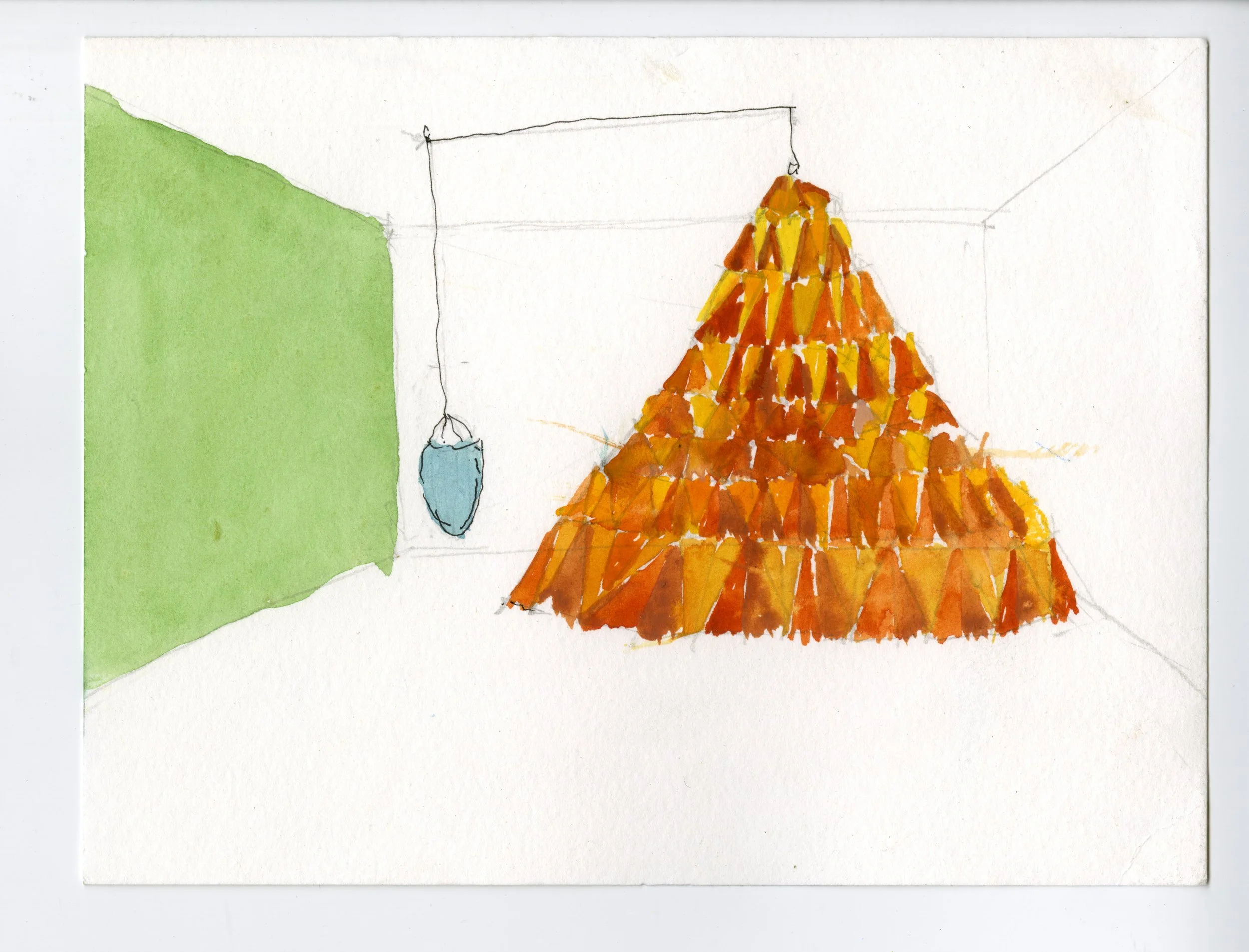
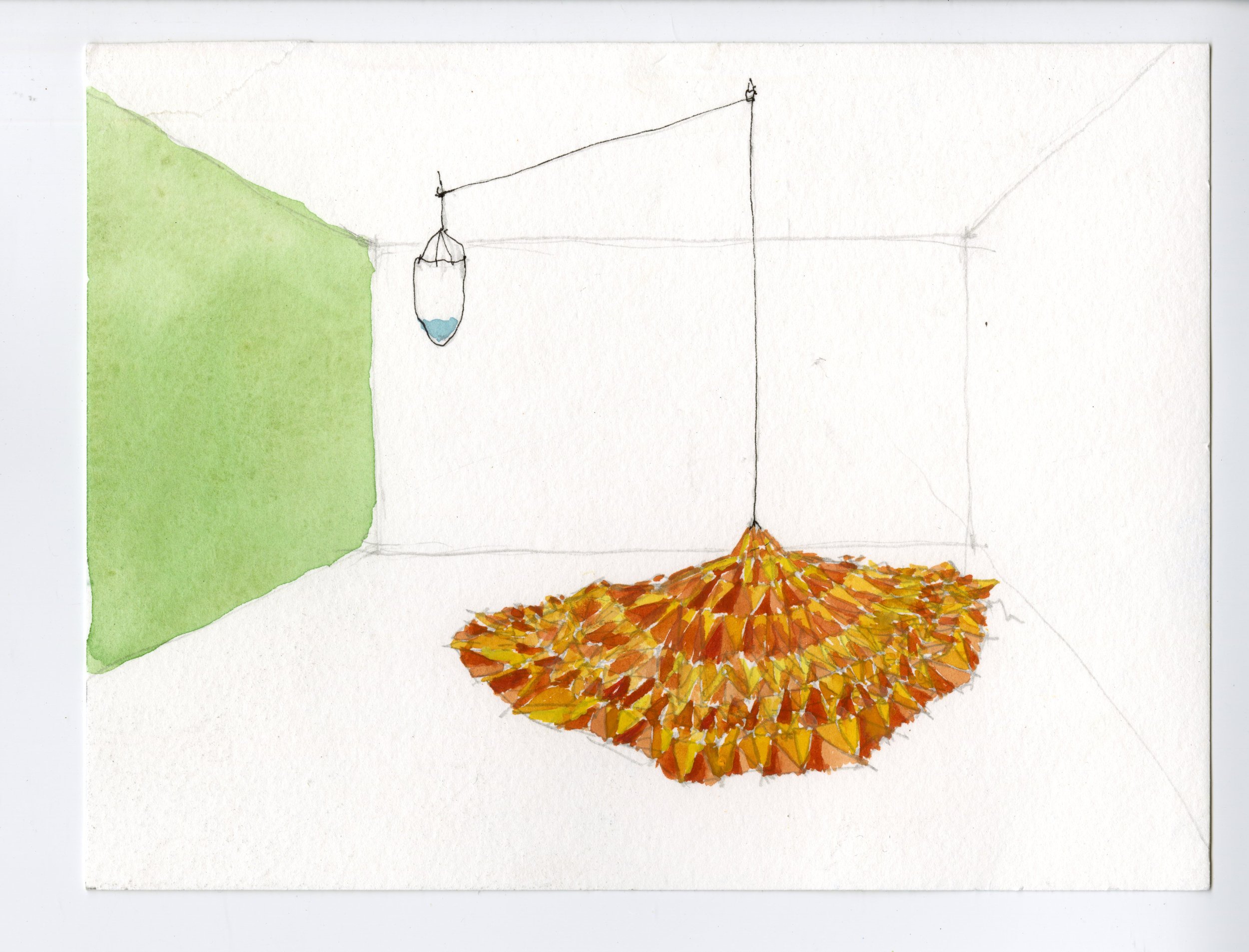
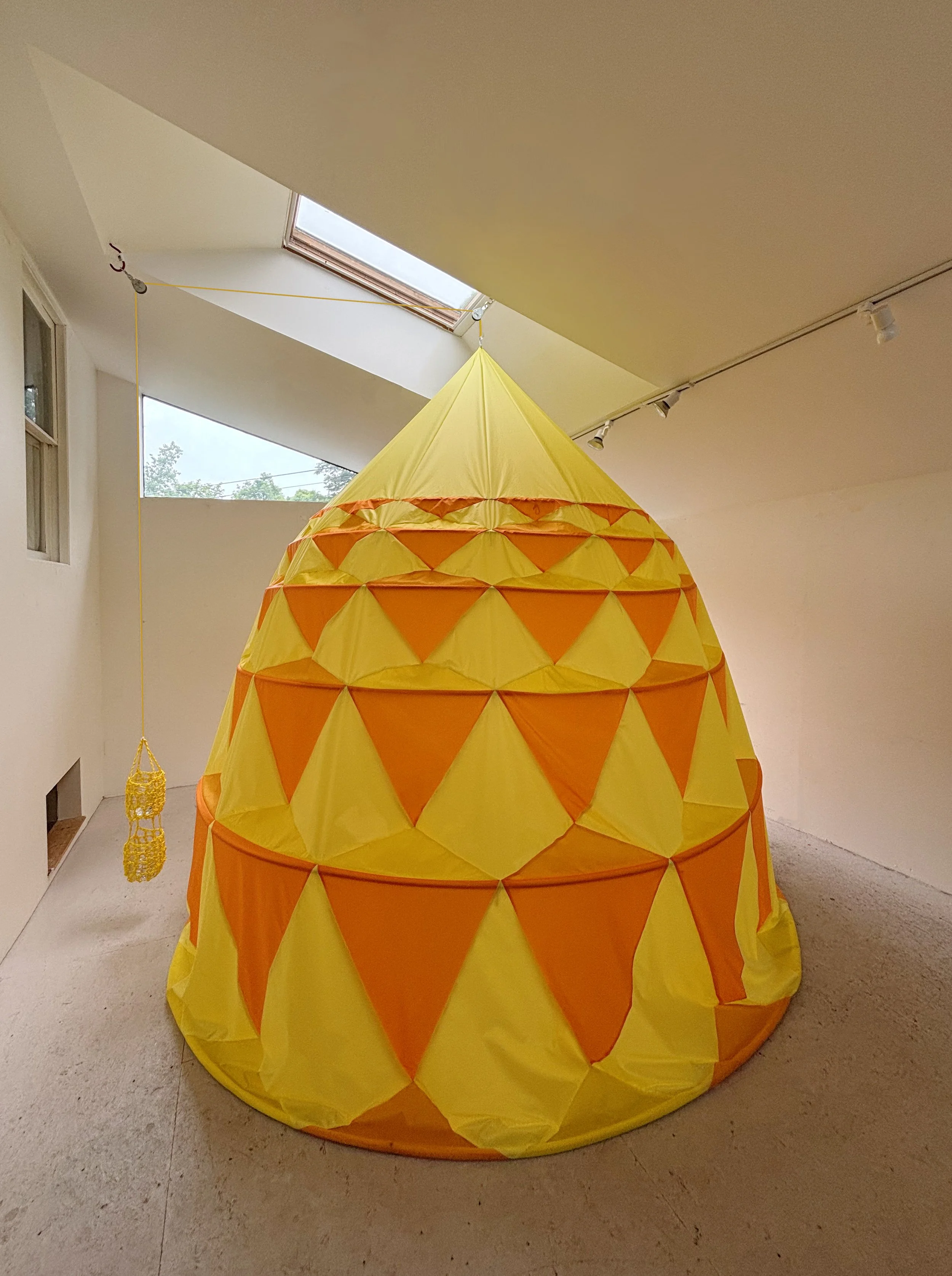
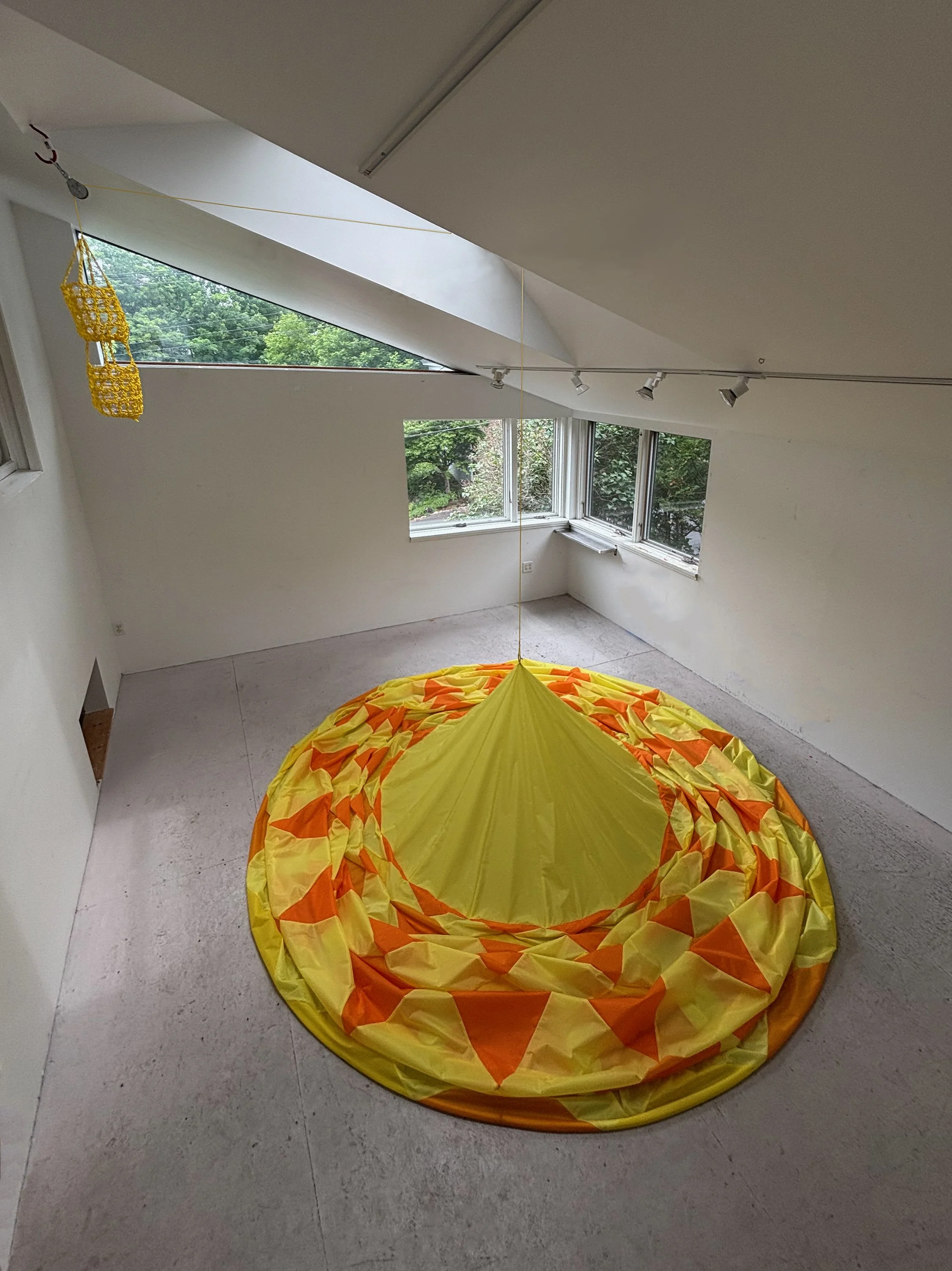
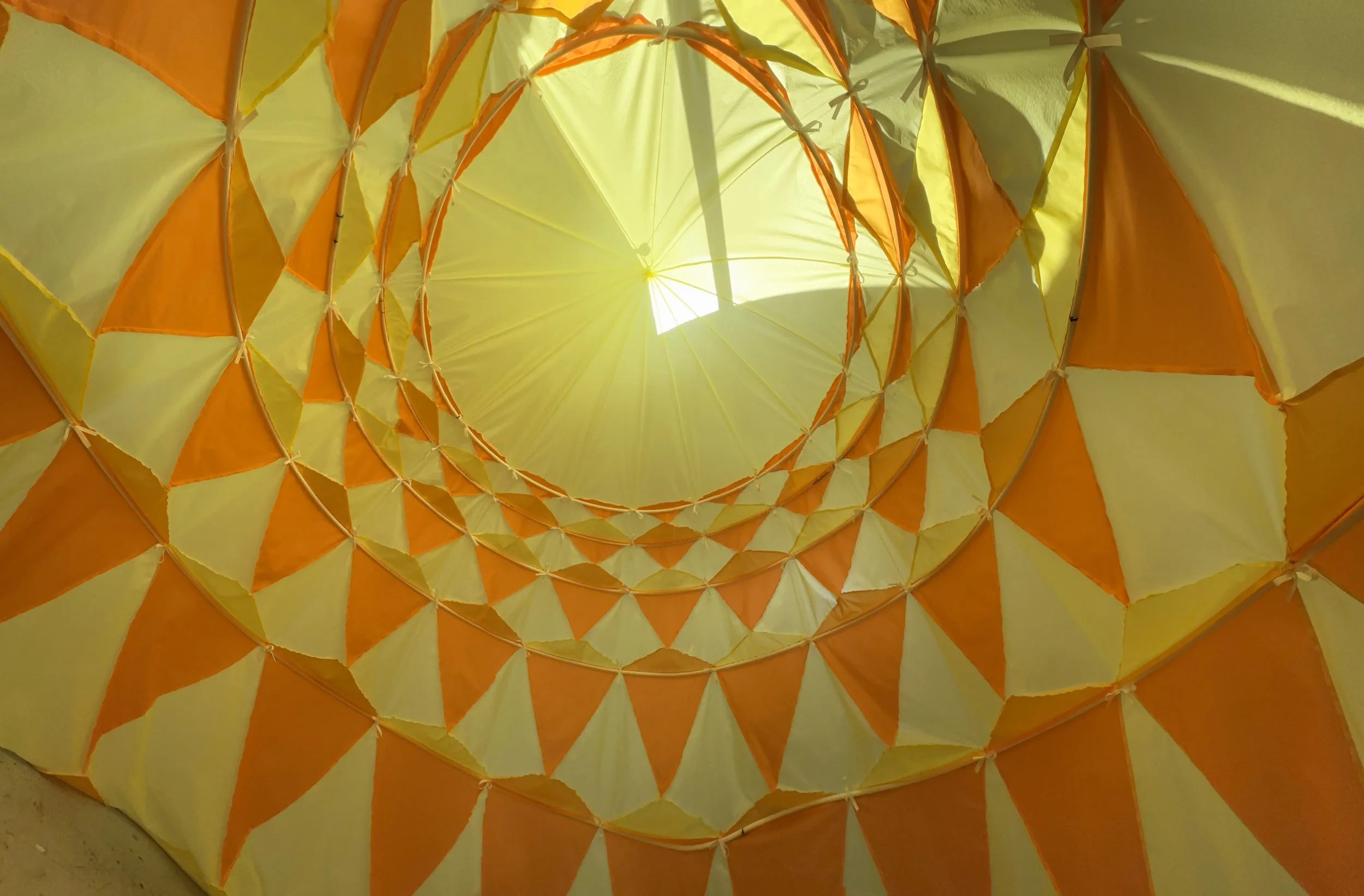
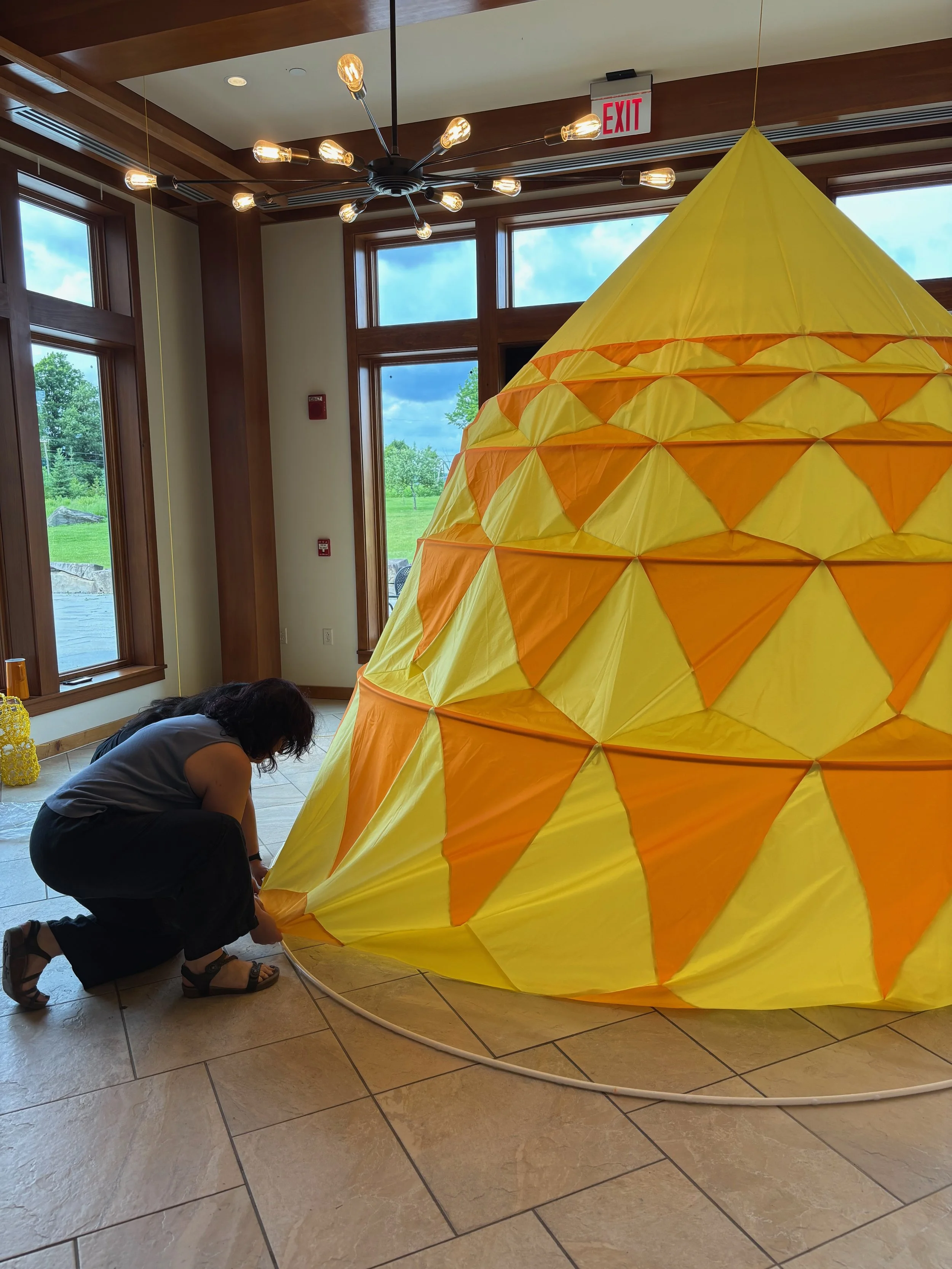
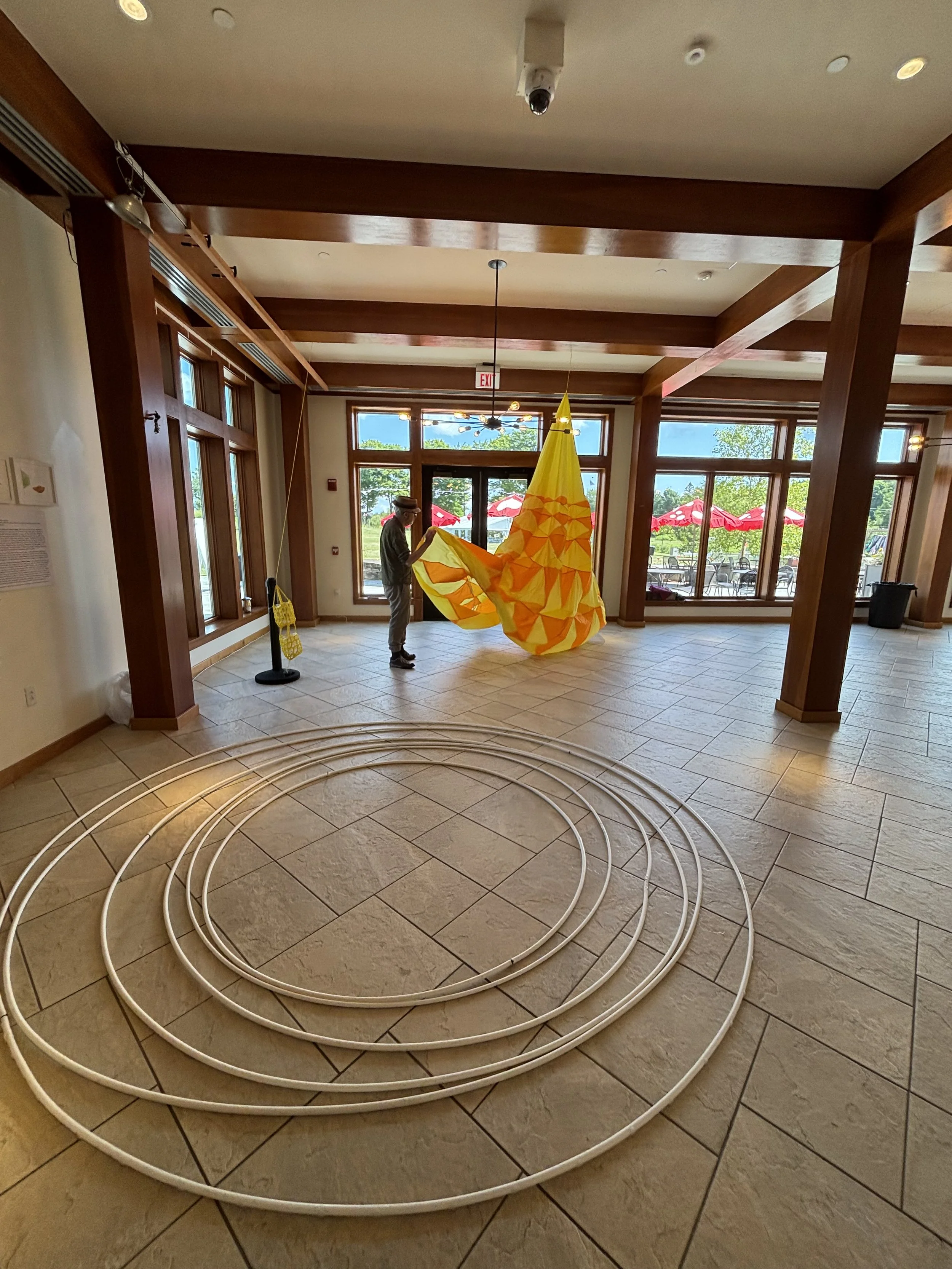
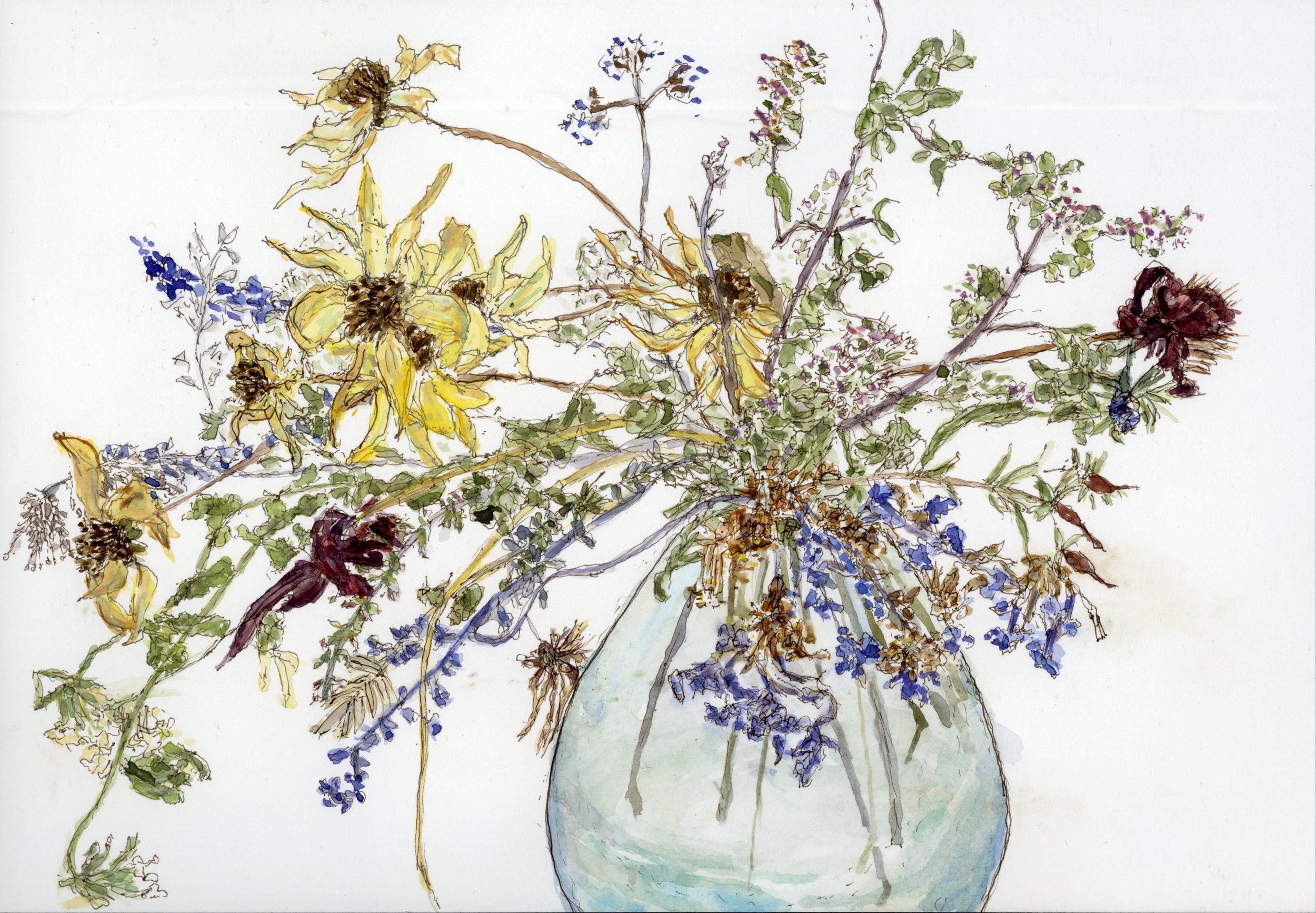
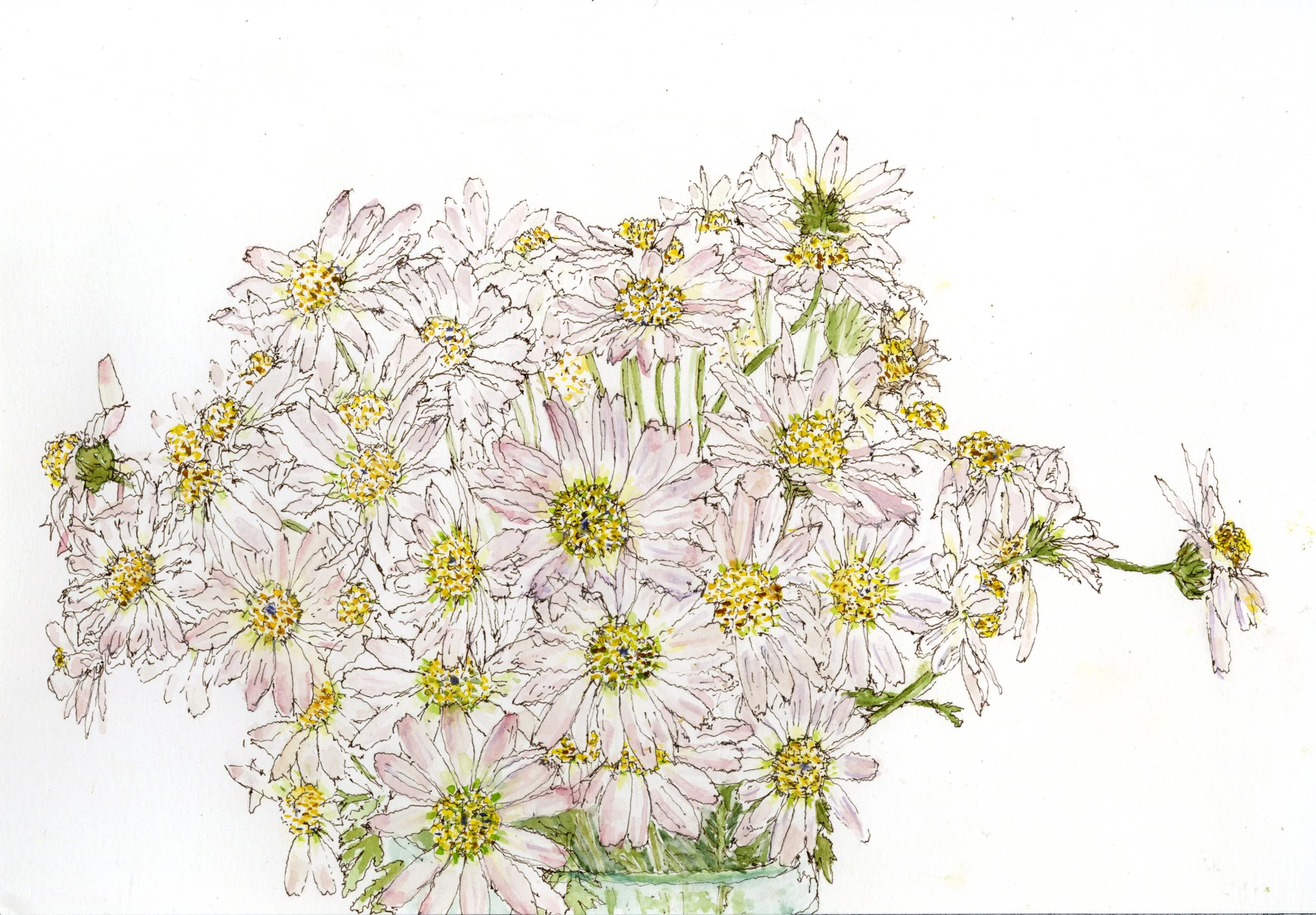
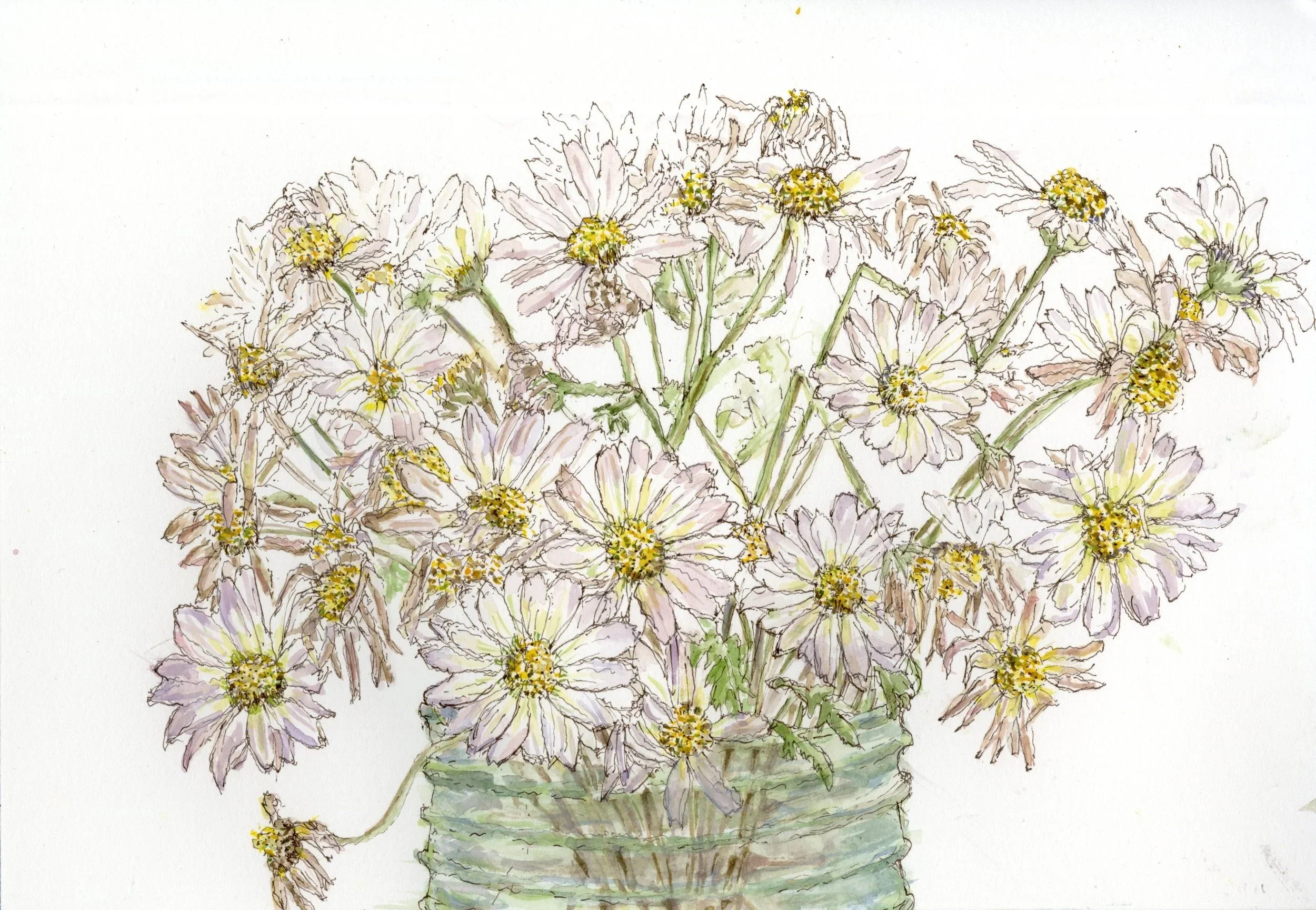
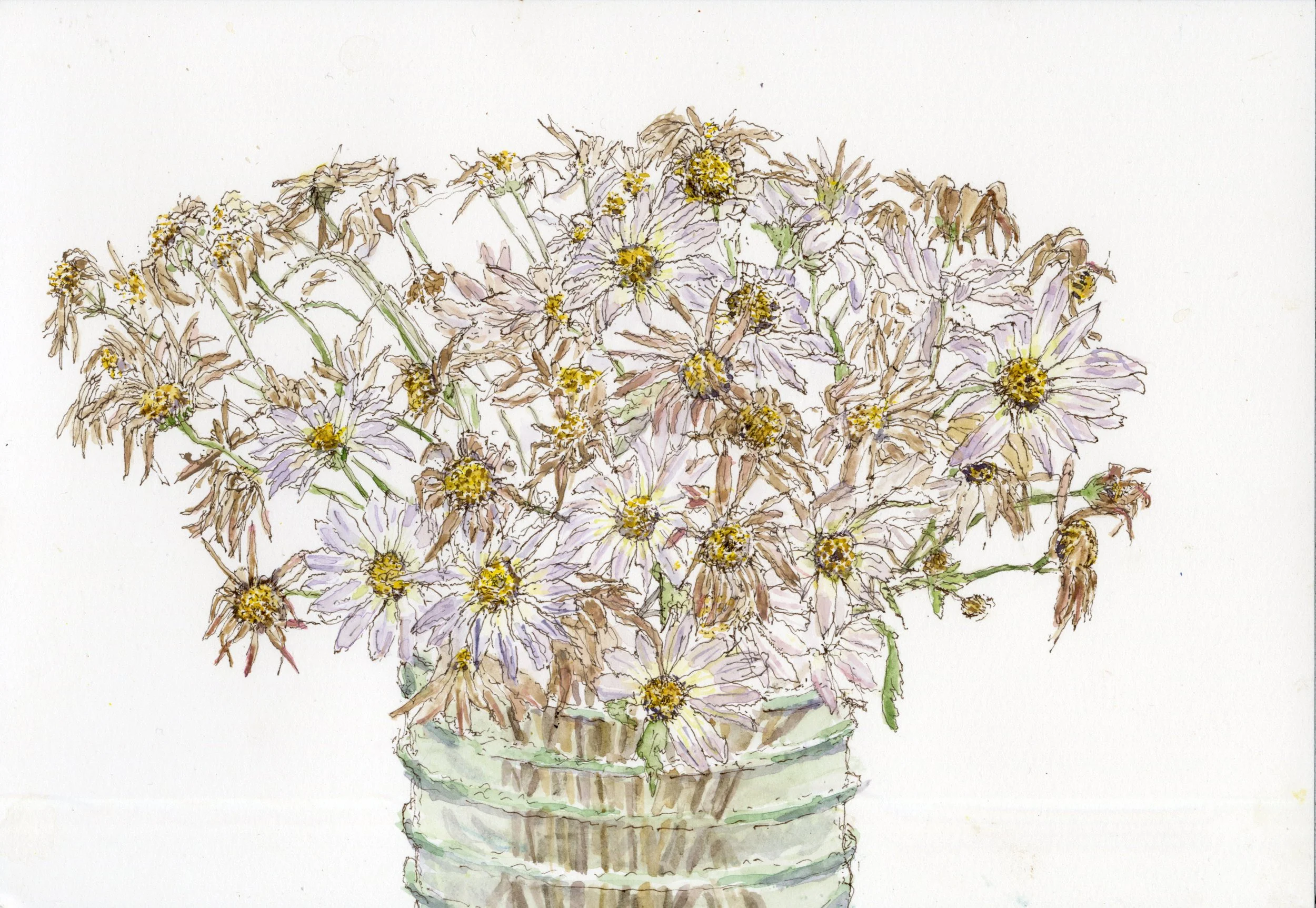
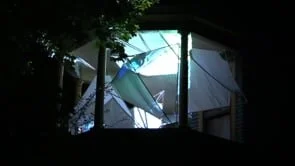
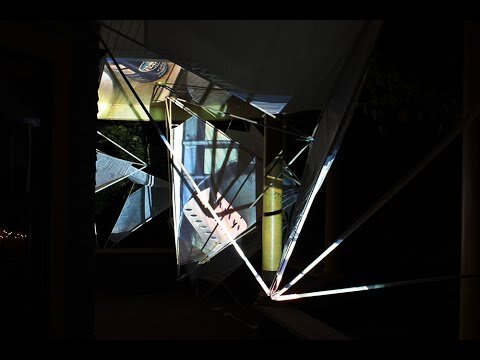
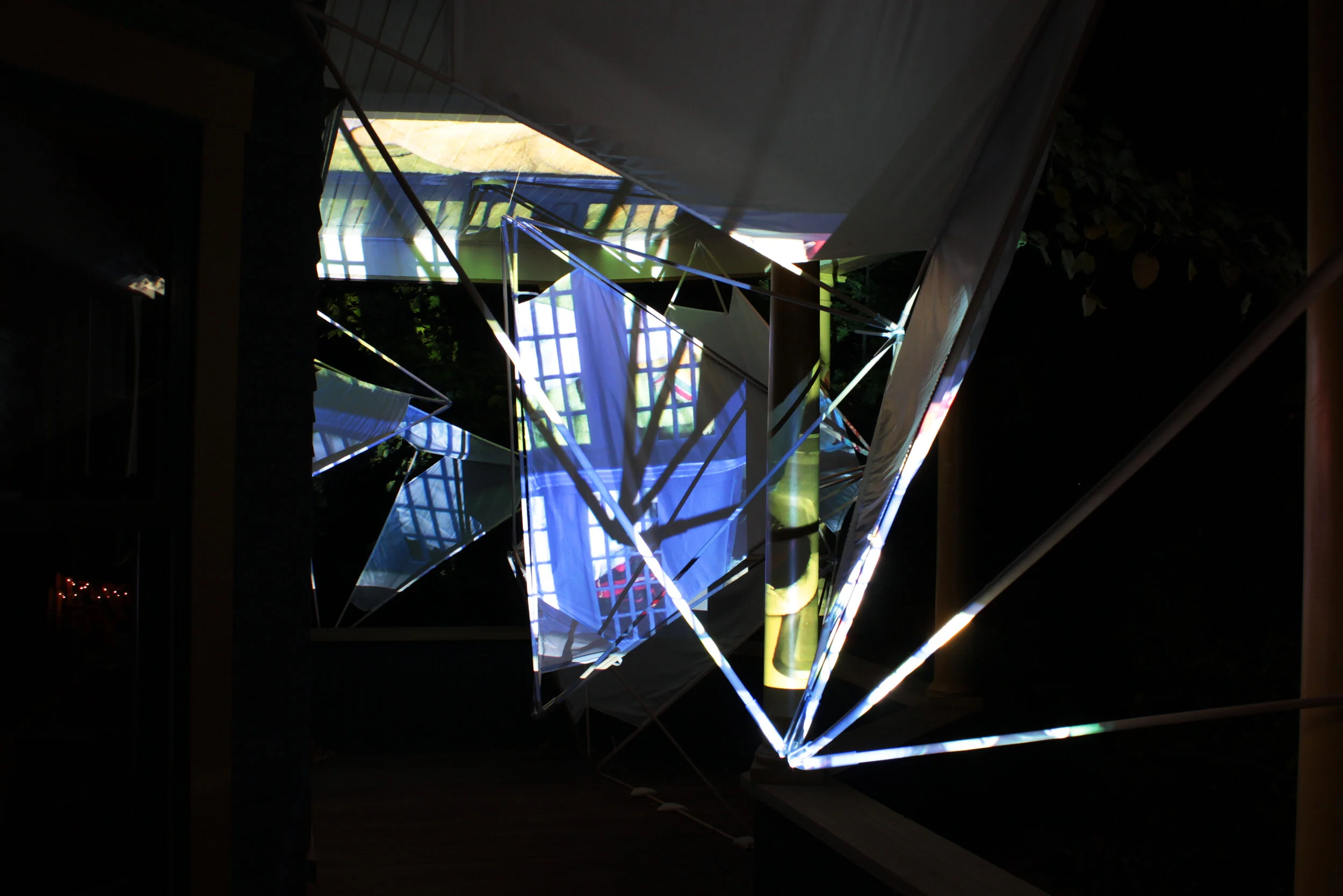
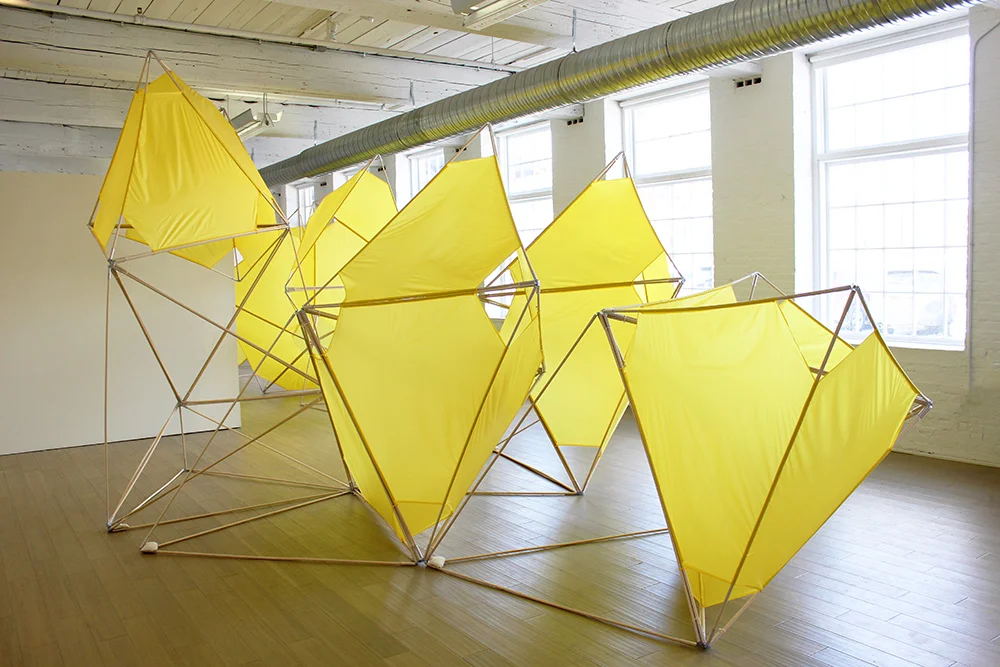
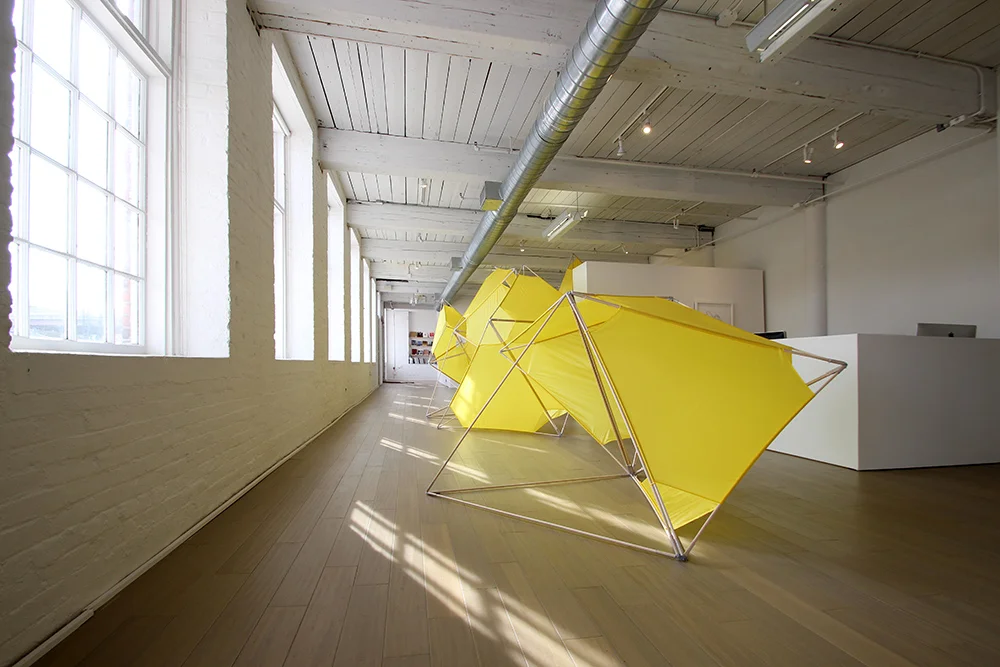
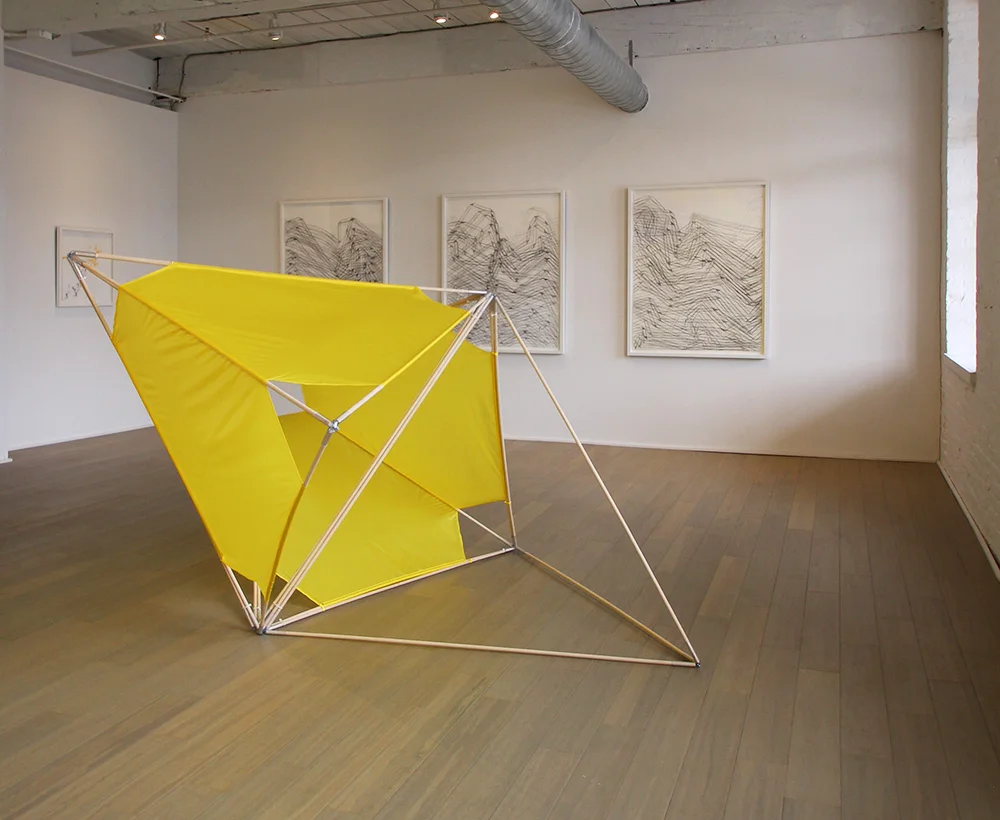
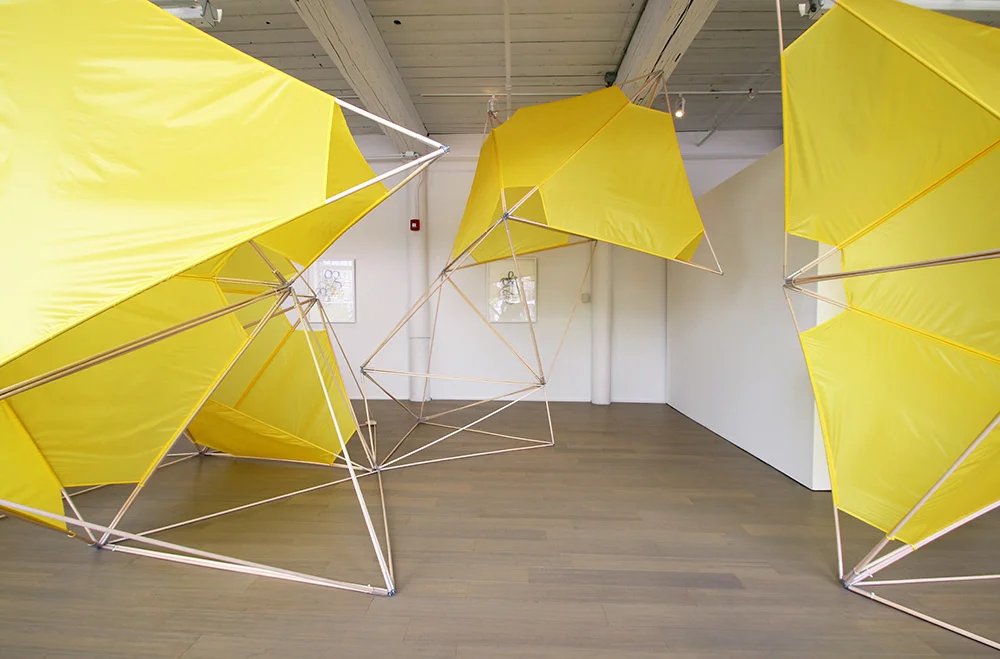
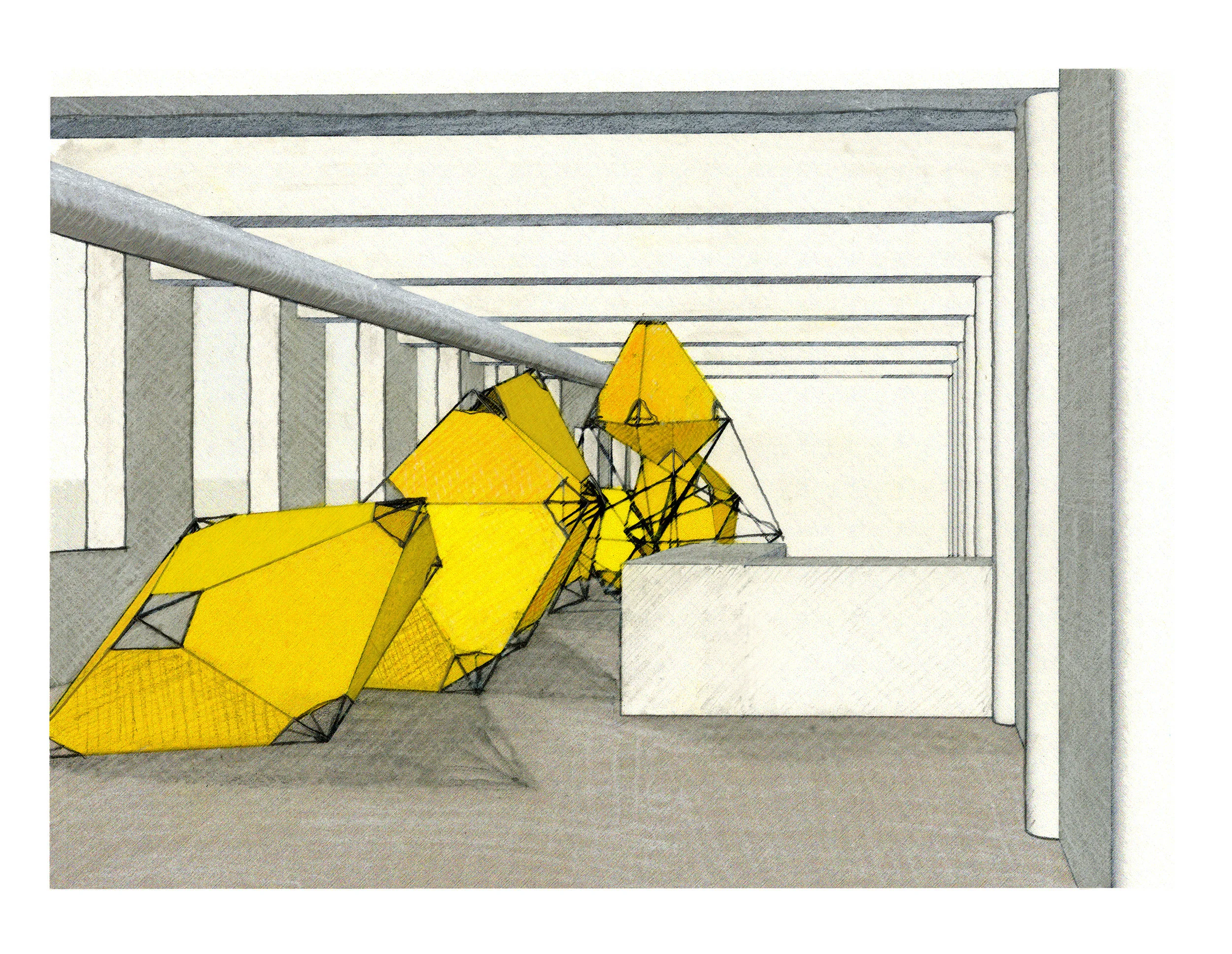
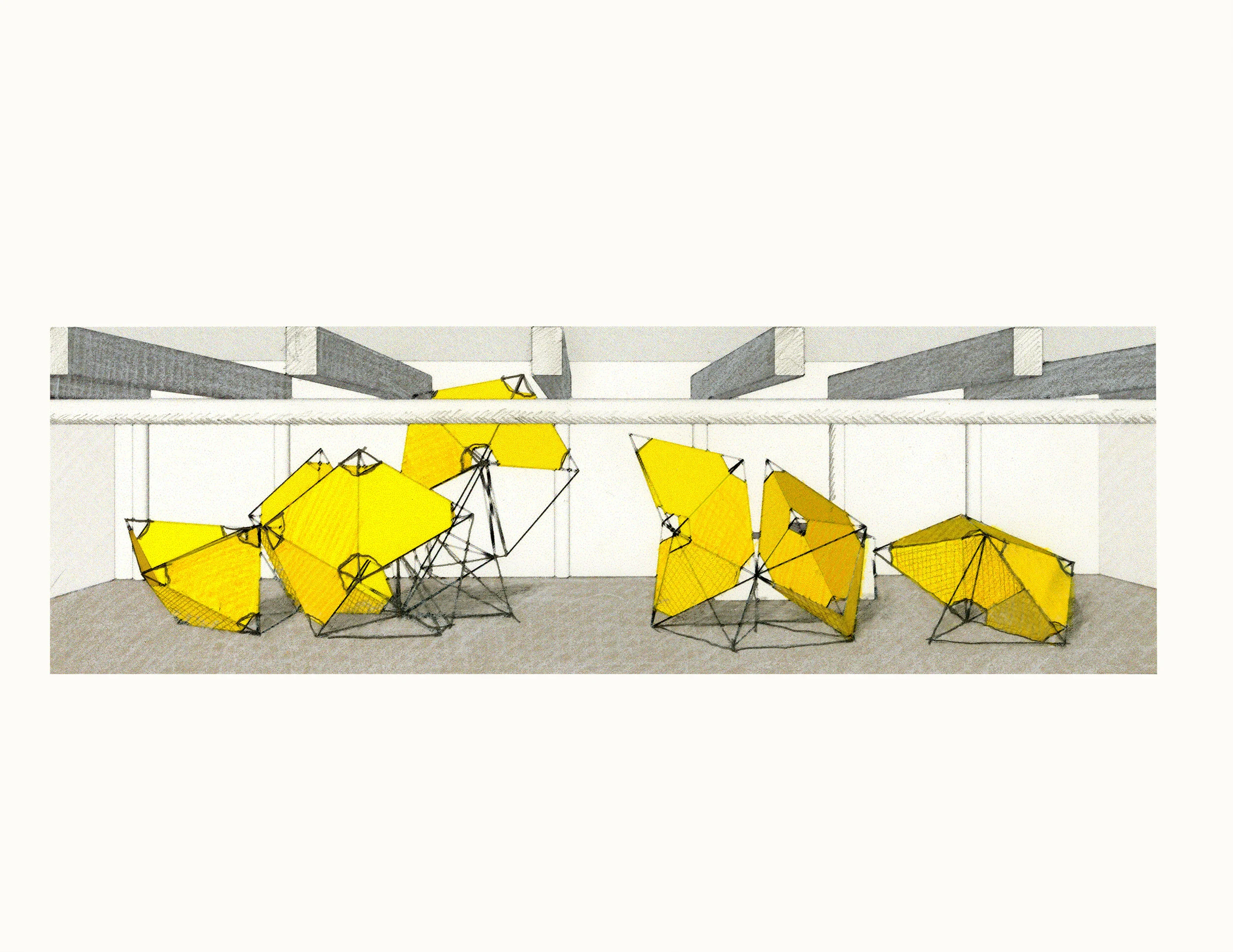
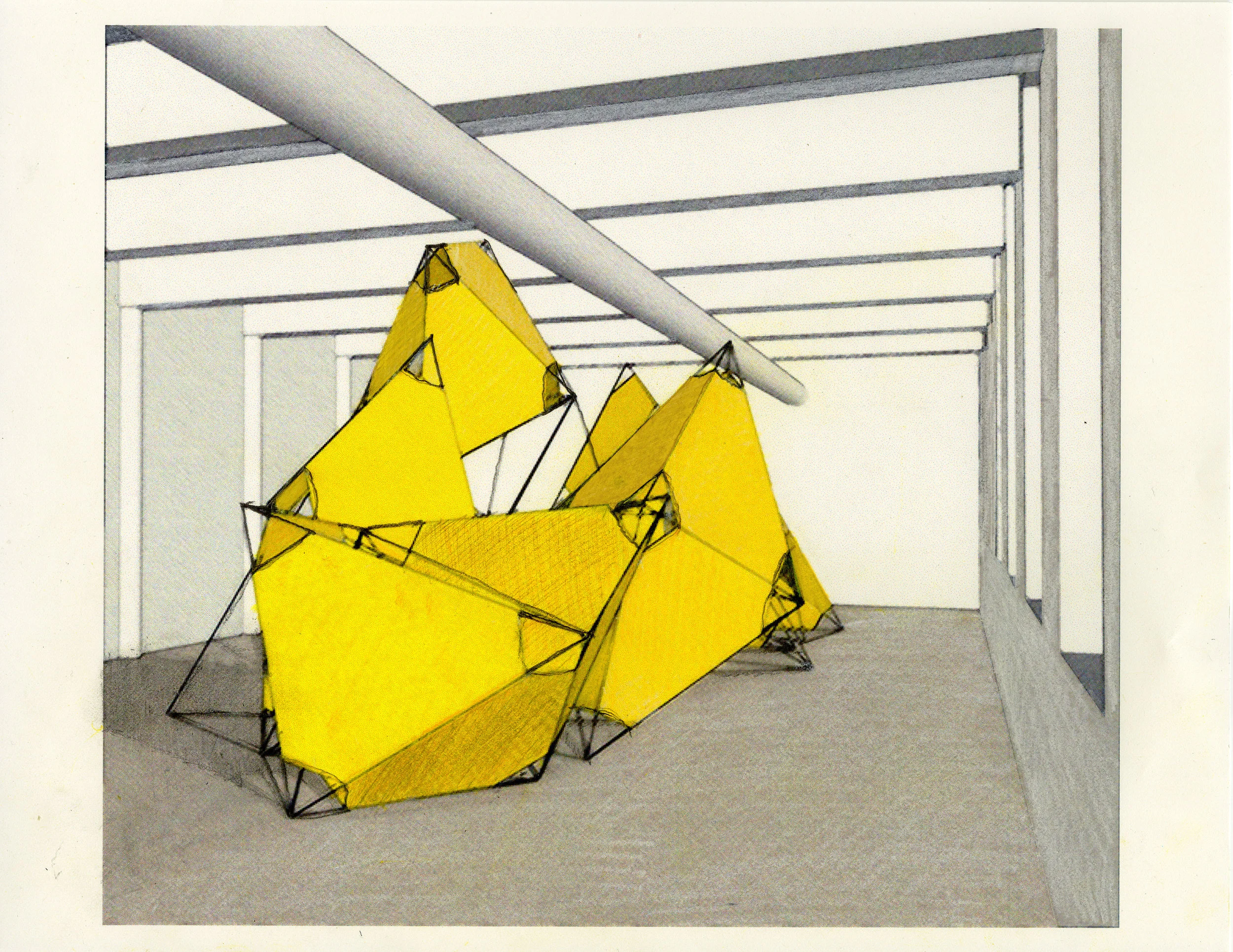
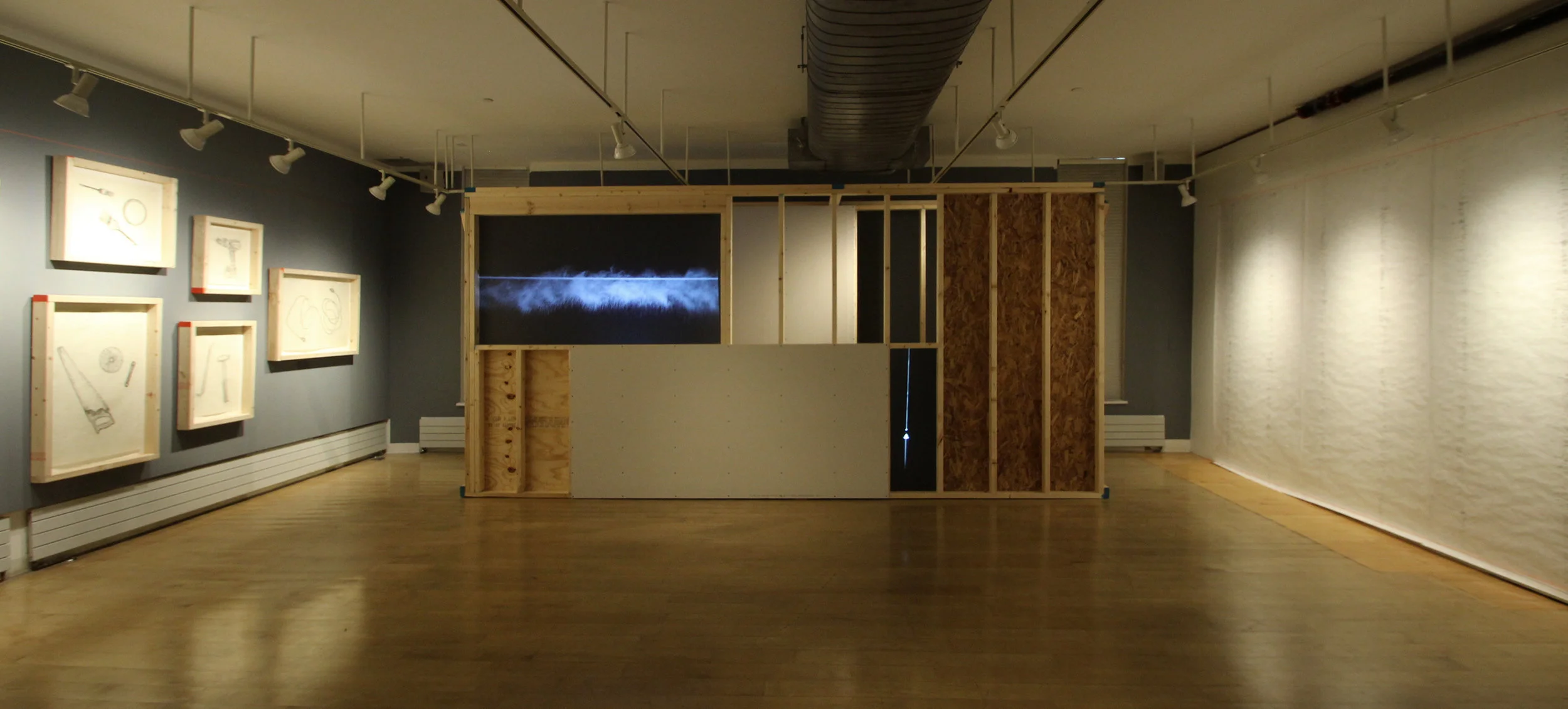
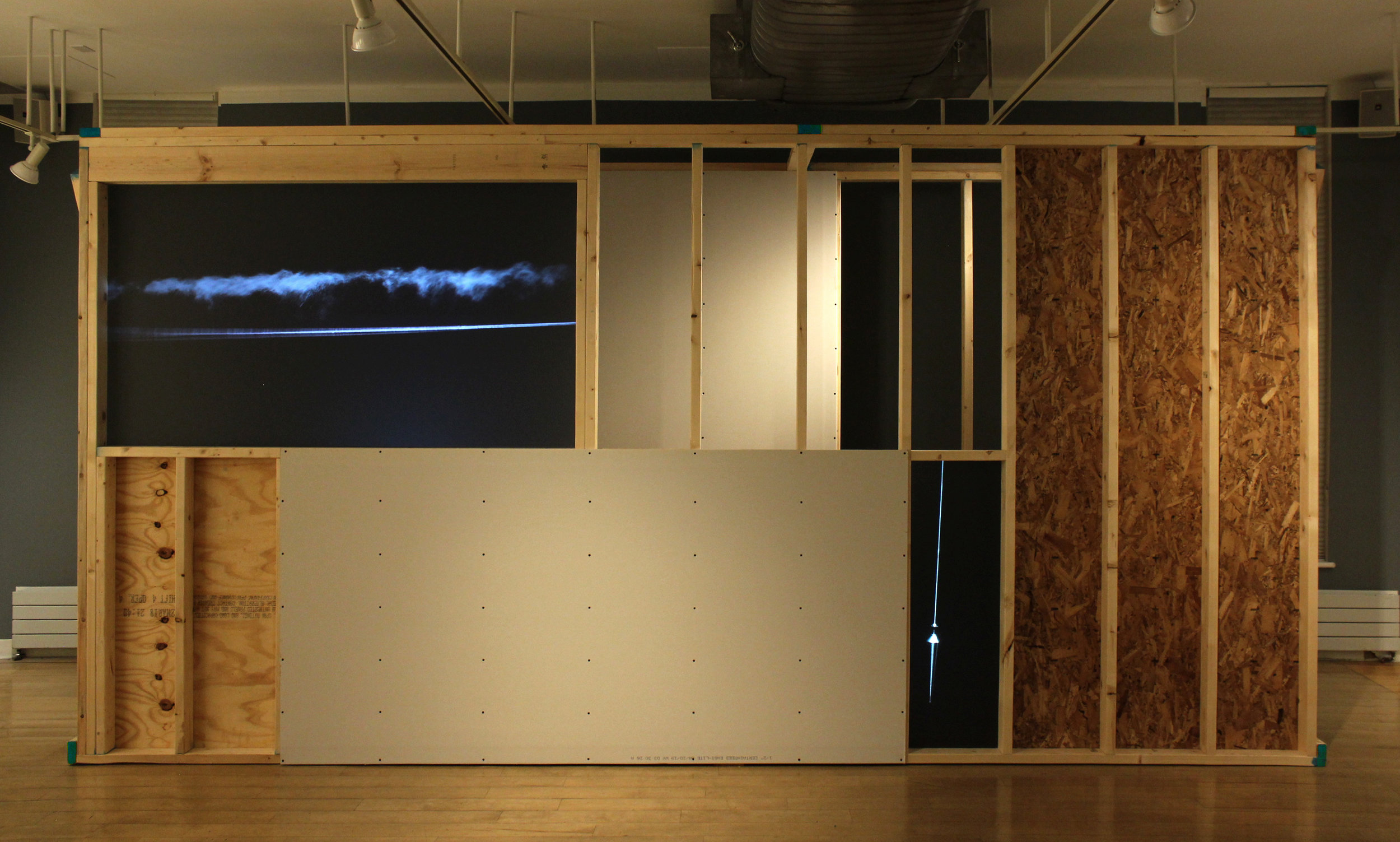
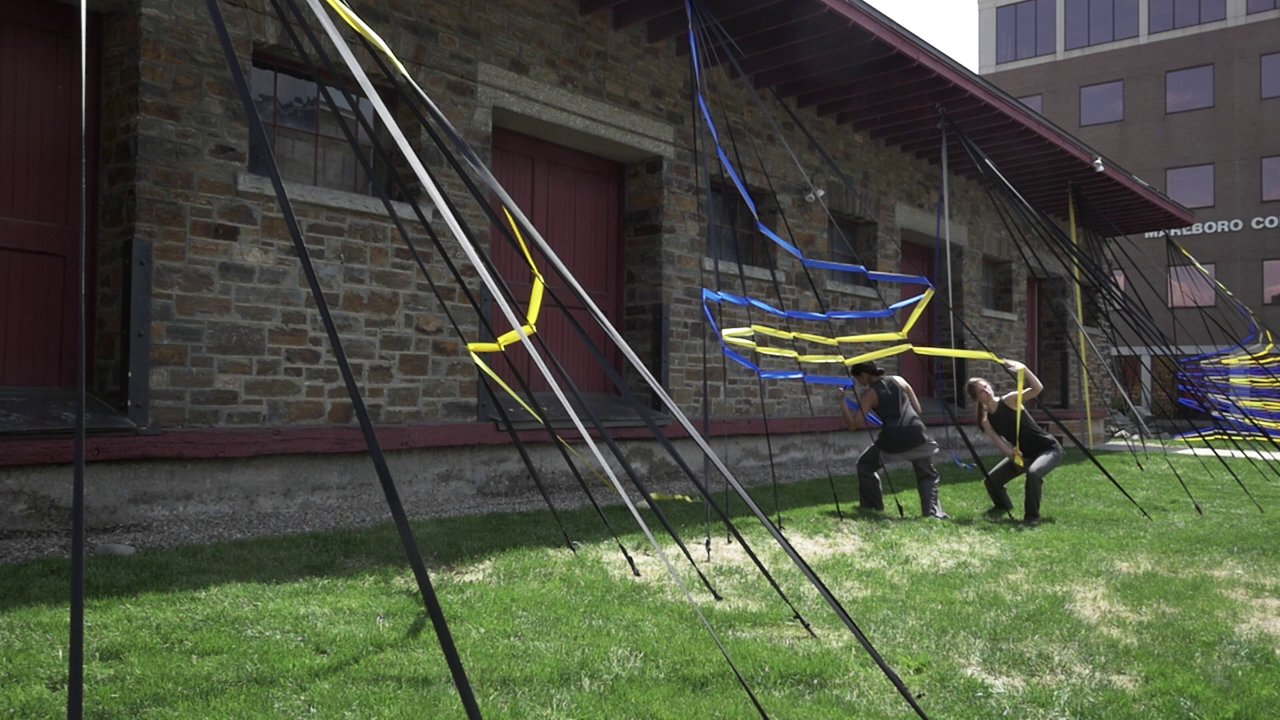
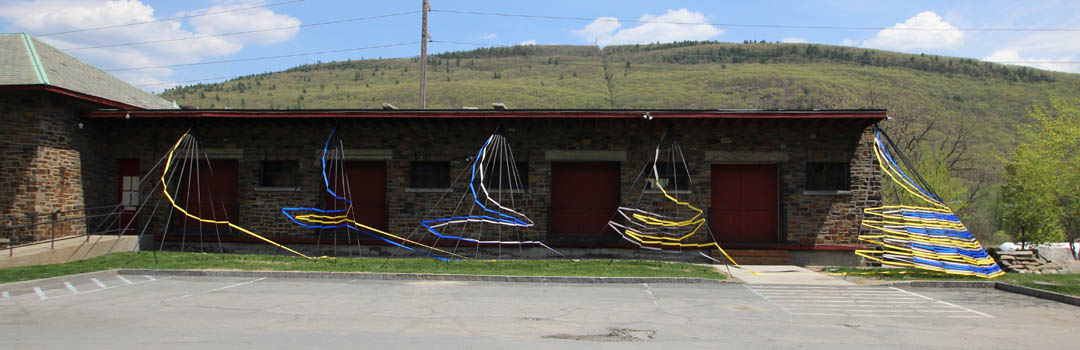
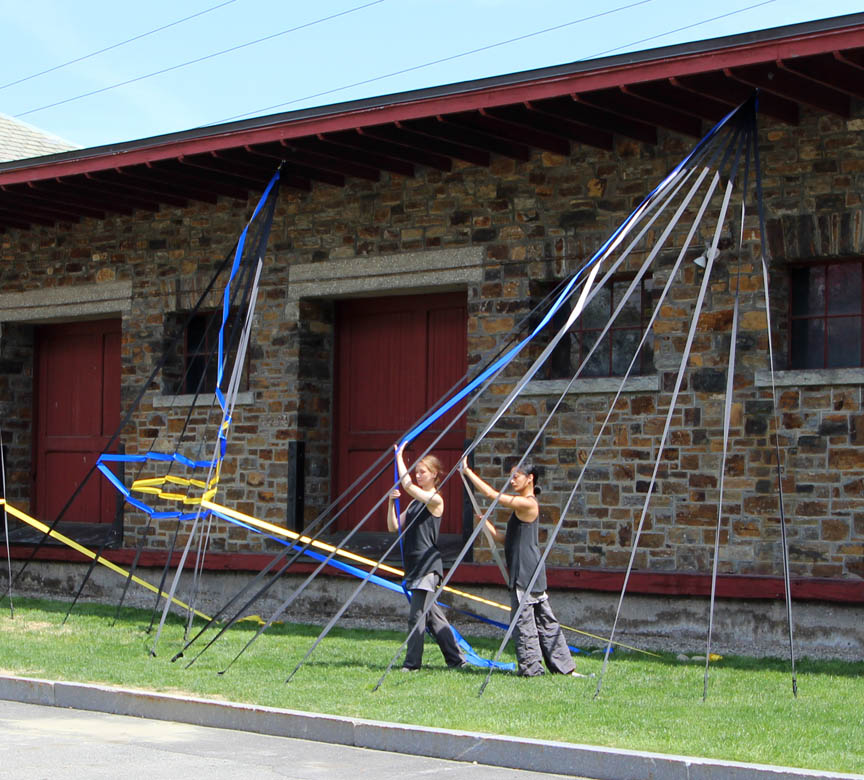
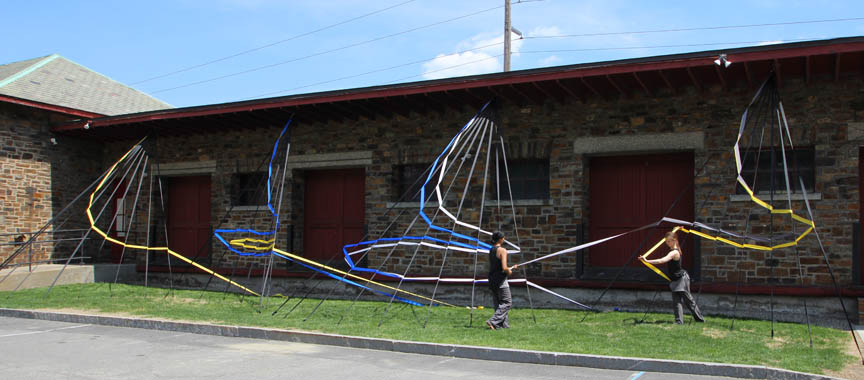
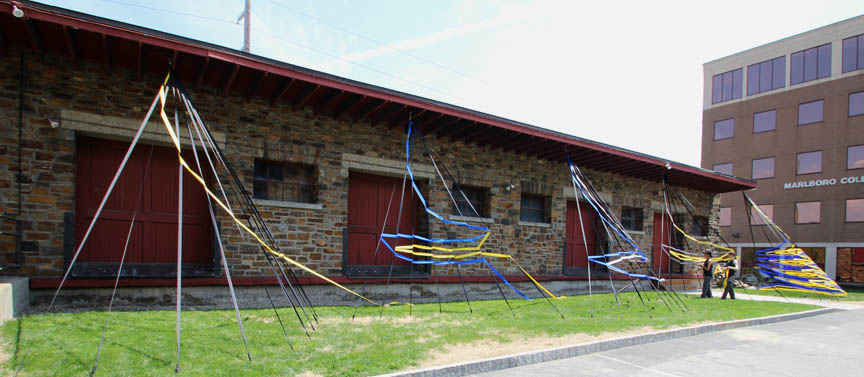
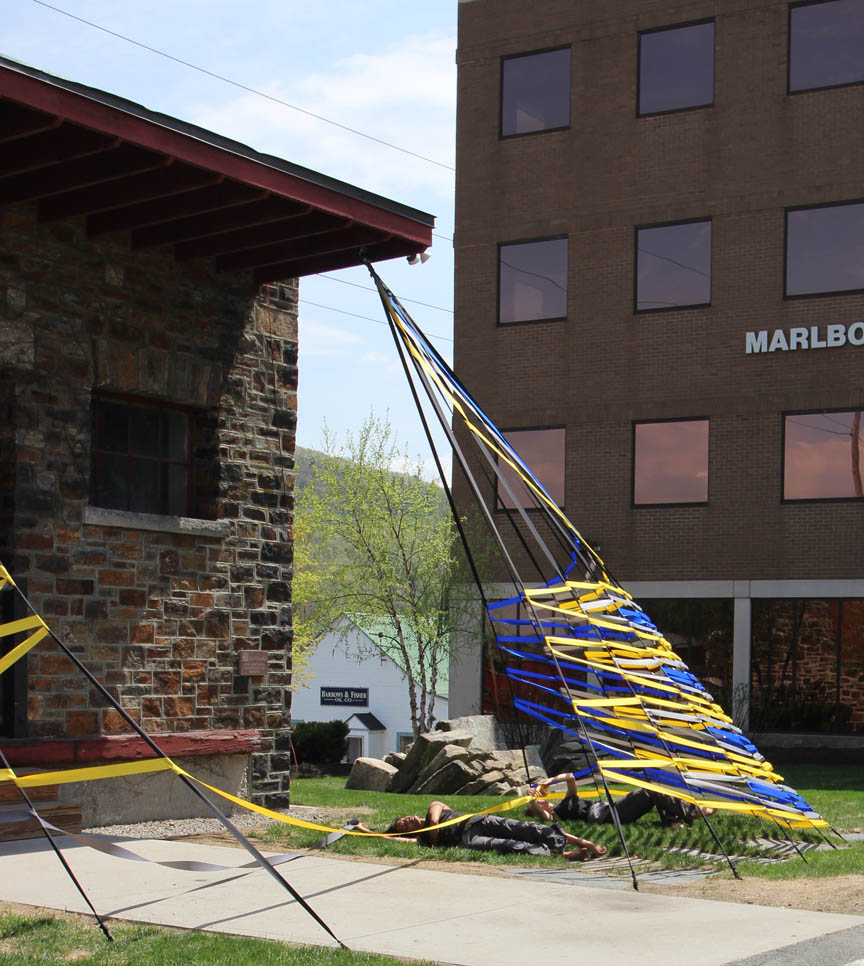
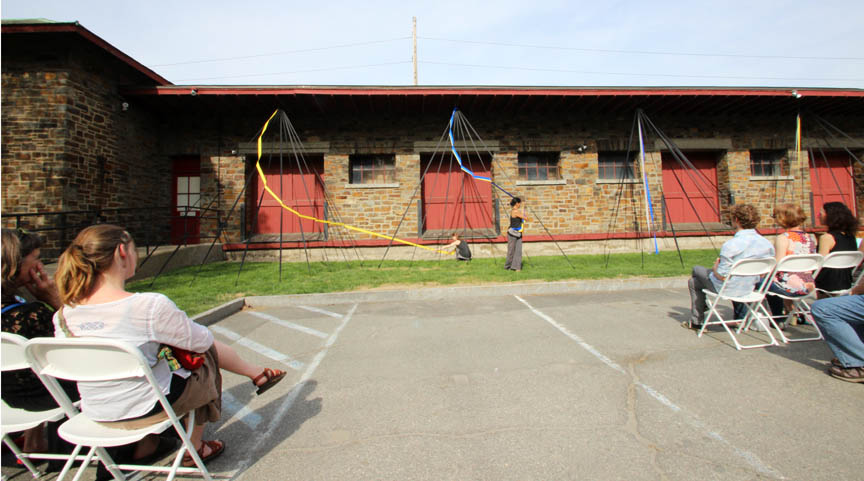
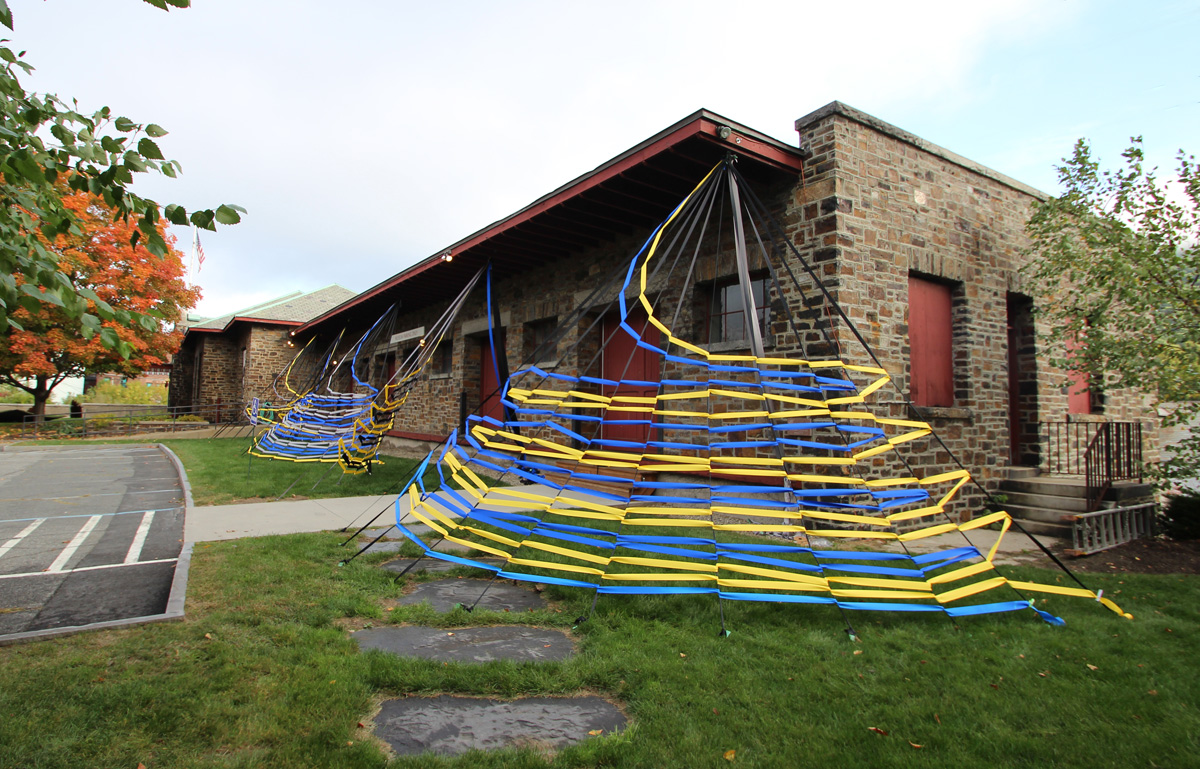
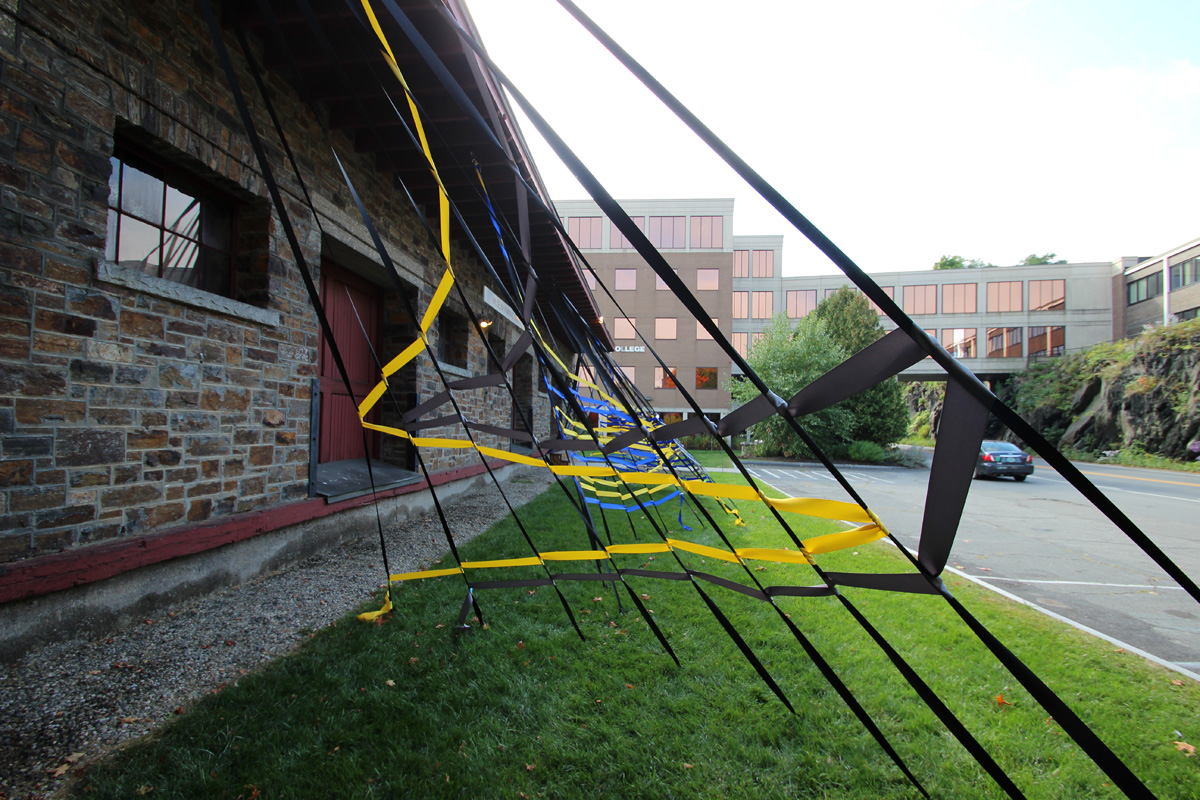
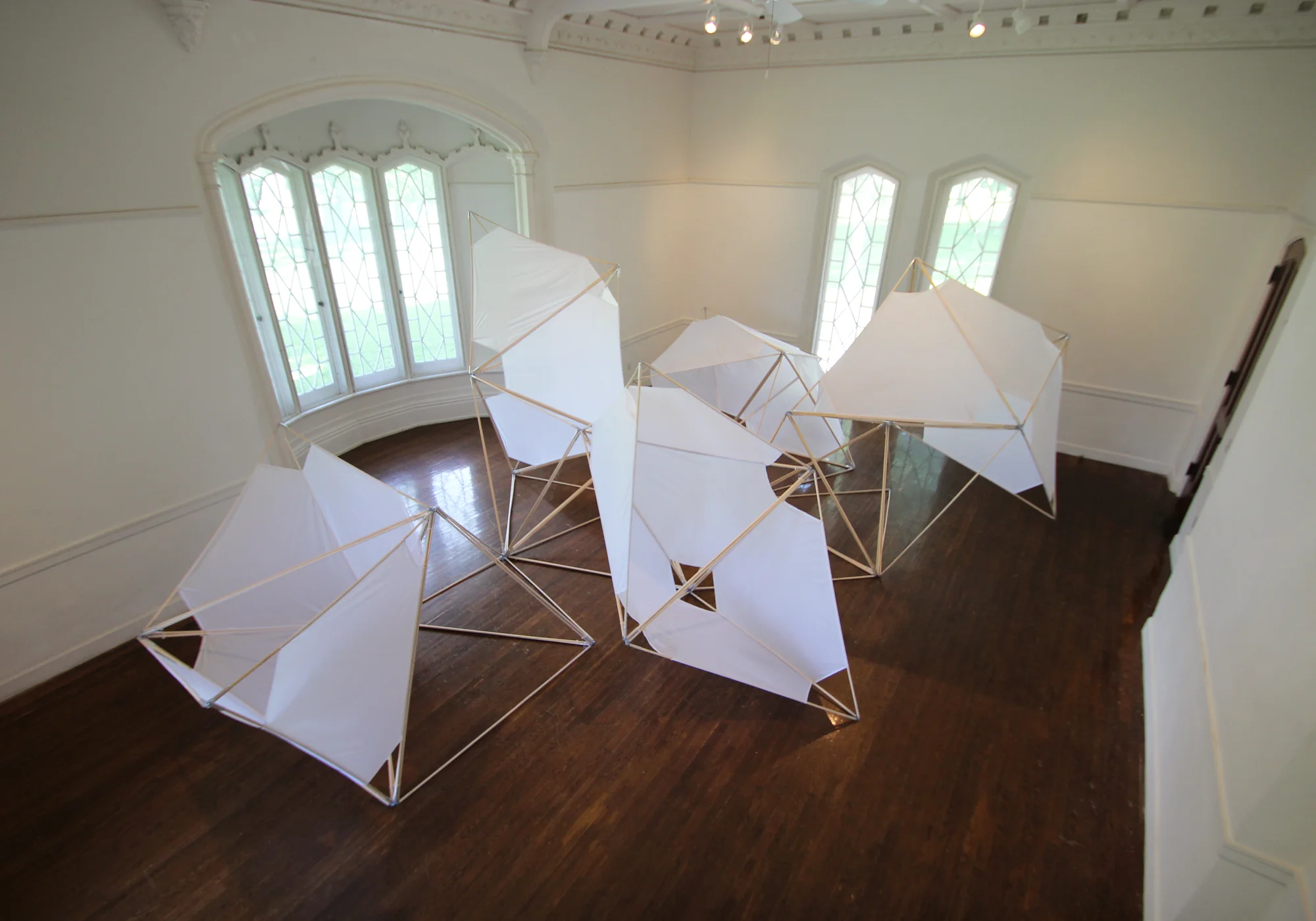
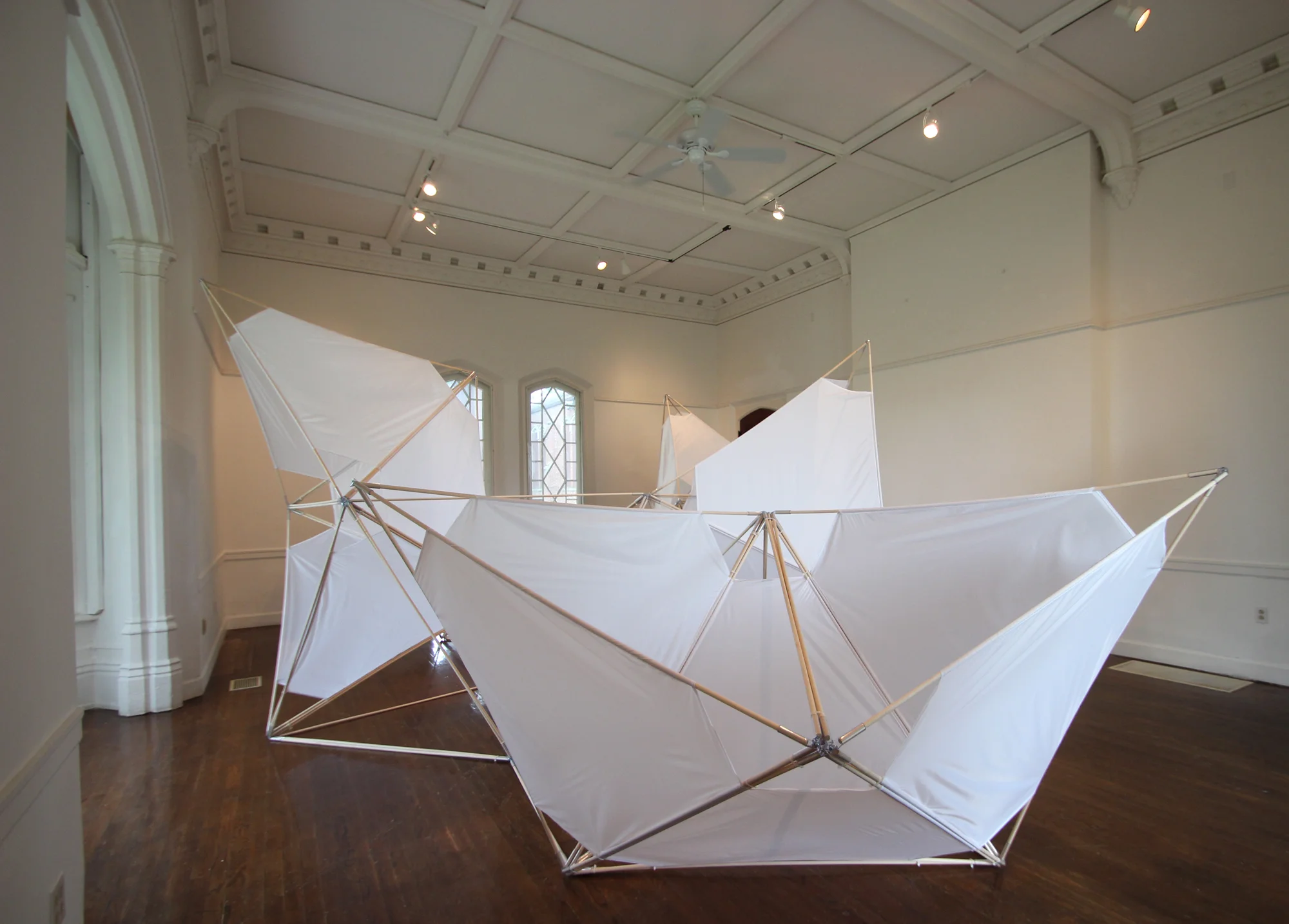
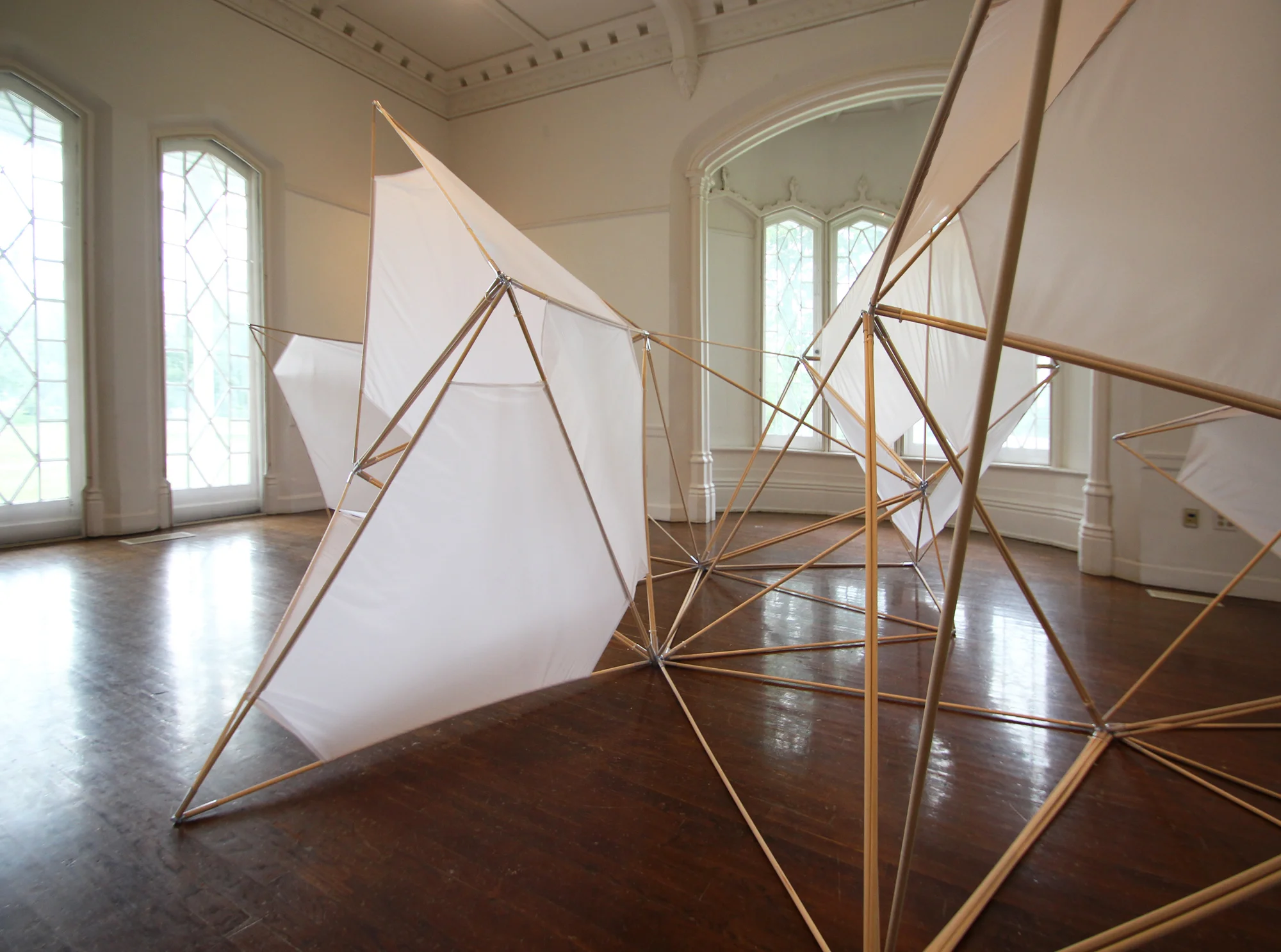
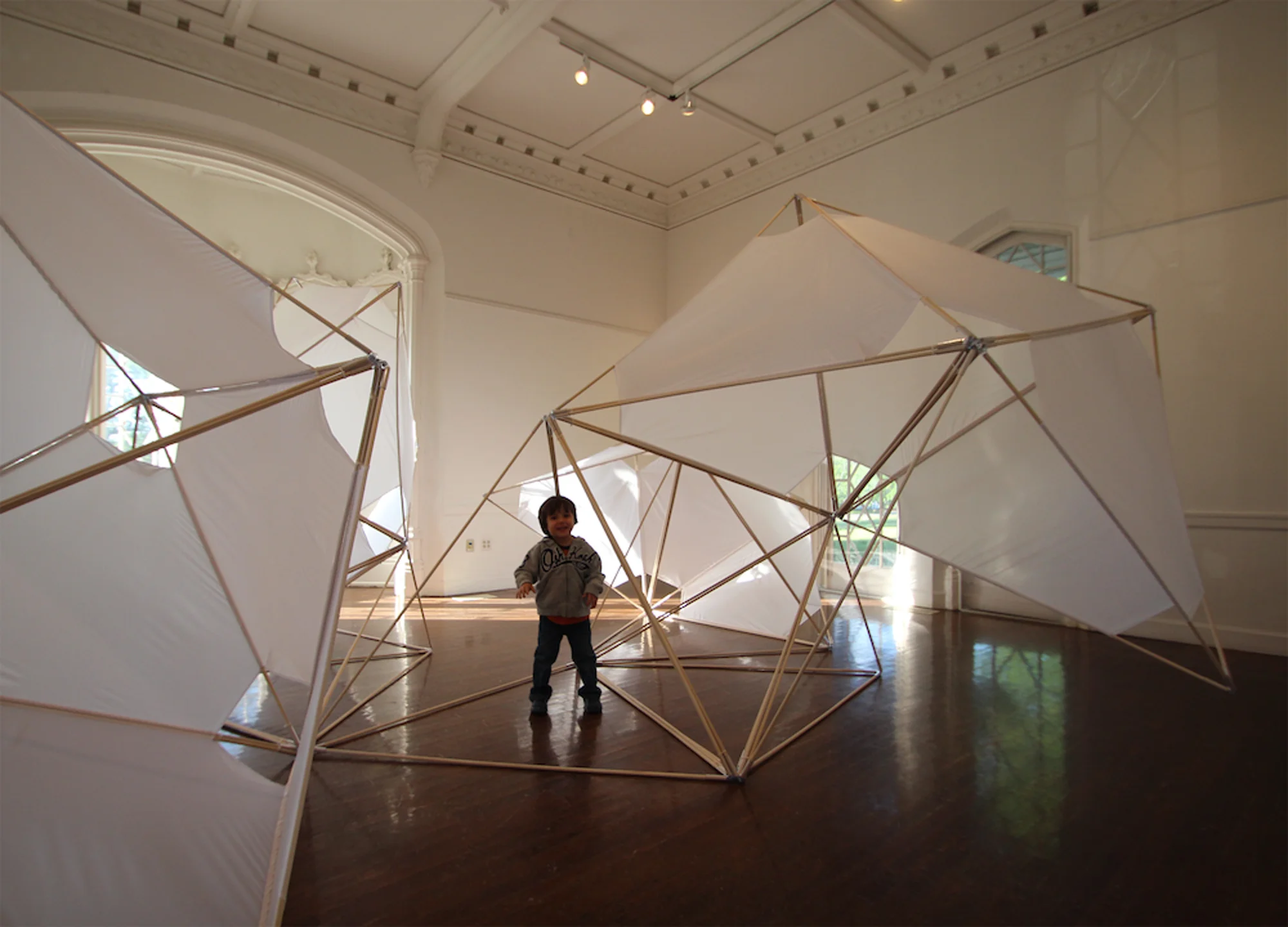
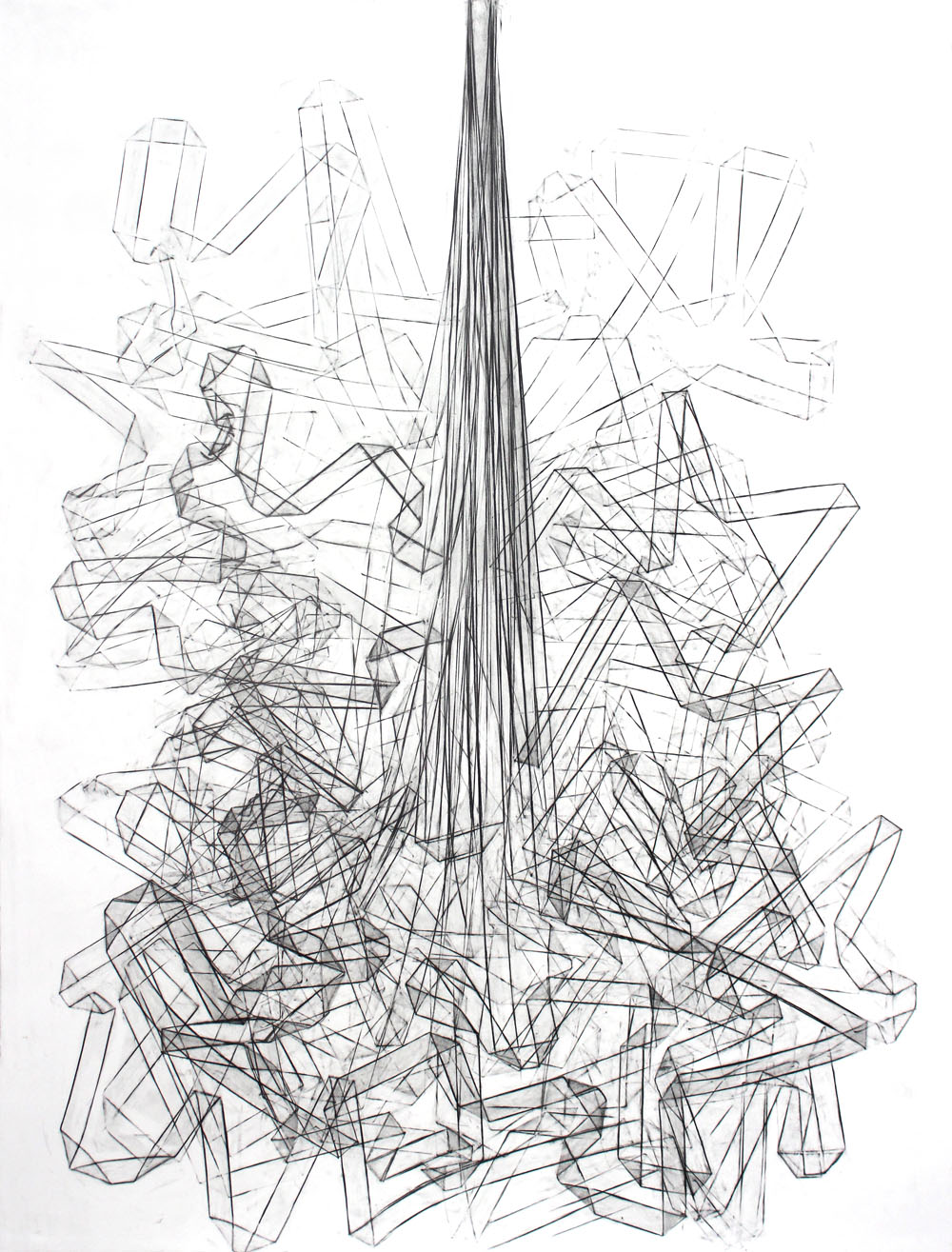
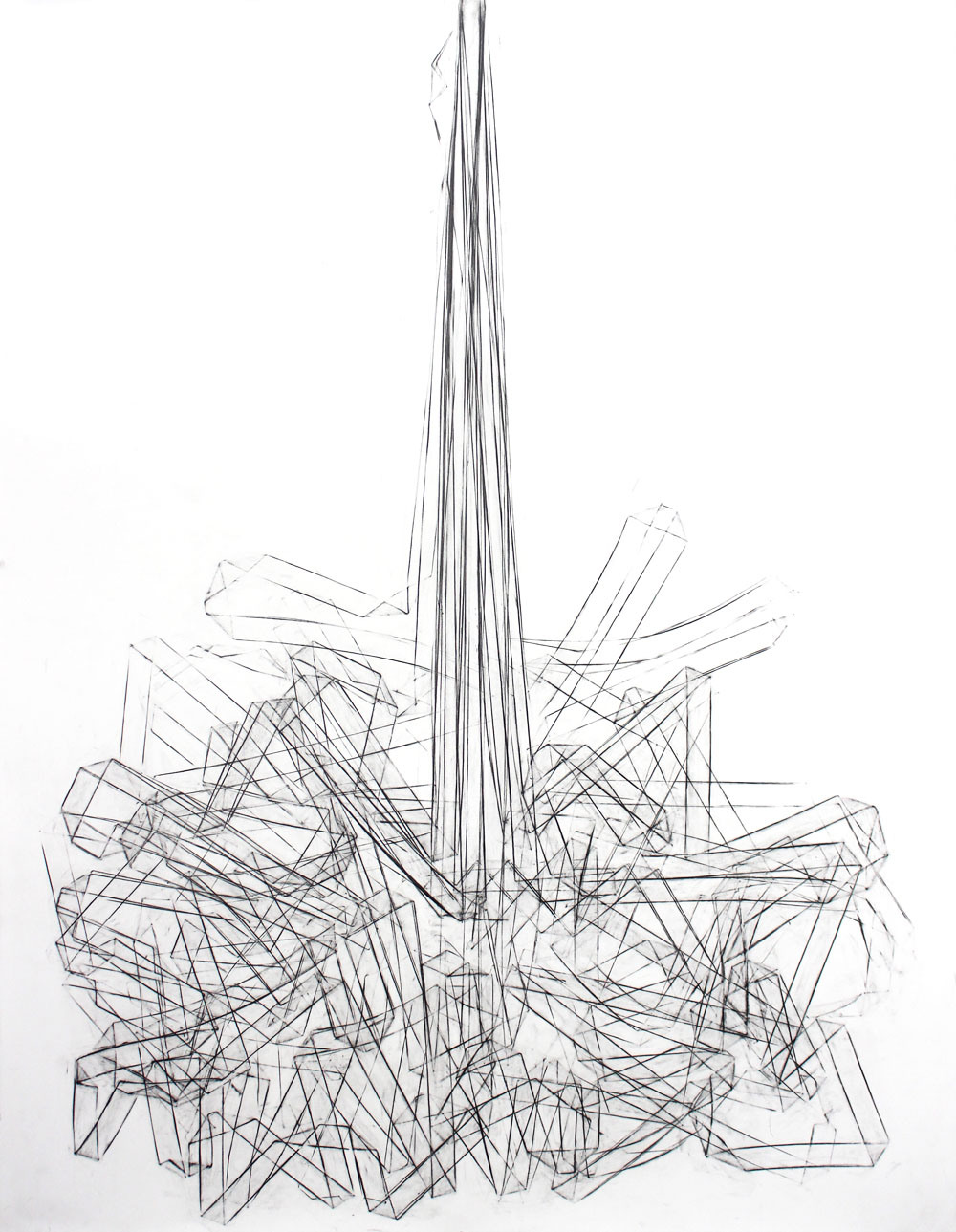
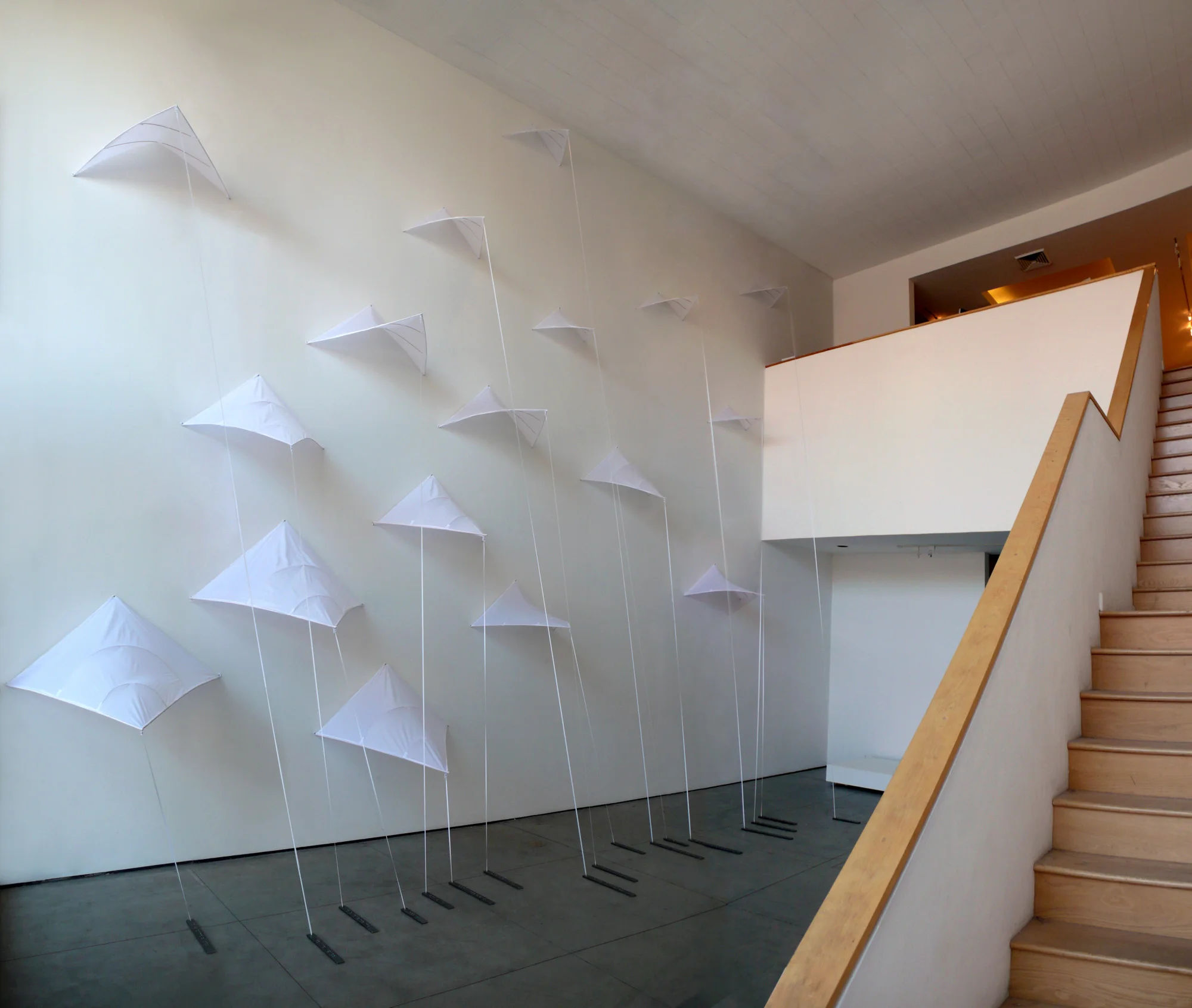
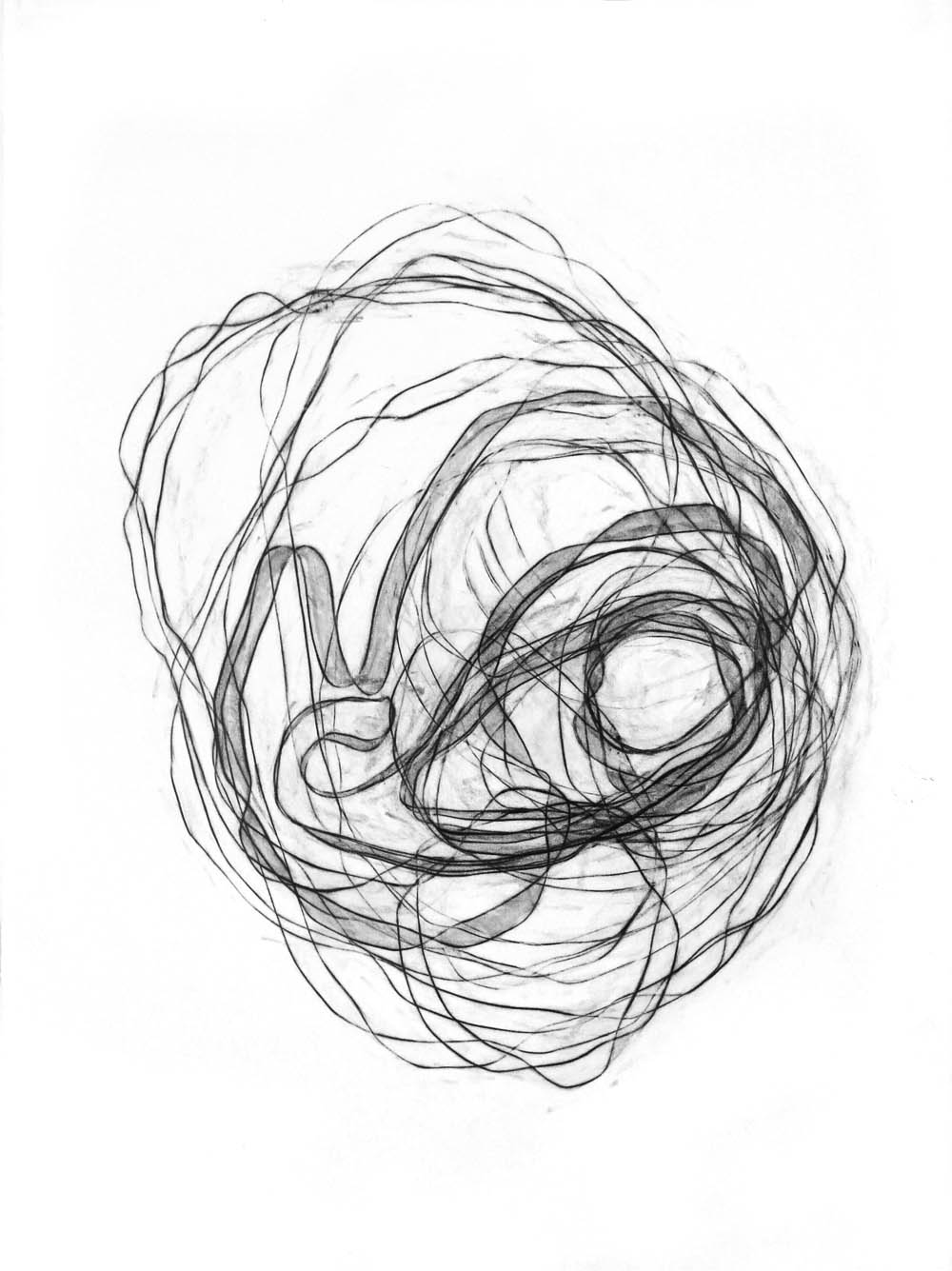
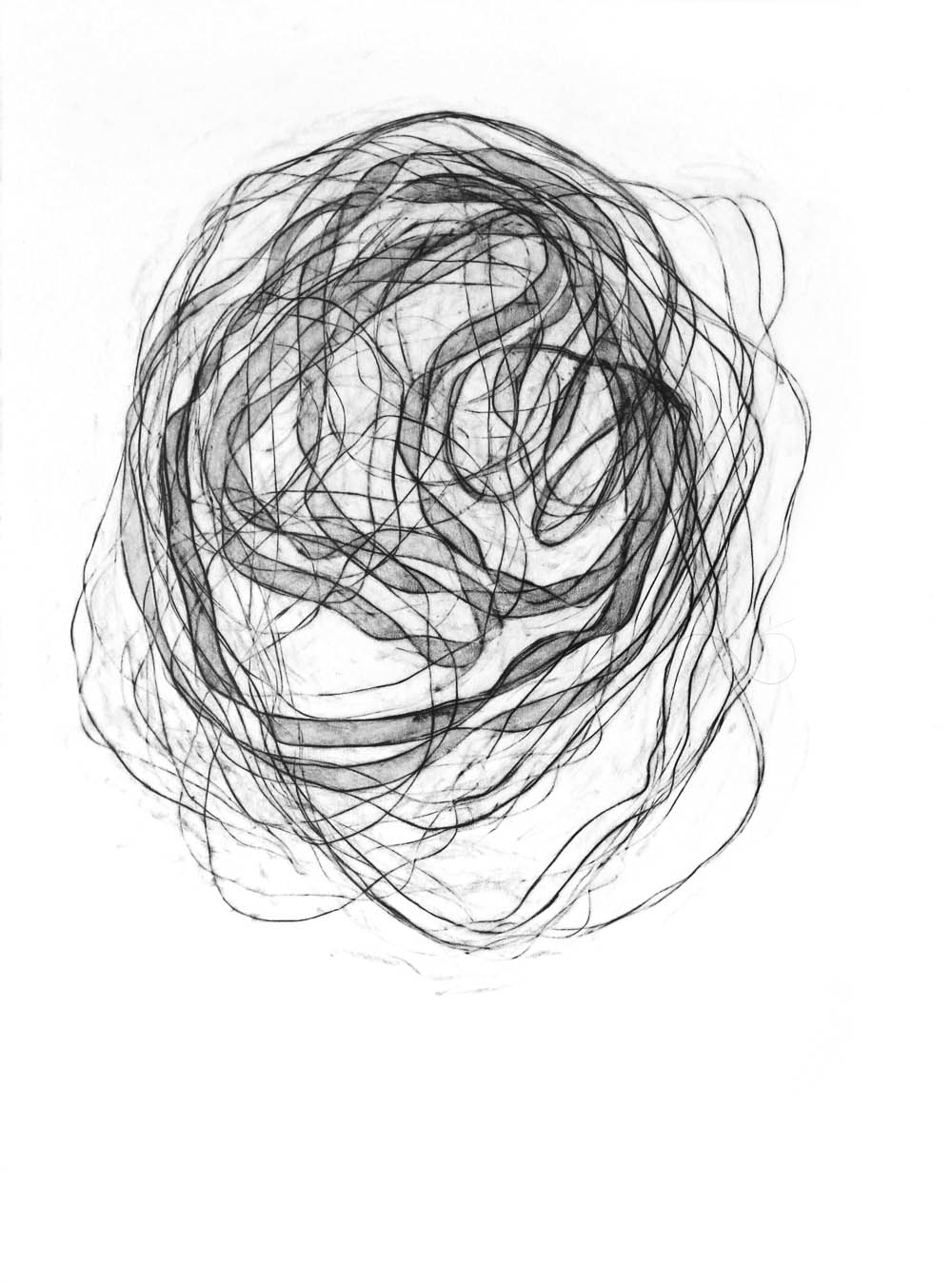
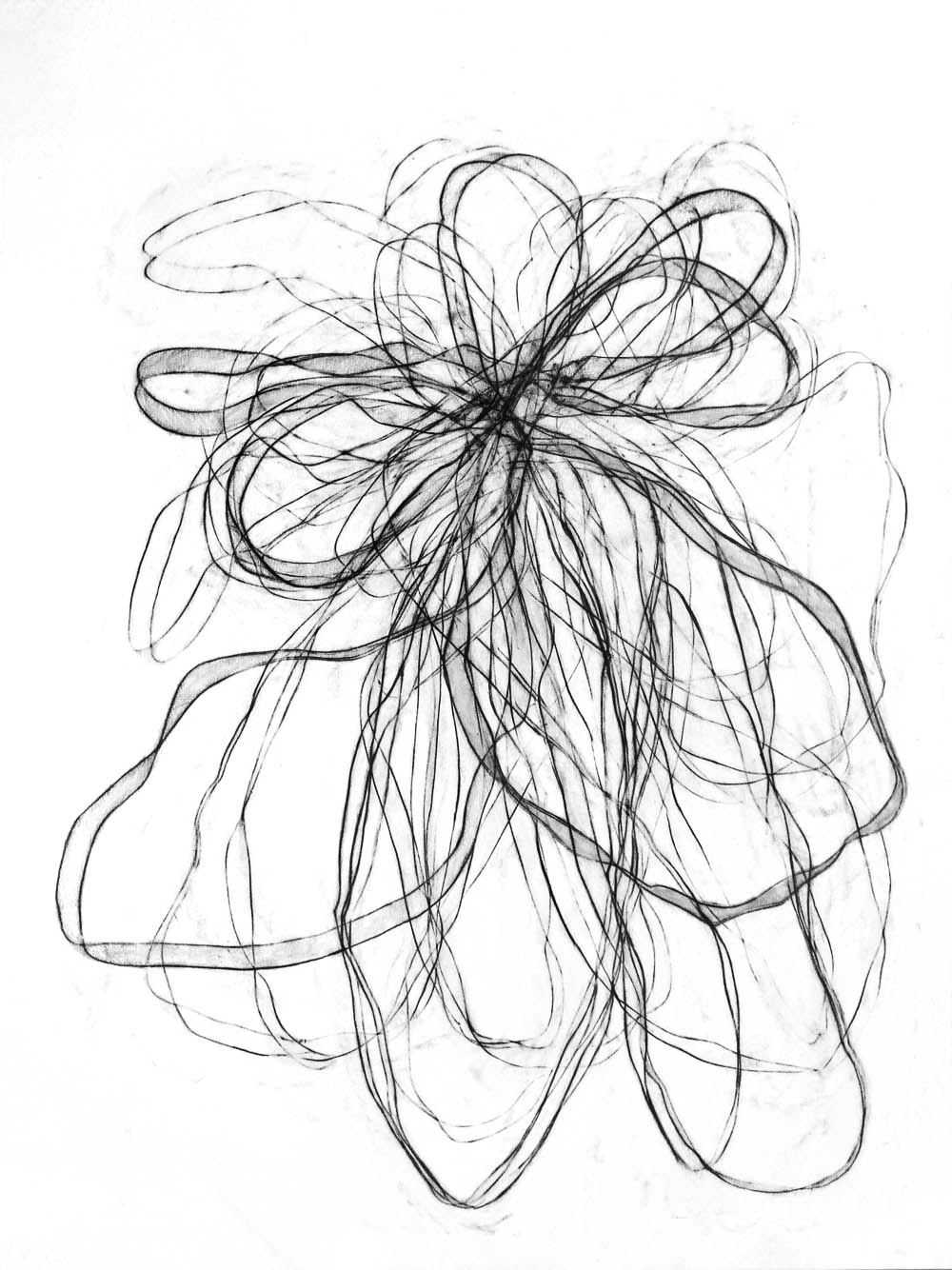
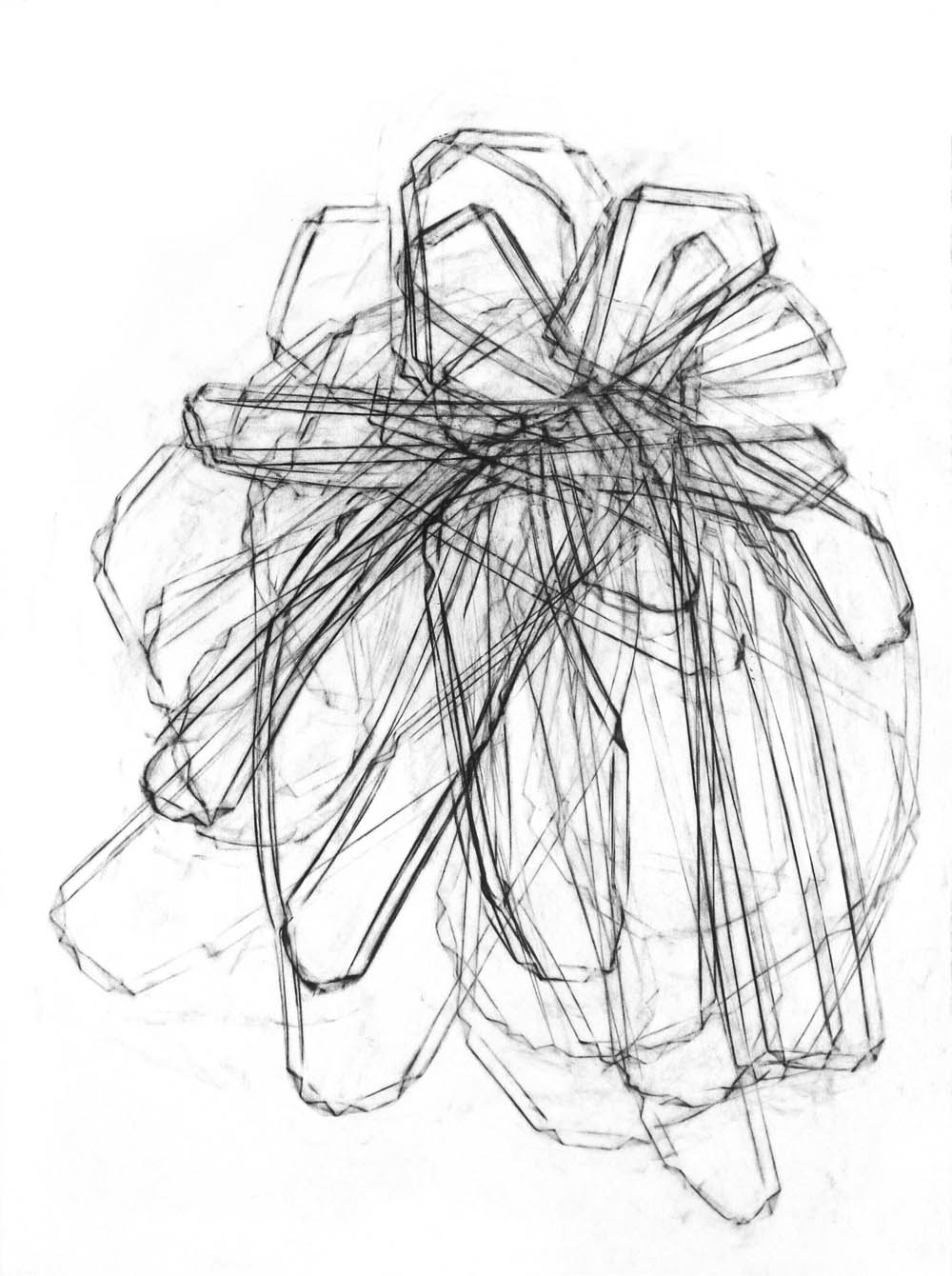
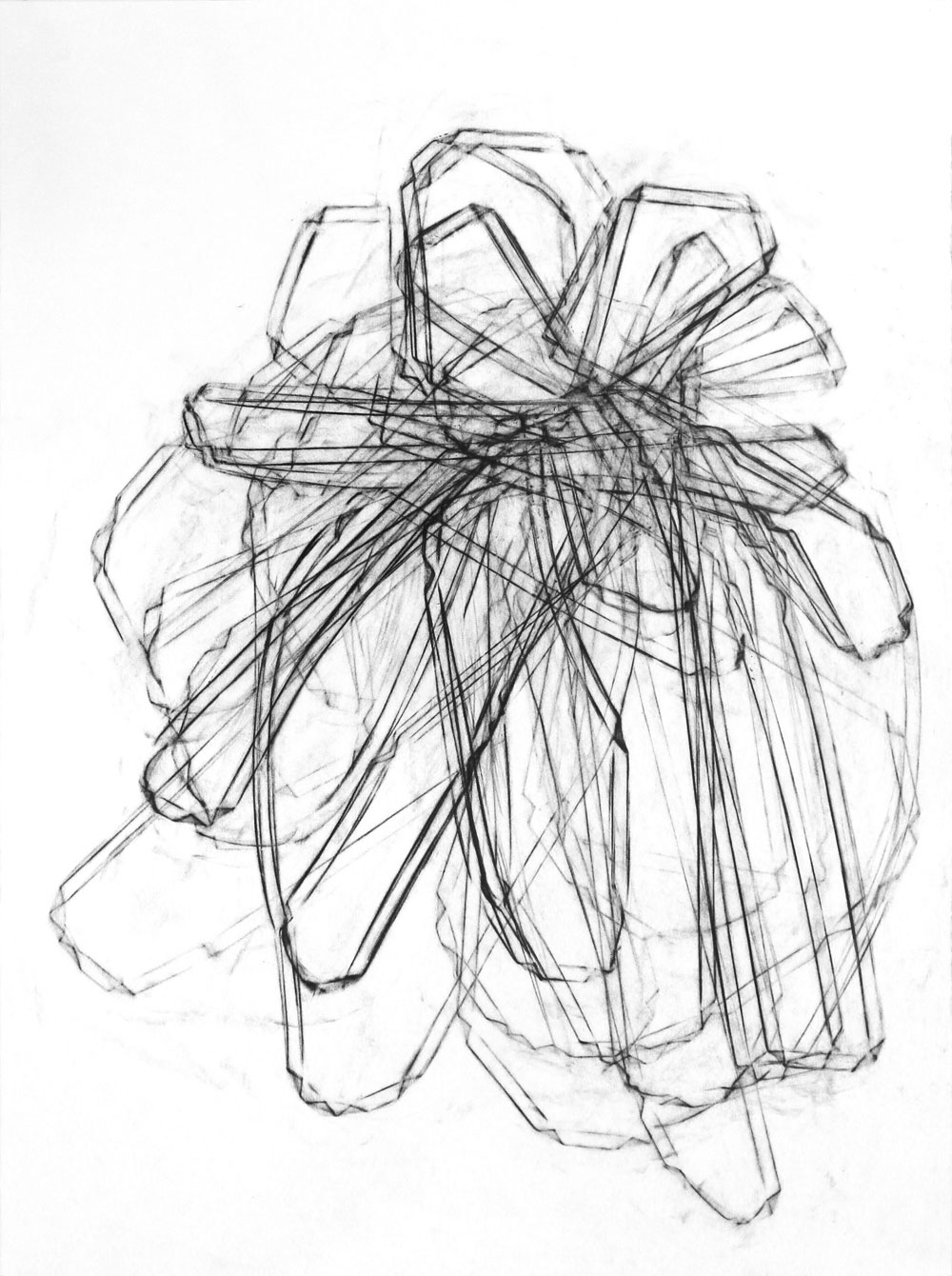
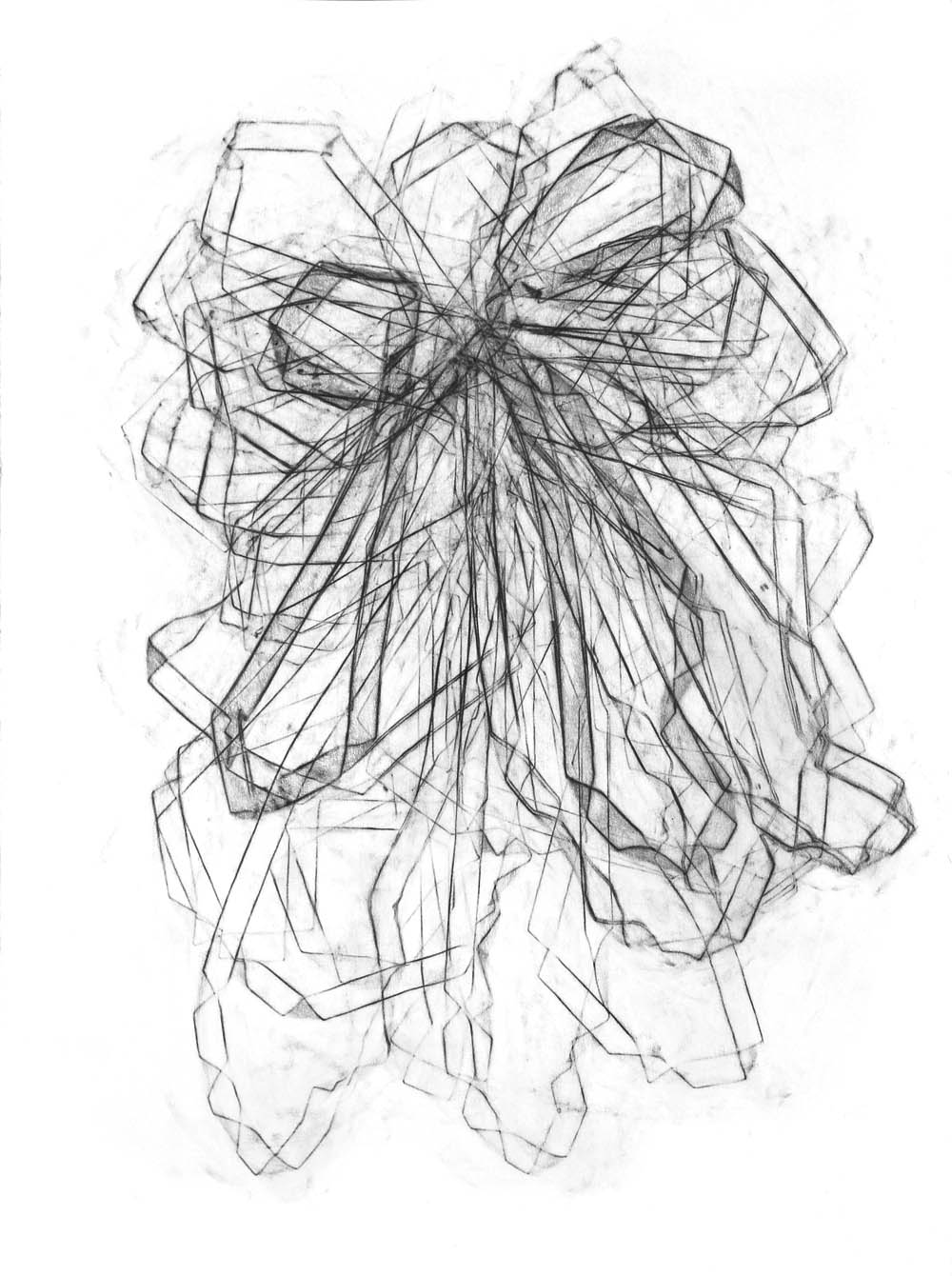
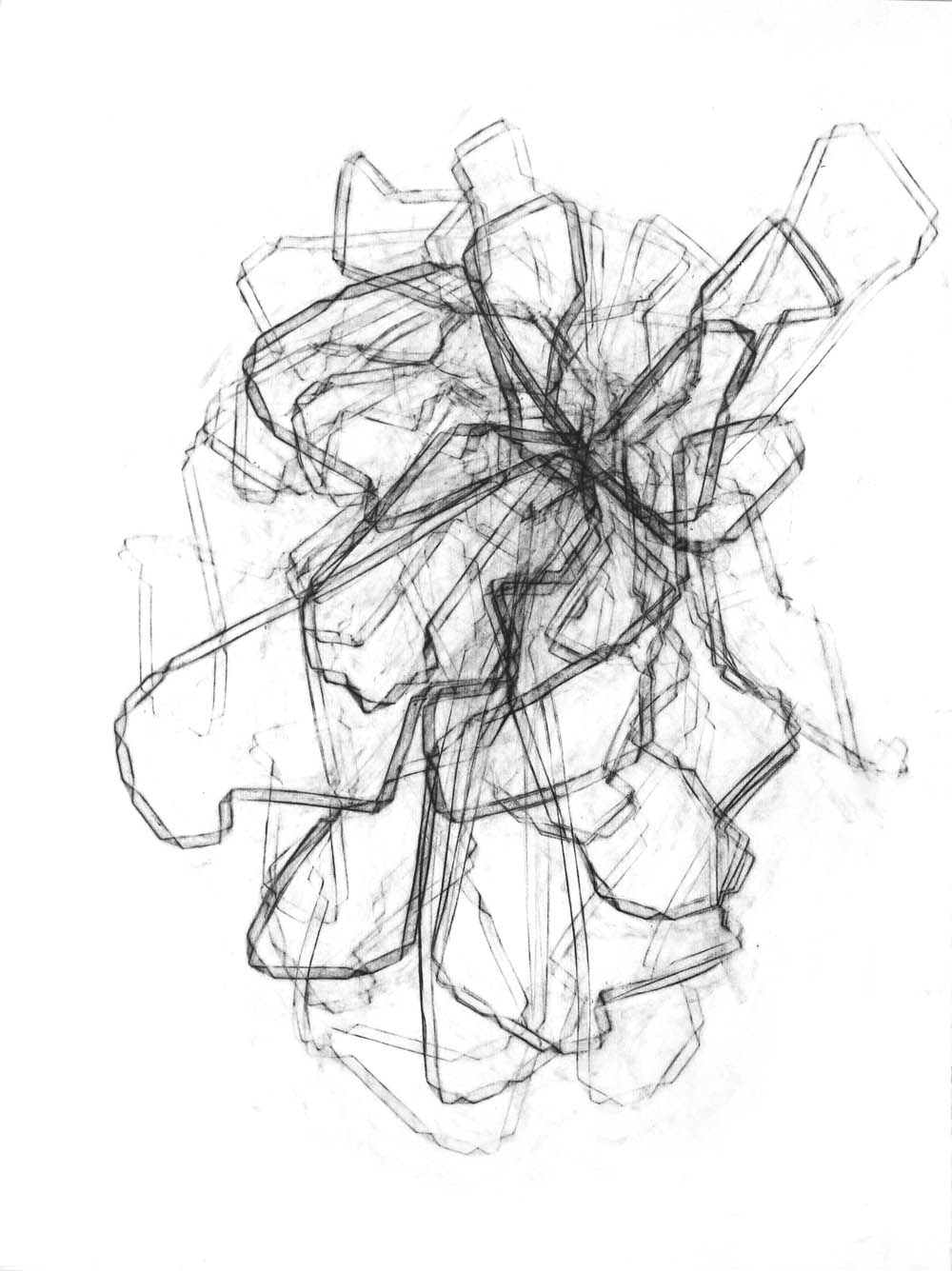
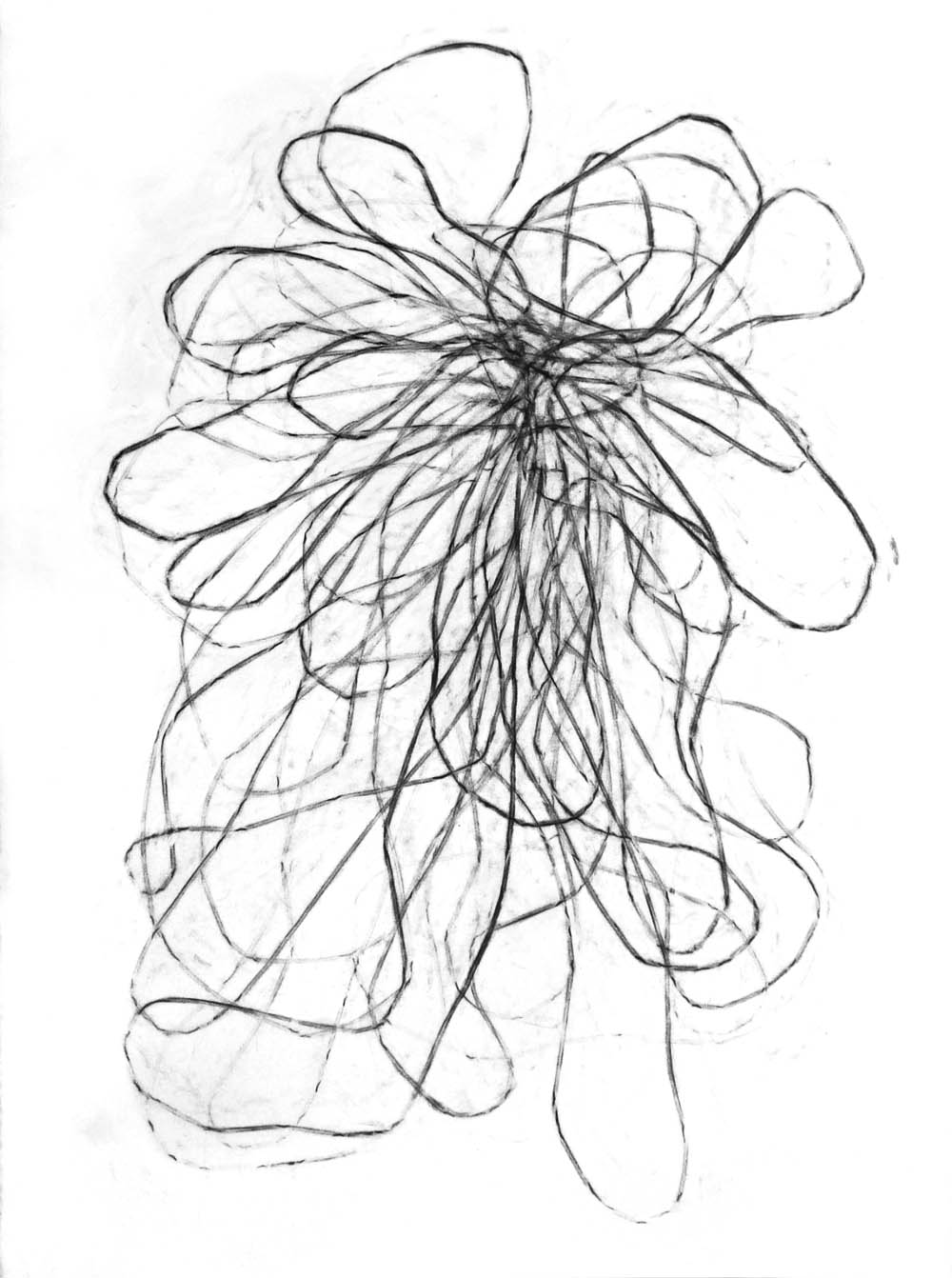
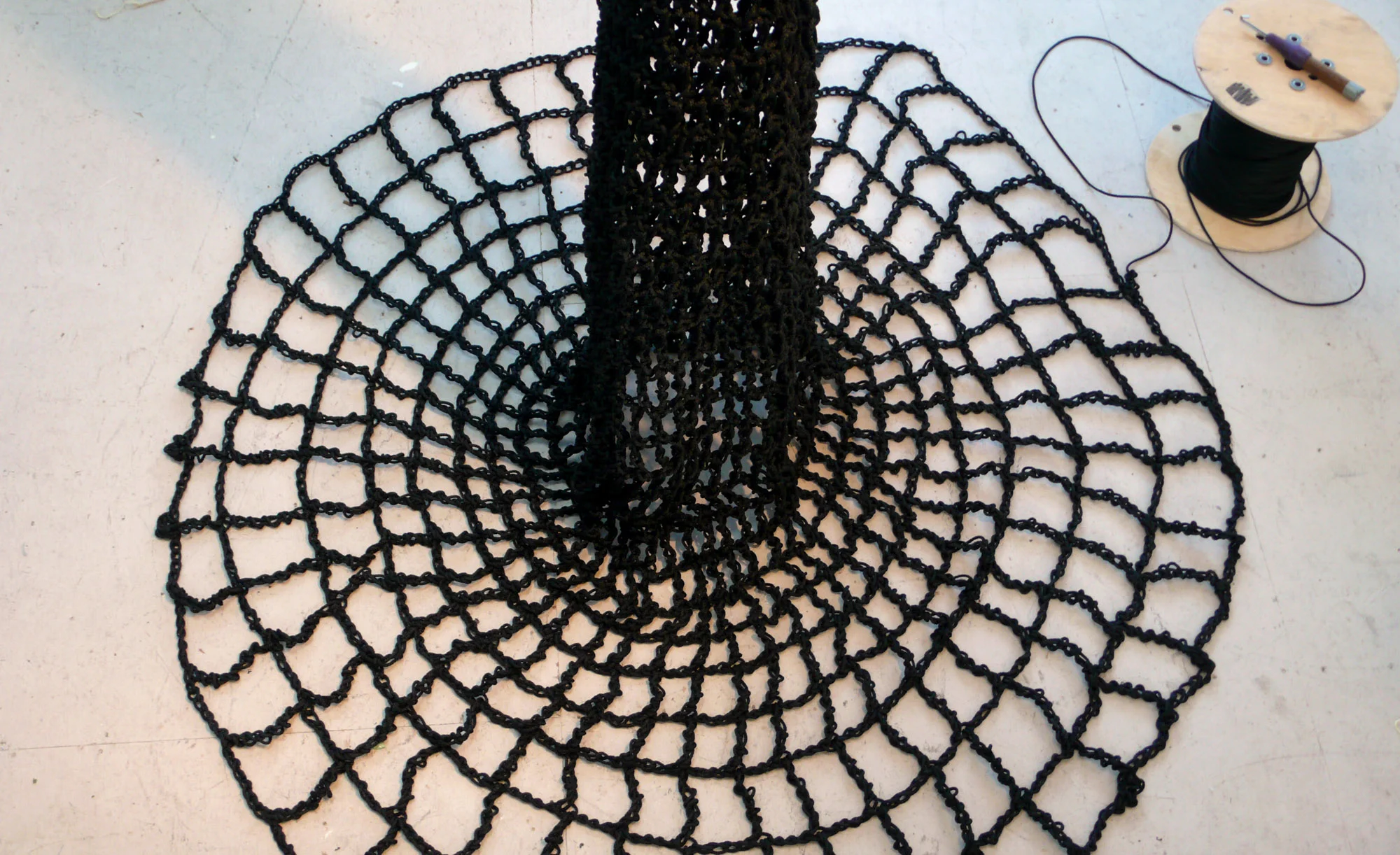
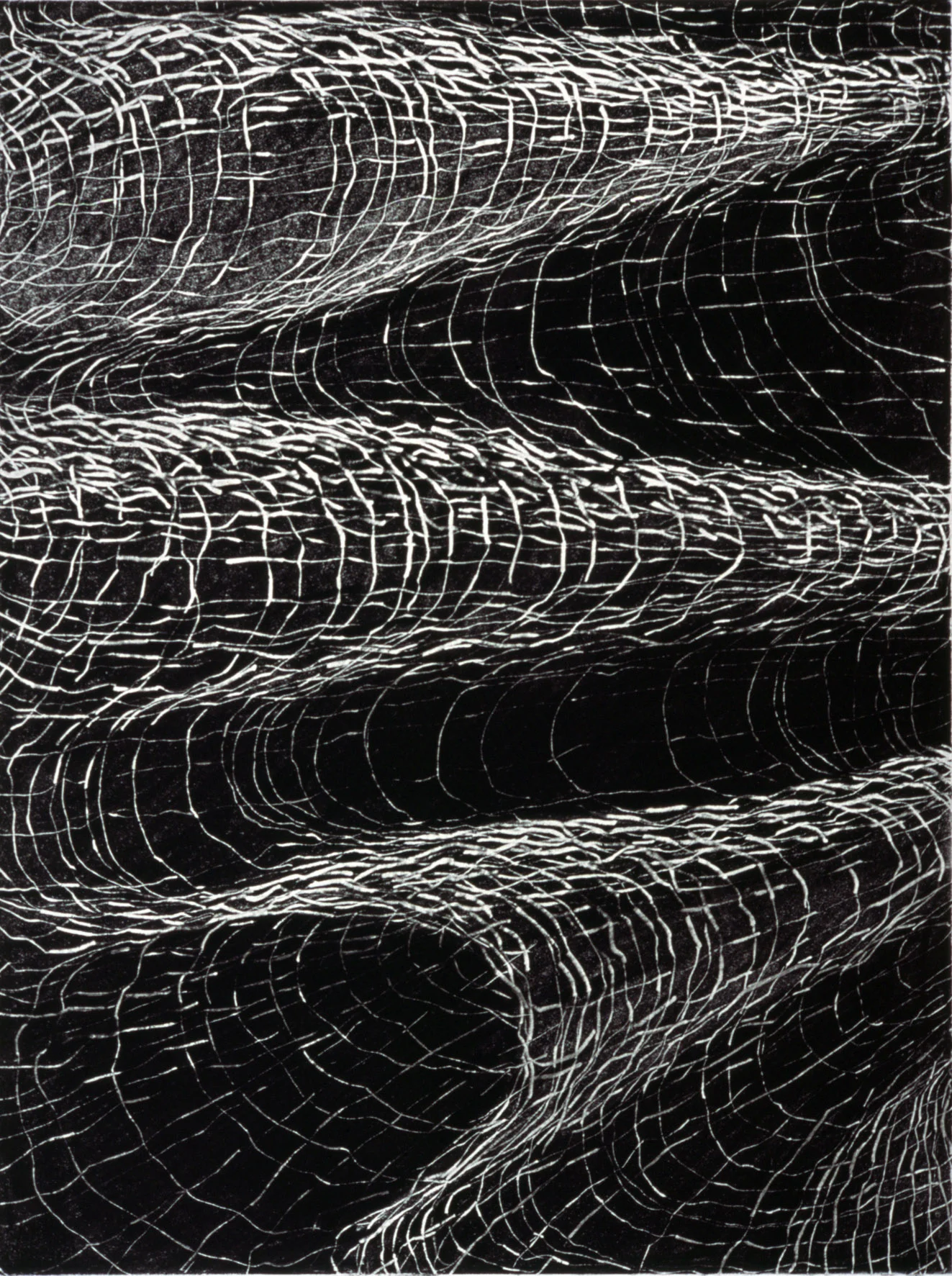
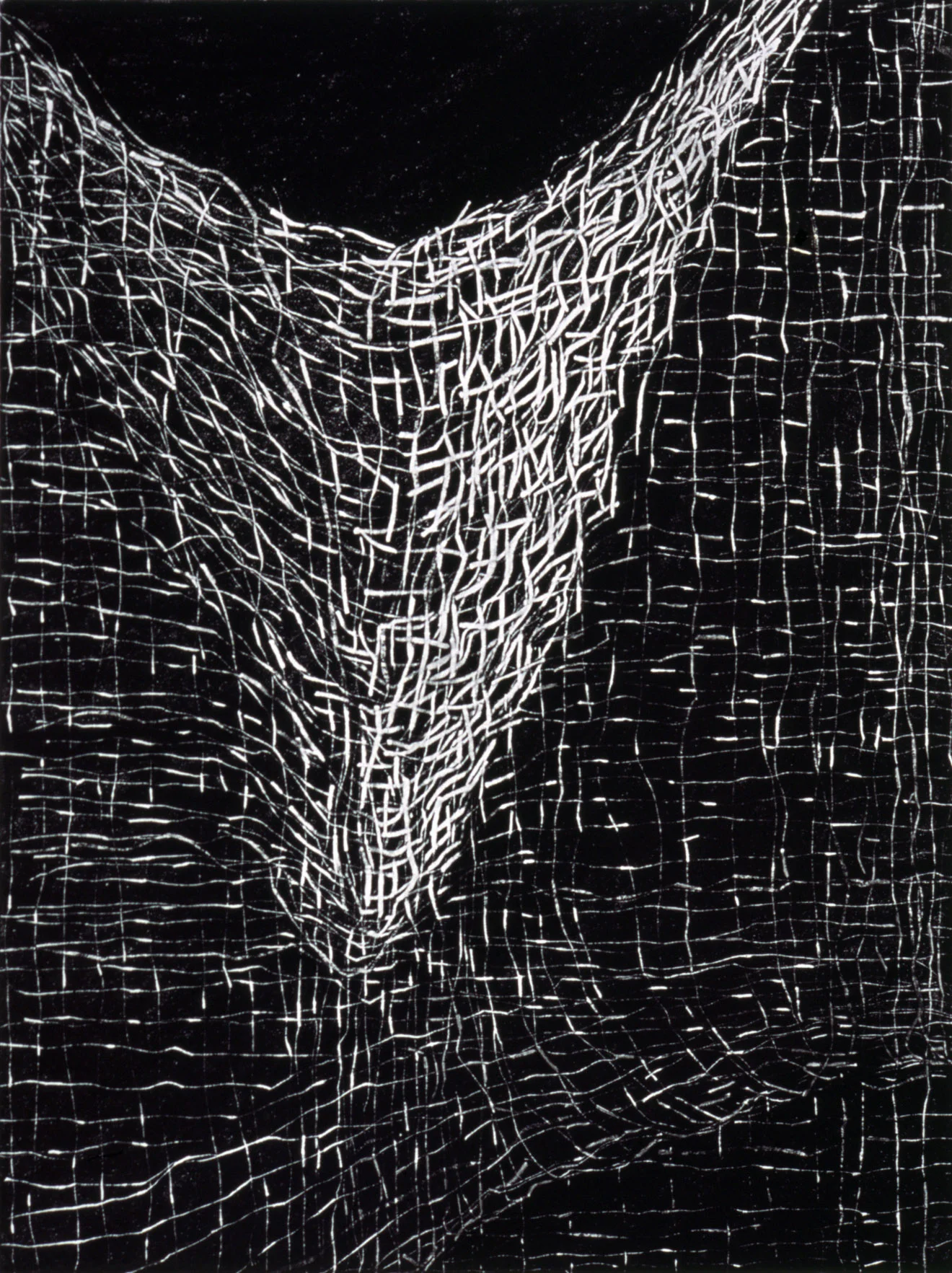
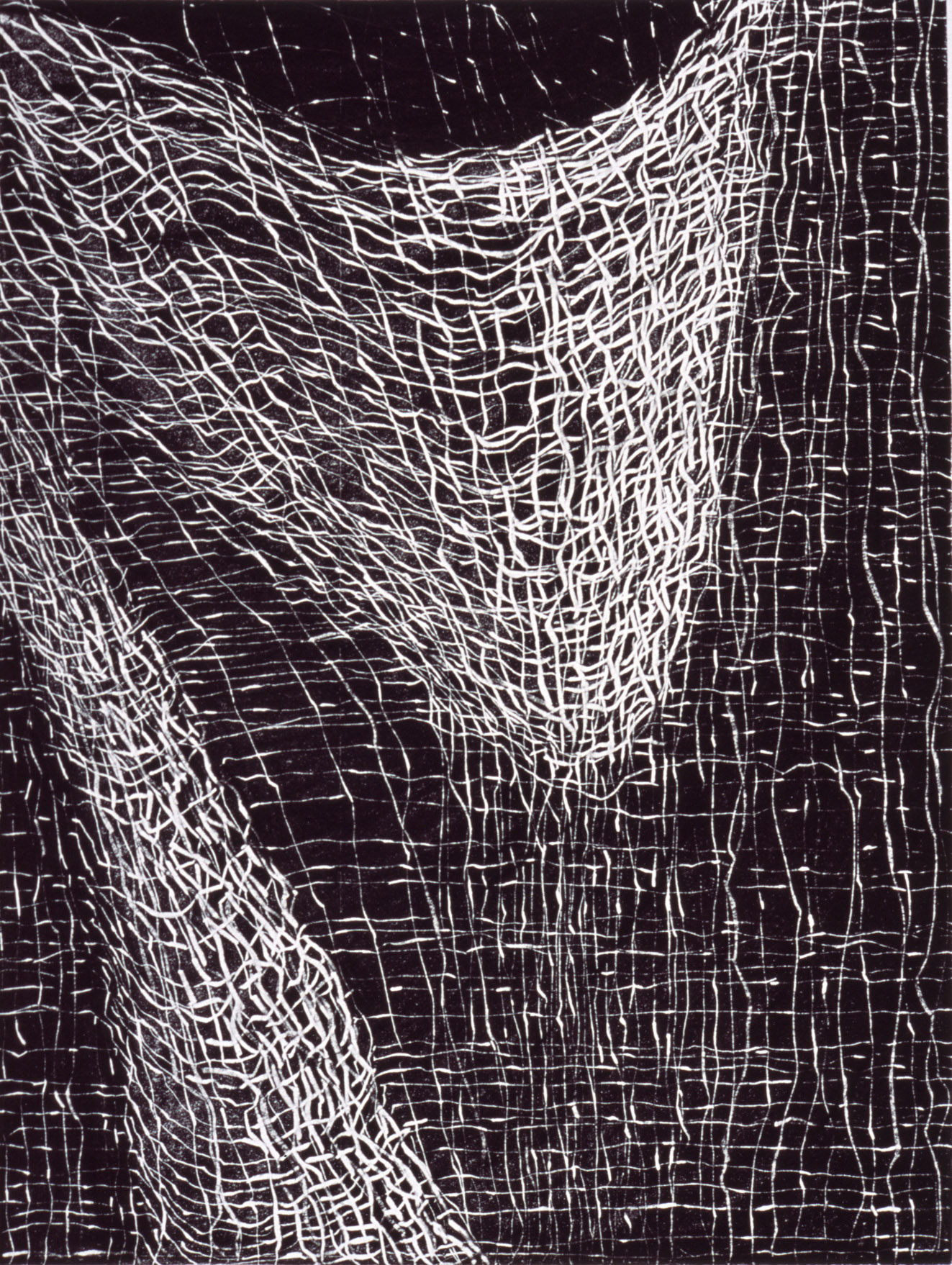
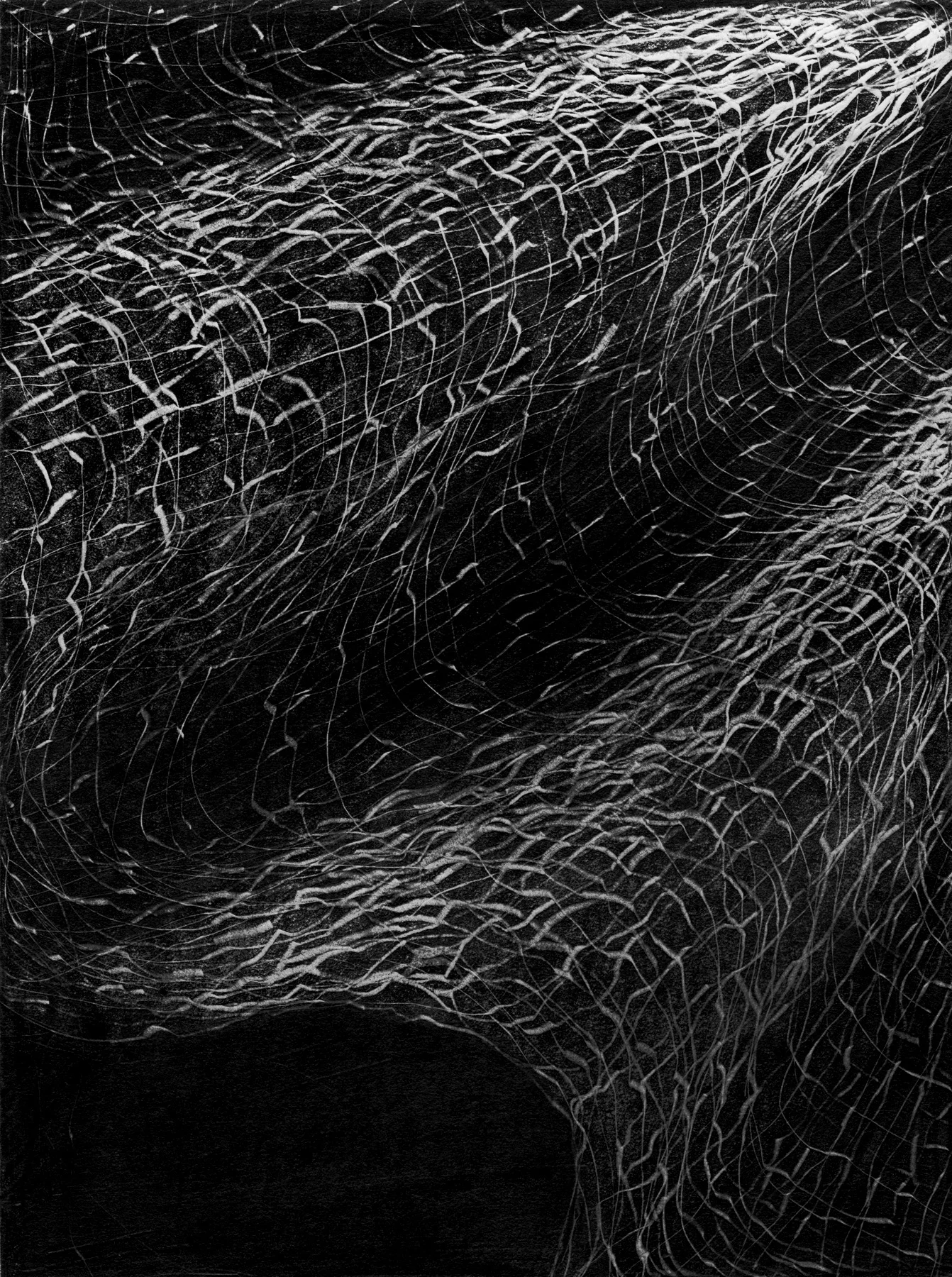
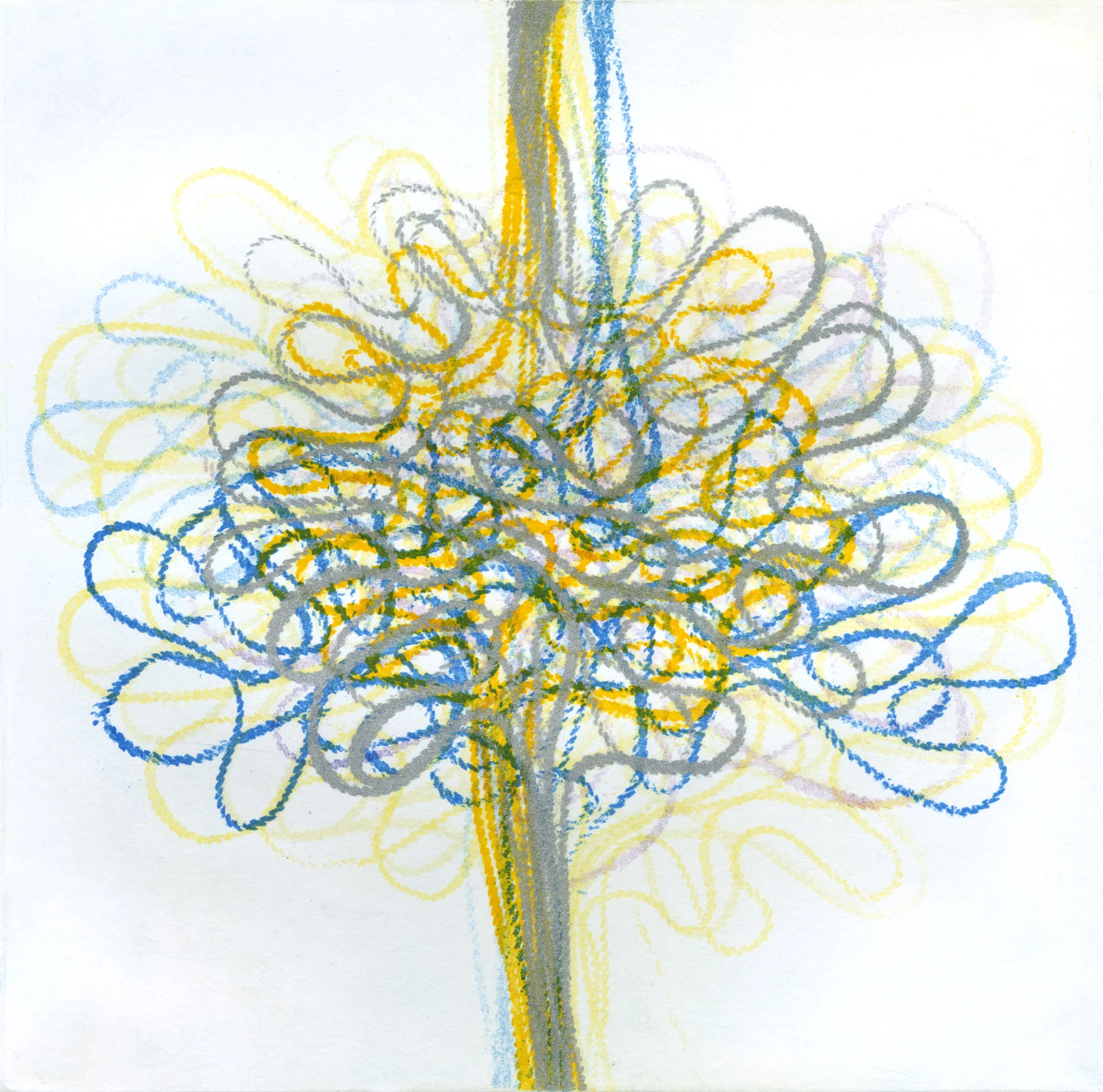
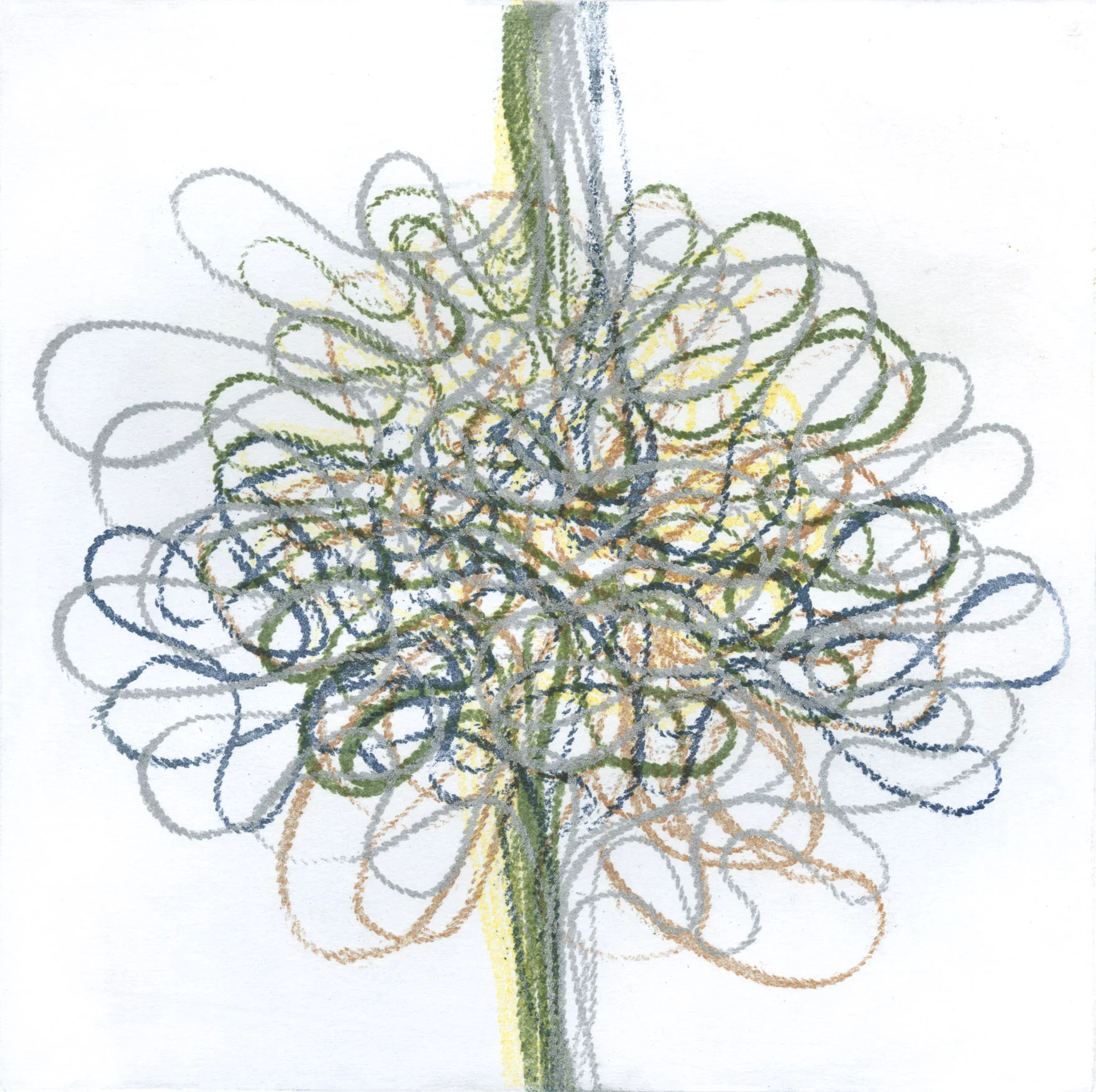
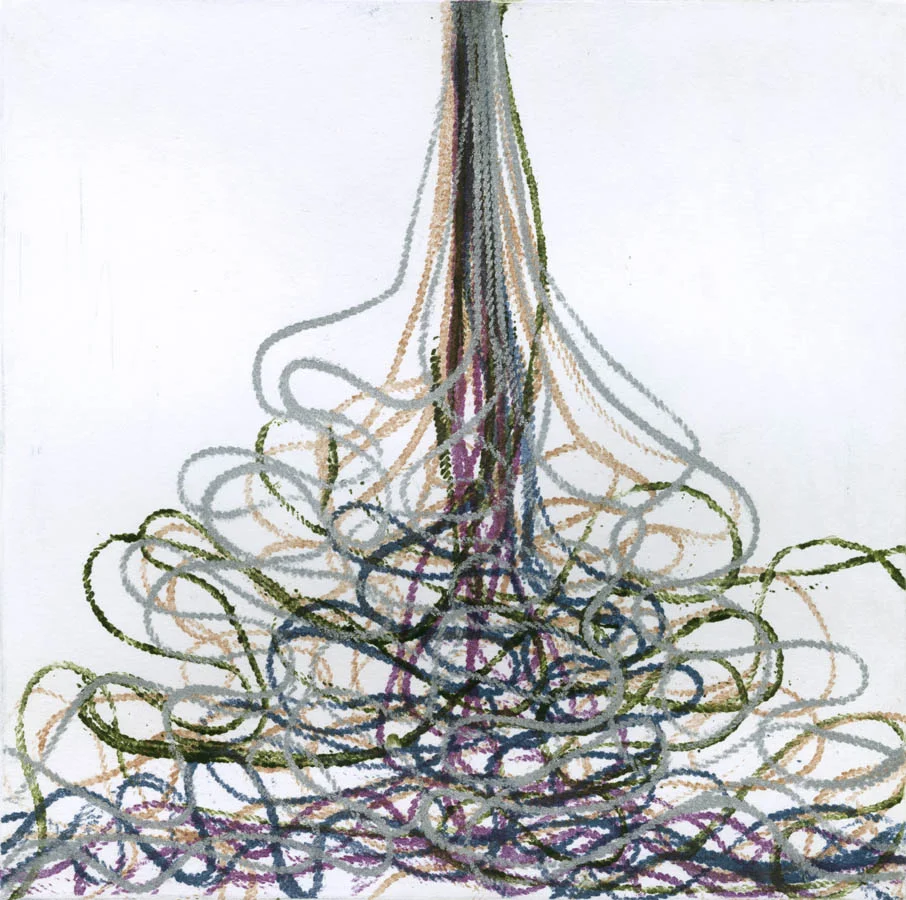
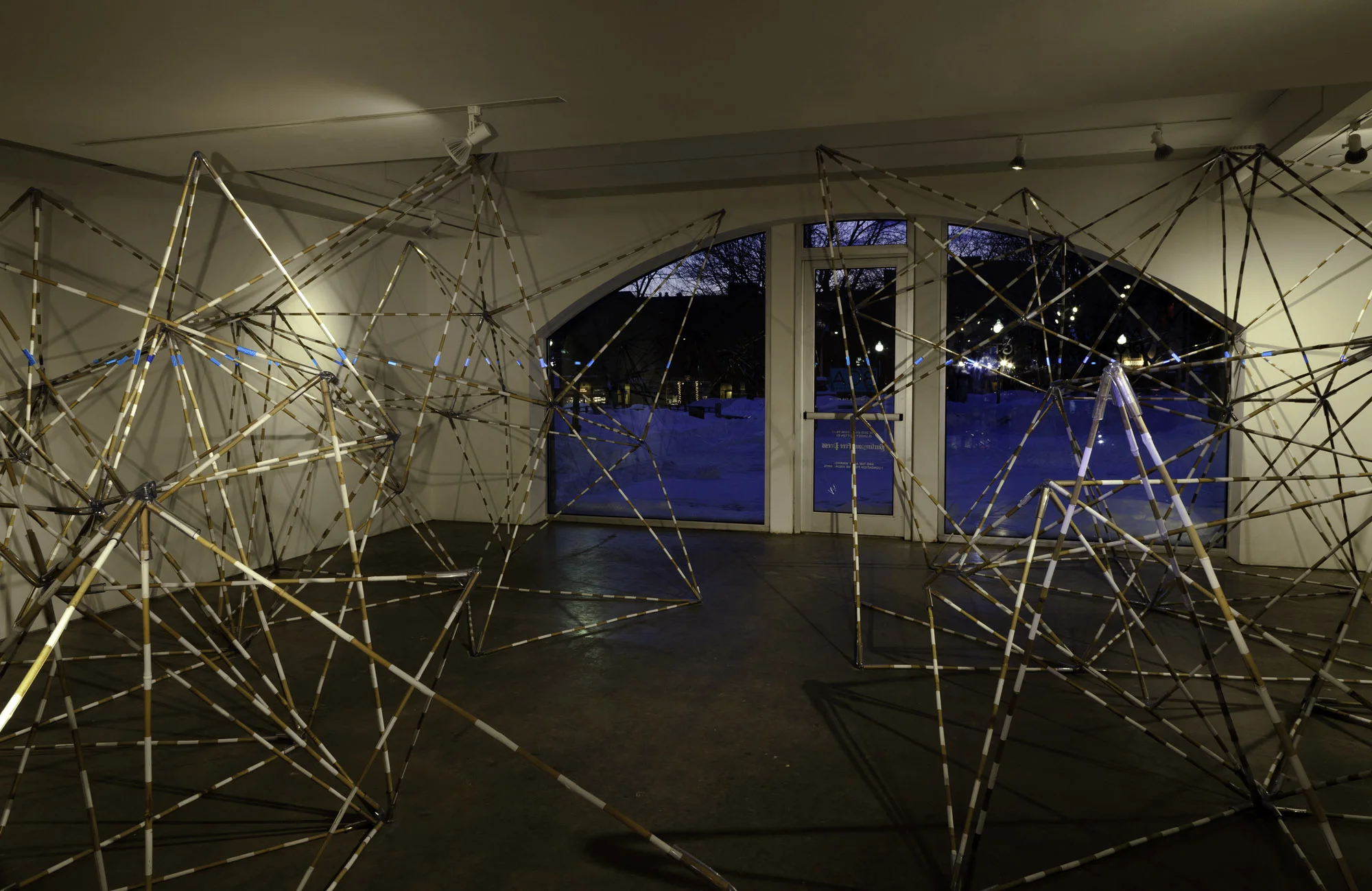
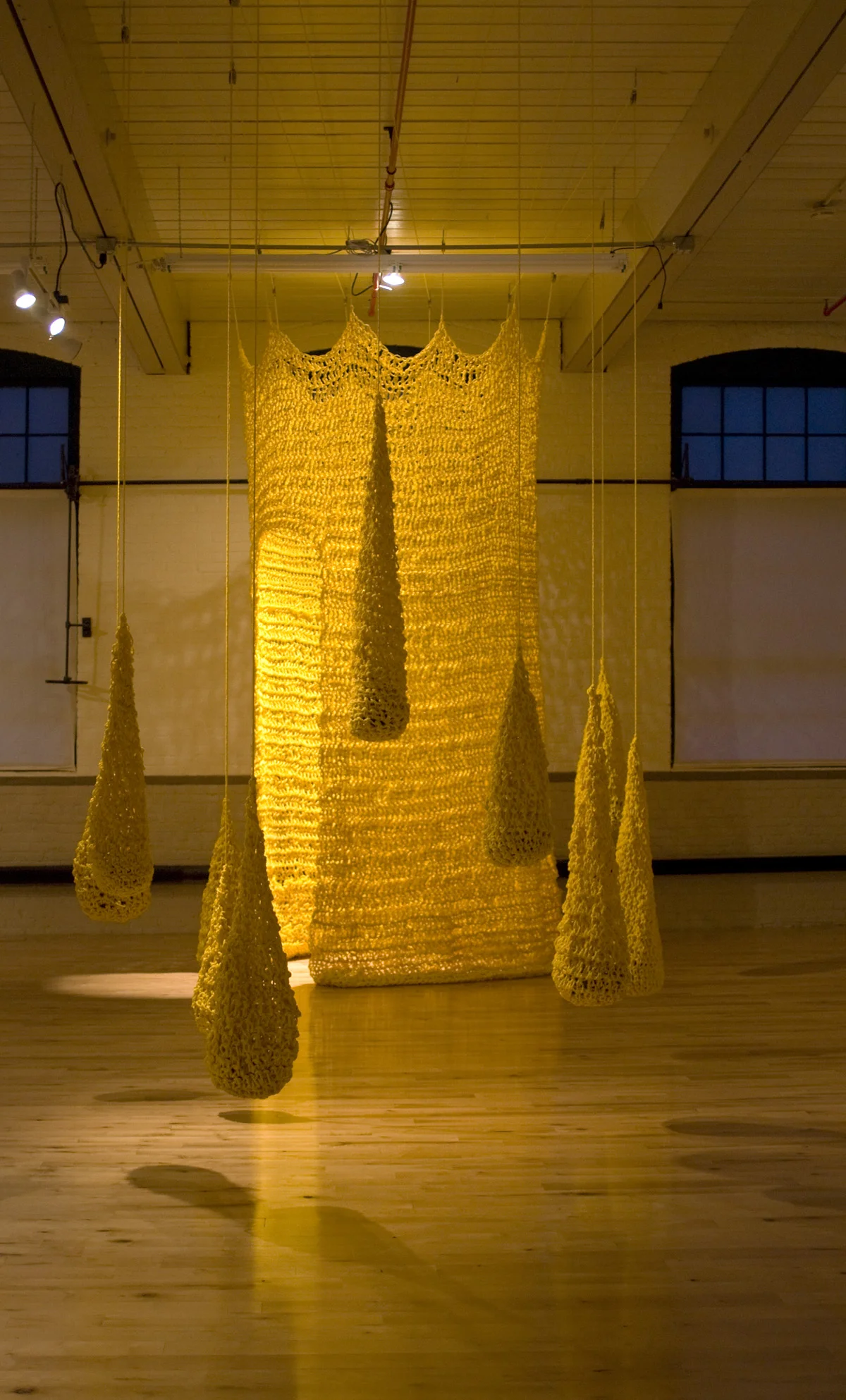
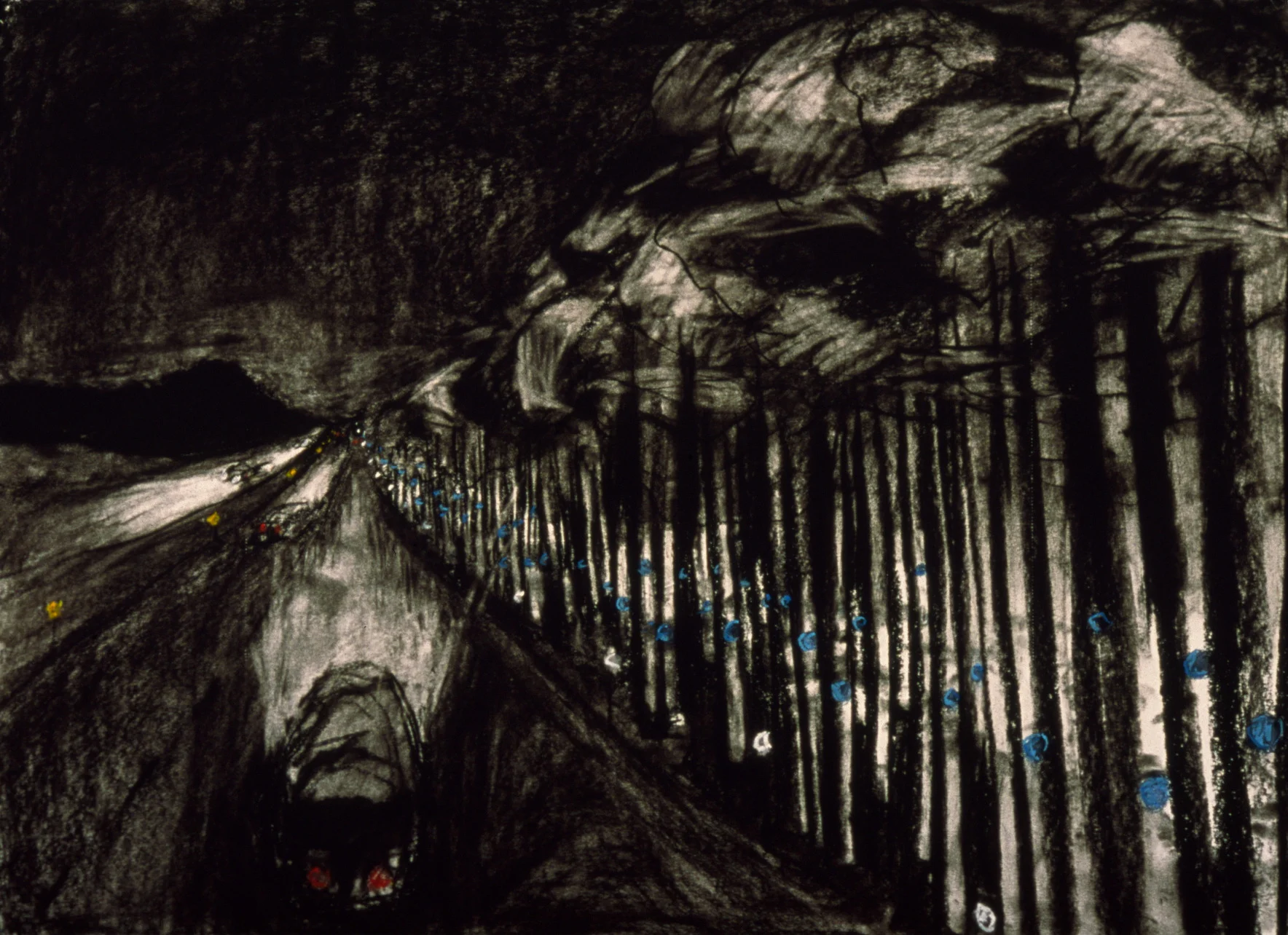
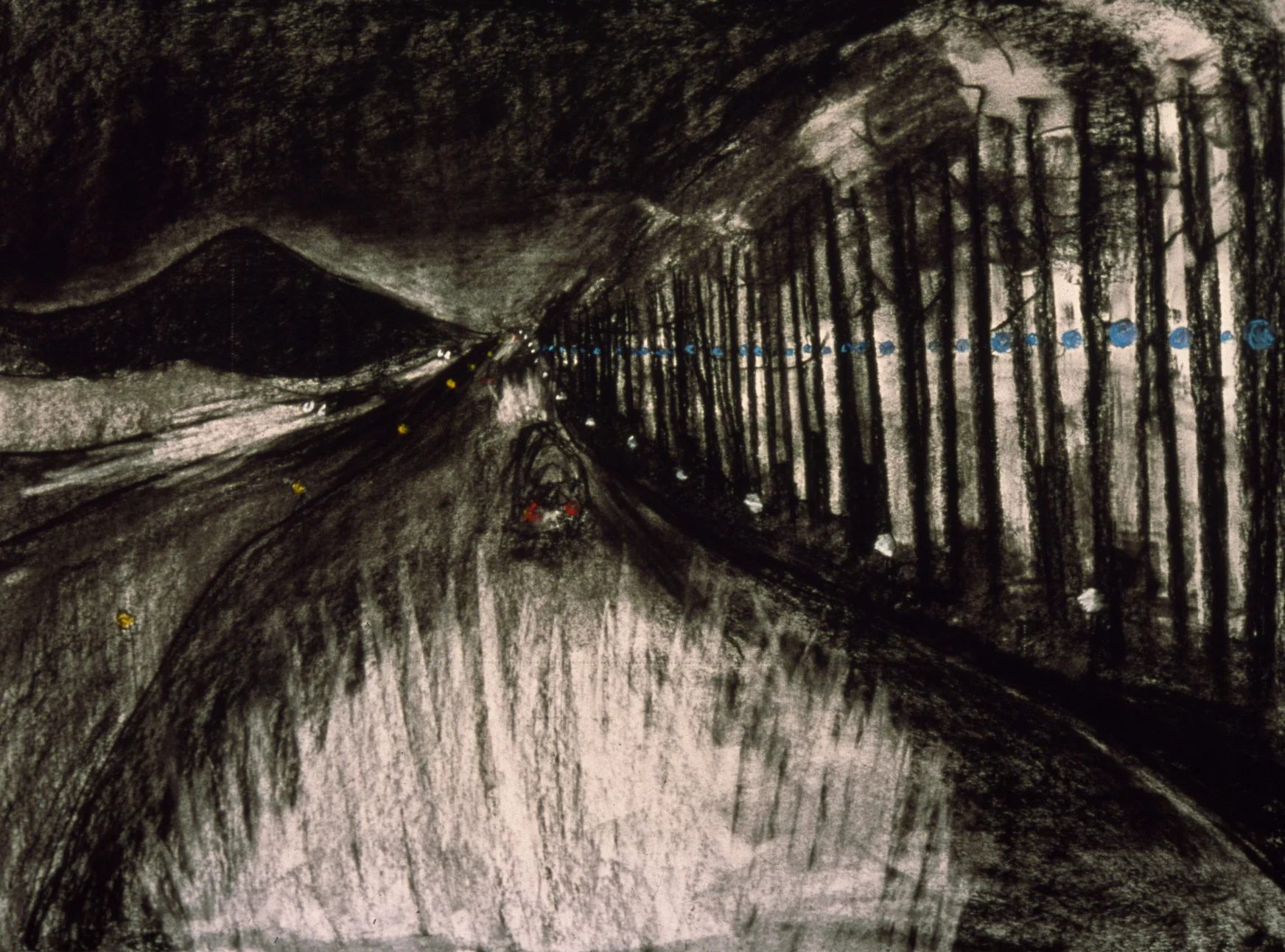
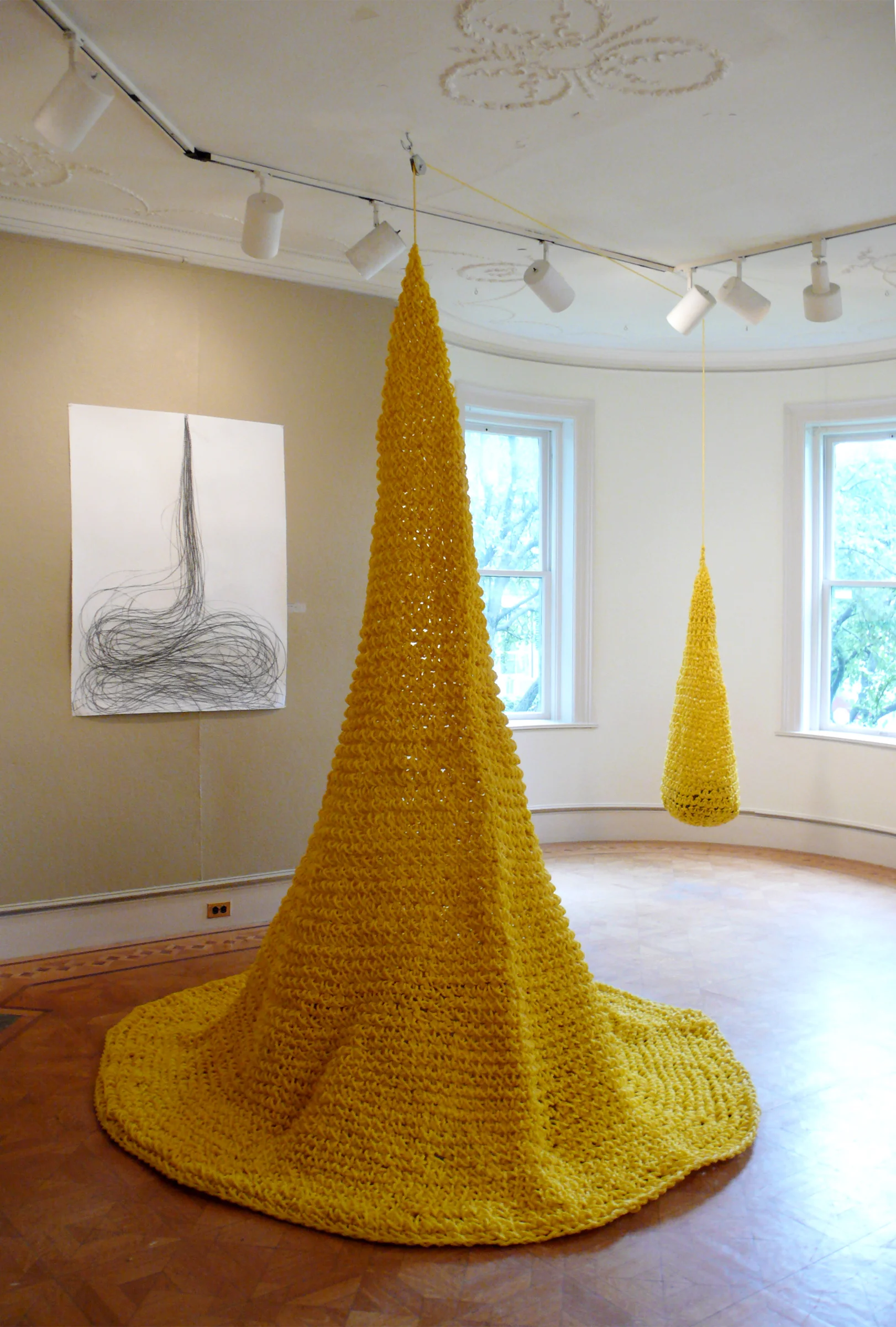
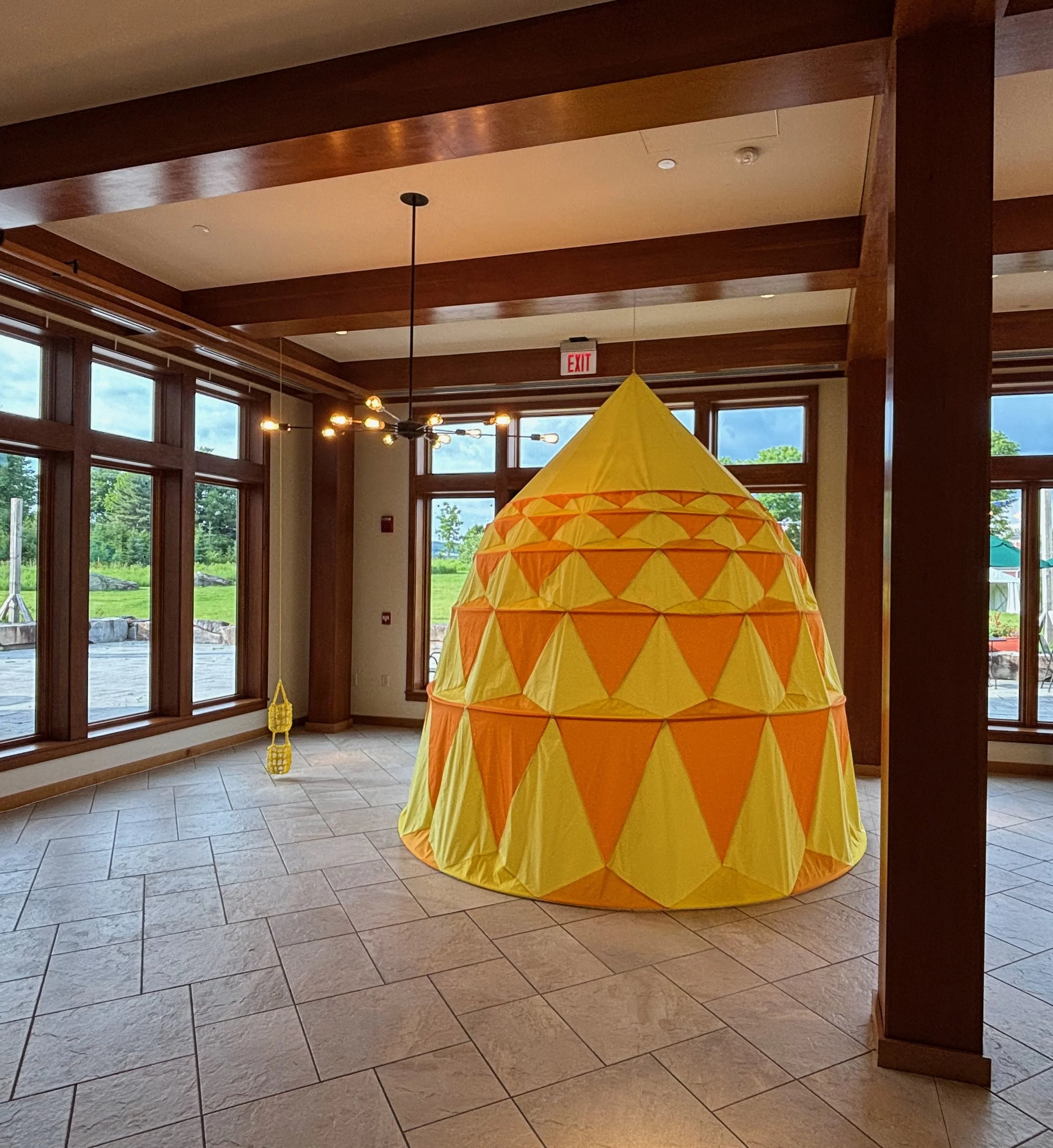
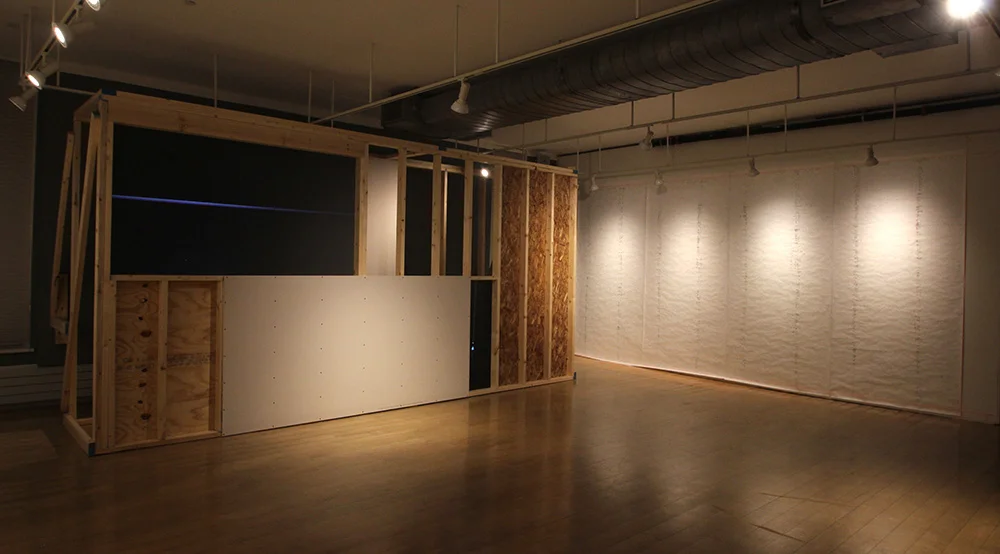
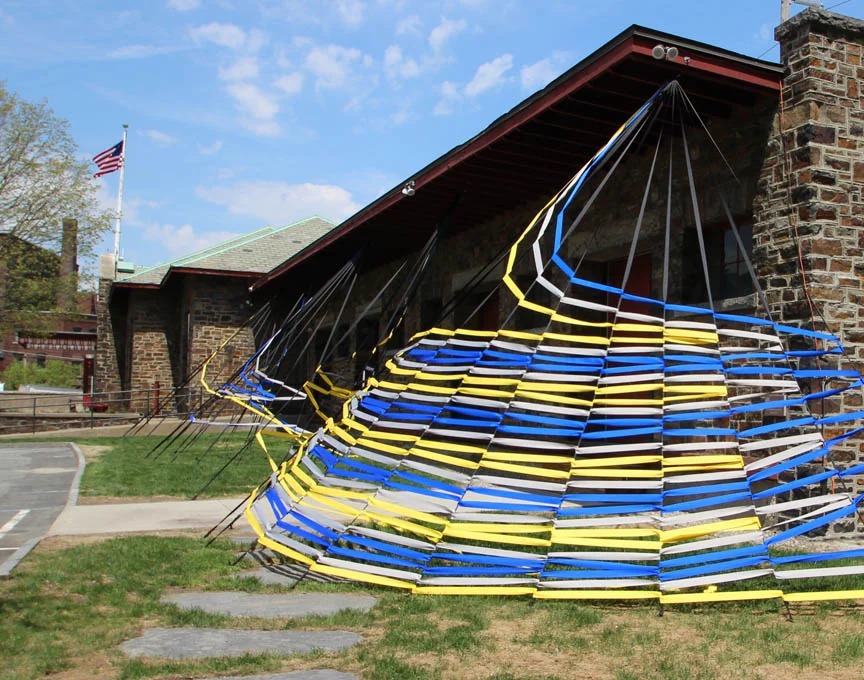
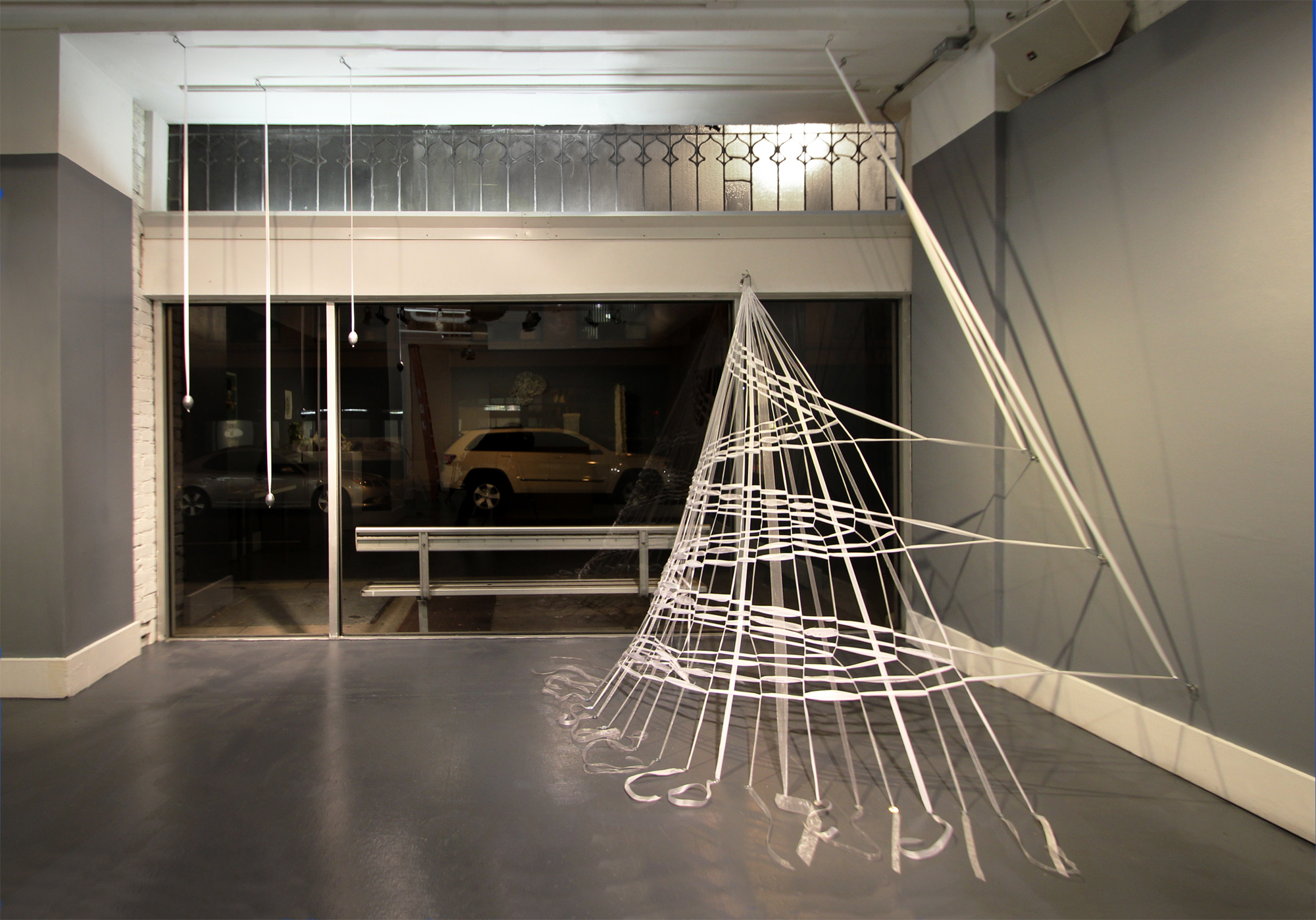
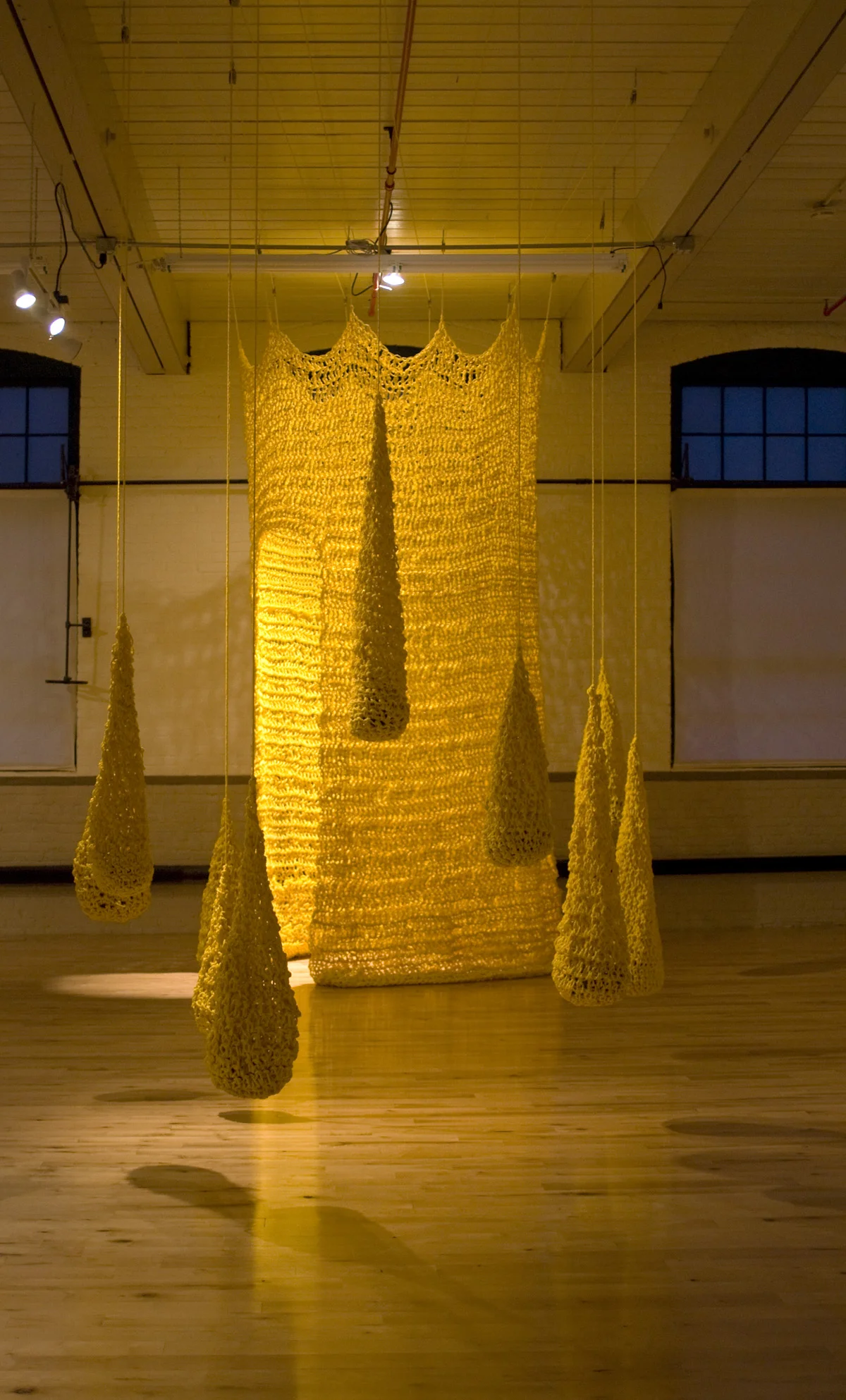
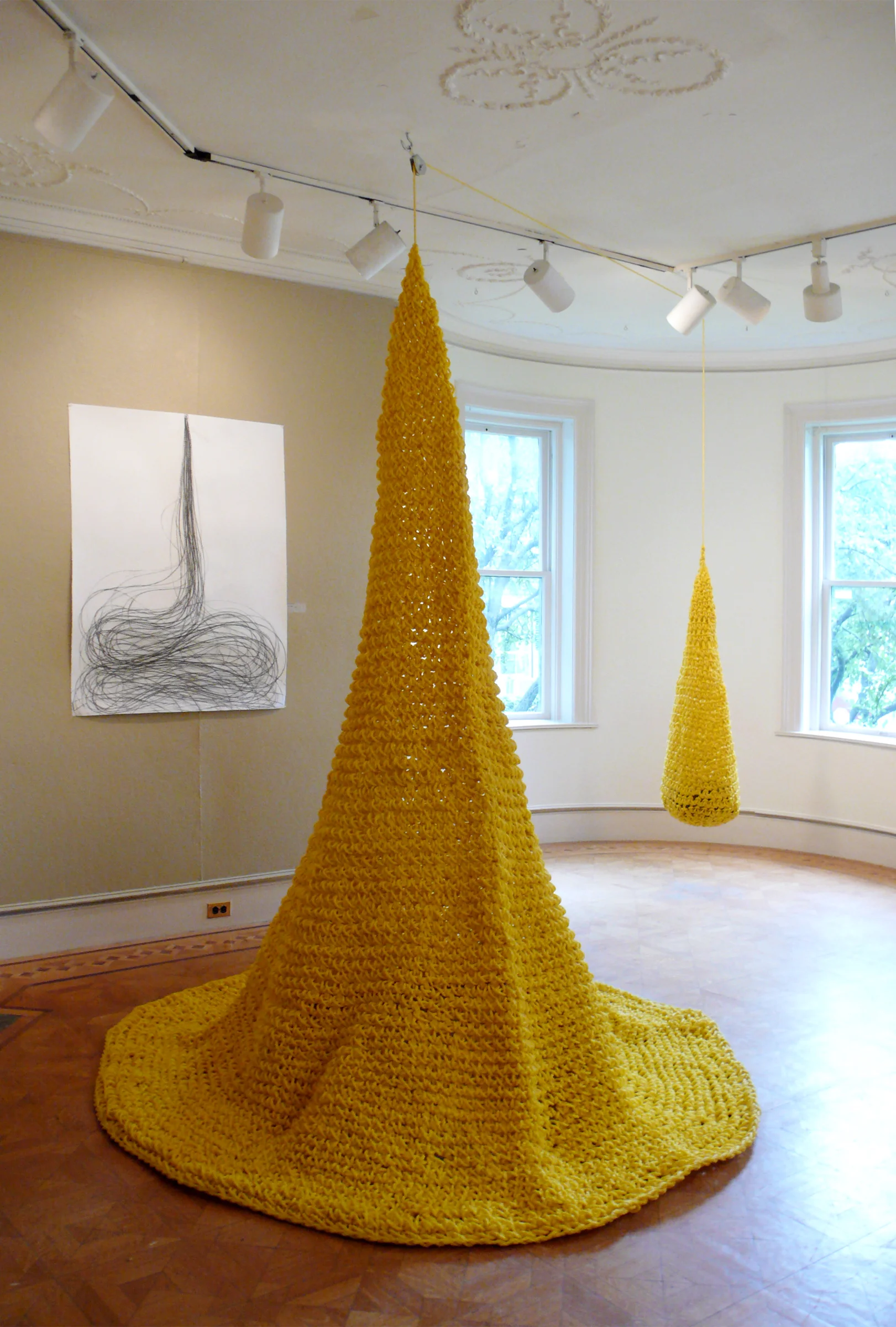
“Phase Change 1”, 10' diameter, 16’ wide (including counterweight), 9.5' high (variable), ripstop nylon fabric, nylon cord, PEX tubing, two trimmed plastic Poland Spring water bottles, water, metal pulleys, and hardware. 2026
The title of this installation, Phase Change, refers to the scientific term for the physical transformation of matter from one state to another (solid, liquid, vapor, or plasma). In this artwork, water gradually evaporates into vapor over the course of the exhibition. The water is stored in two stacked vessels within the crocheted yellow net. This assembly serves as a counterweight to the fabric’s conical form, holding it in tension. The weight of the water-filled vessel is equal to the weight of the yellow and orange fabric structure; the two are in balance. As the water evaporates, the counterweight becomes lighter and rises while the conical form descends, transferring some of its weight to the floor. Equilibrium is maintained, but slow collapse is the outcome. The rate of change—the phase change—is influenced by weather conditions throughout the exhibition, particularly the humidity and temperature within the gallery.
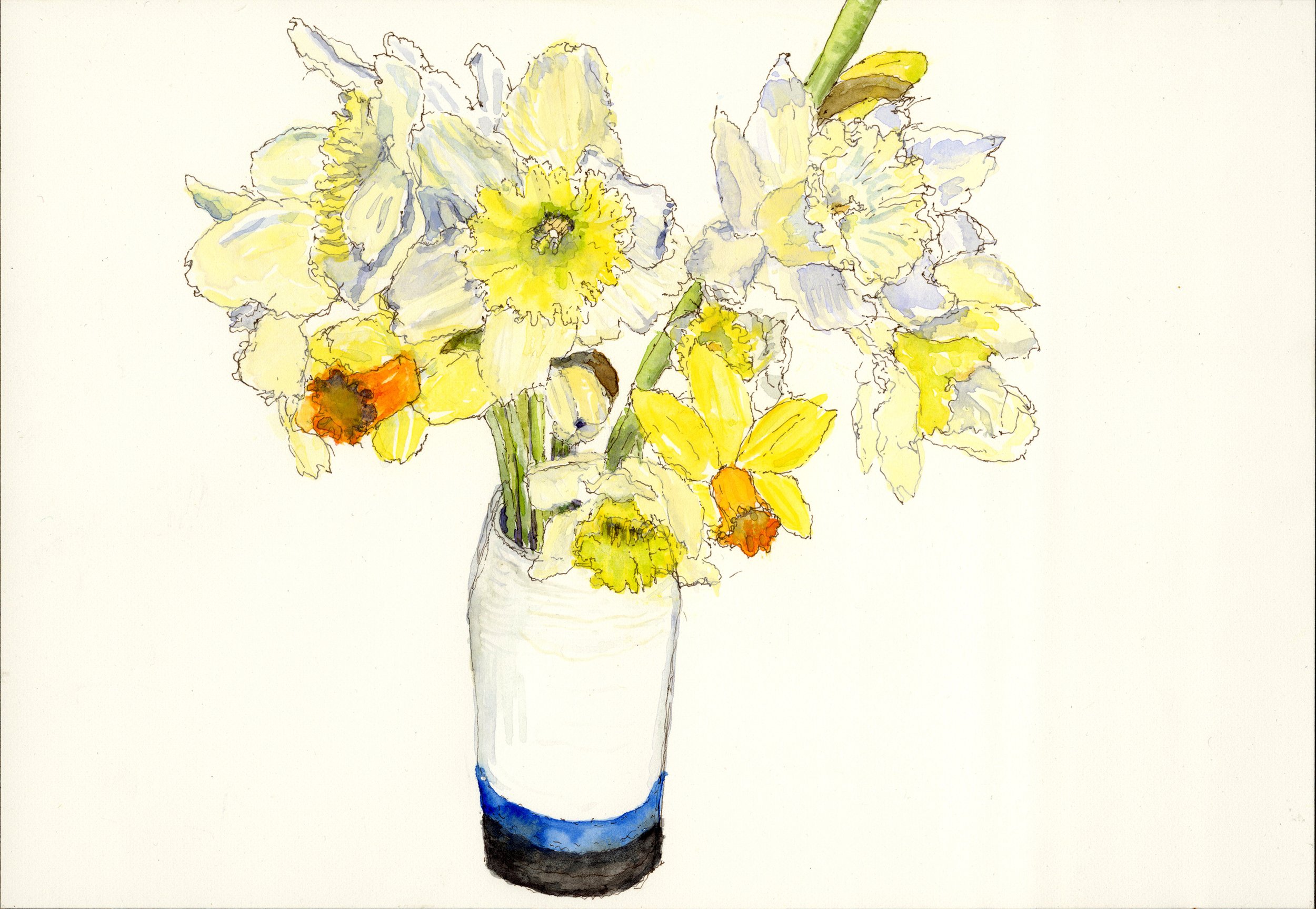
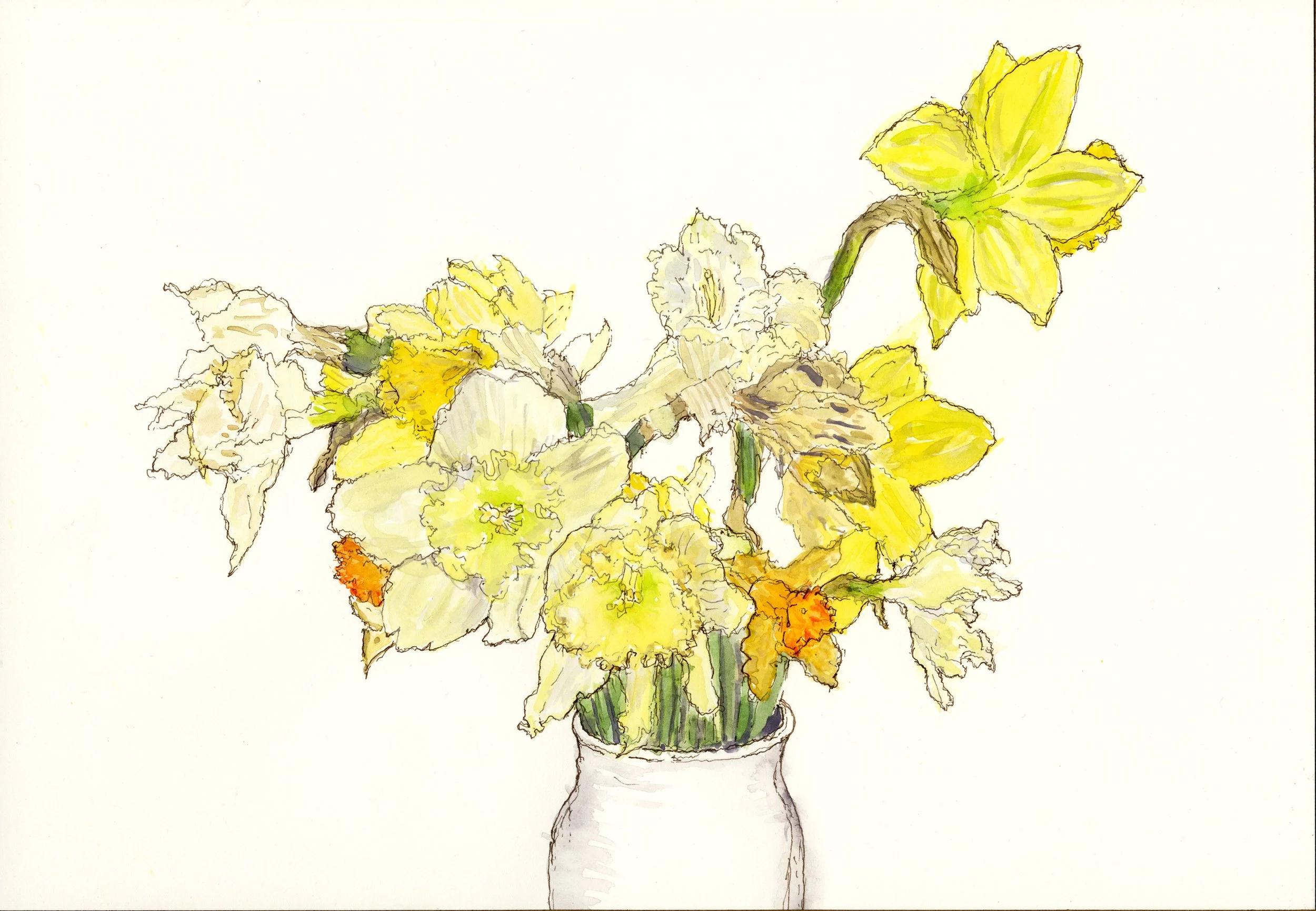
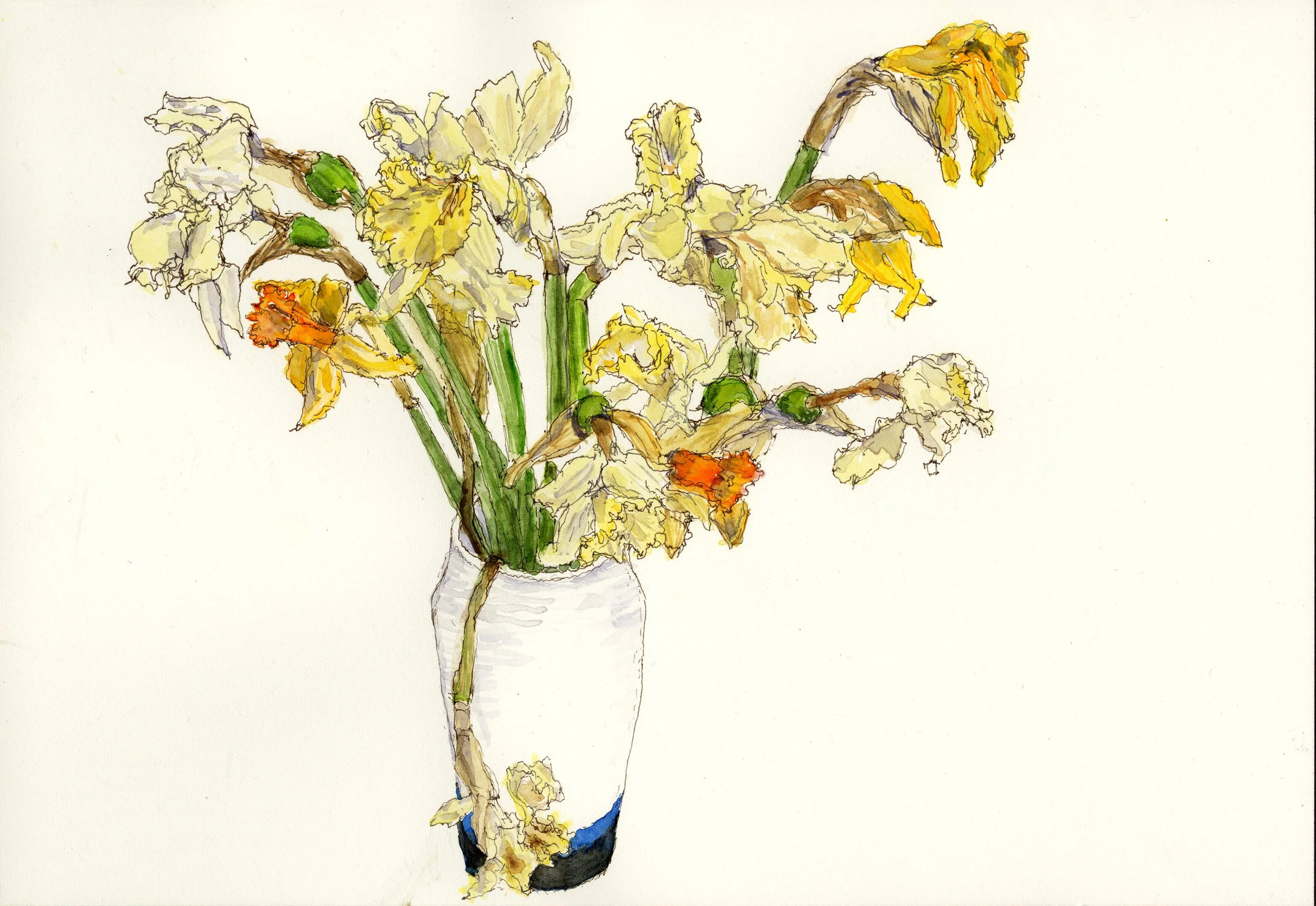
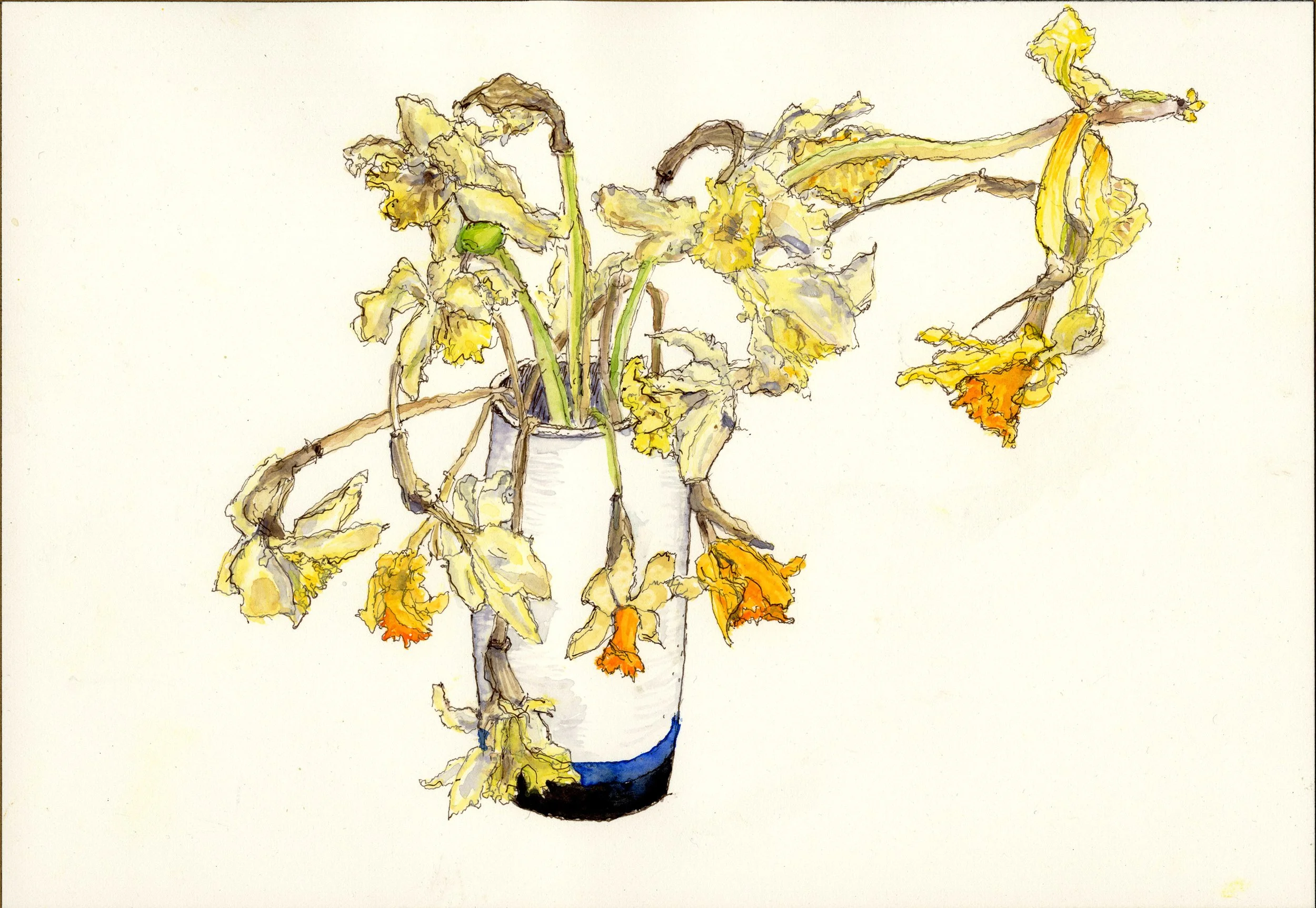
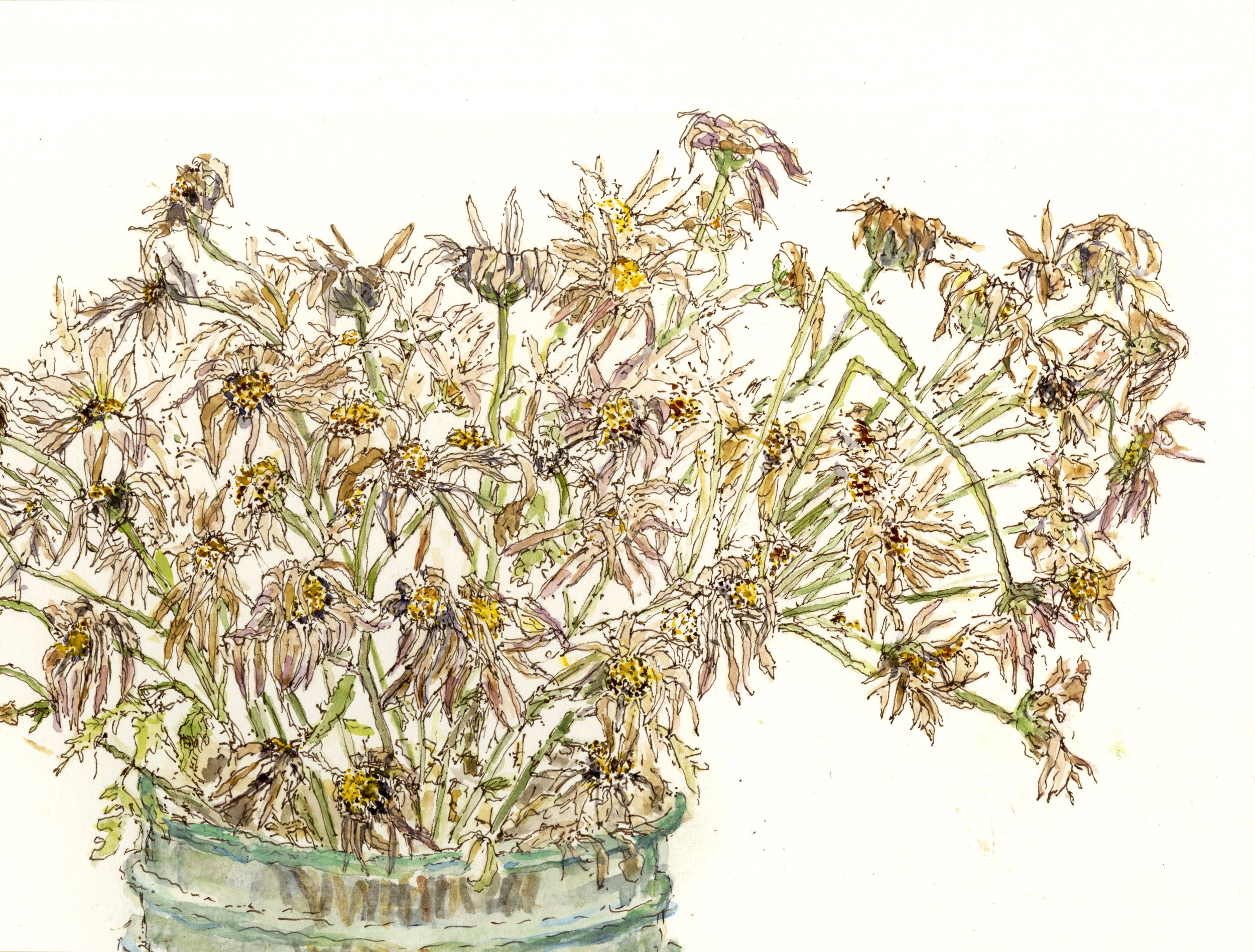
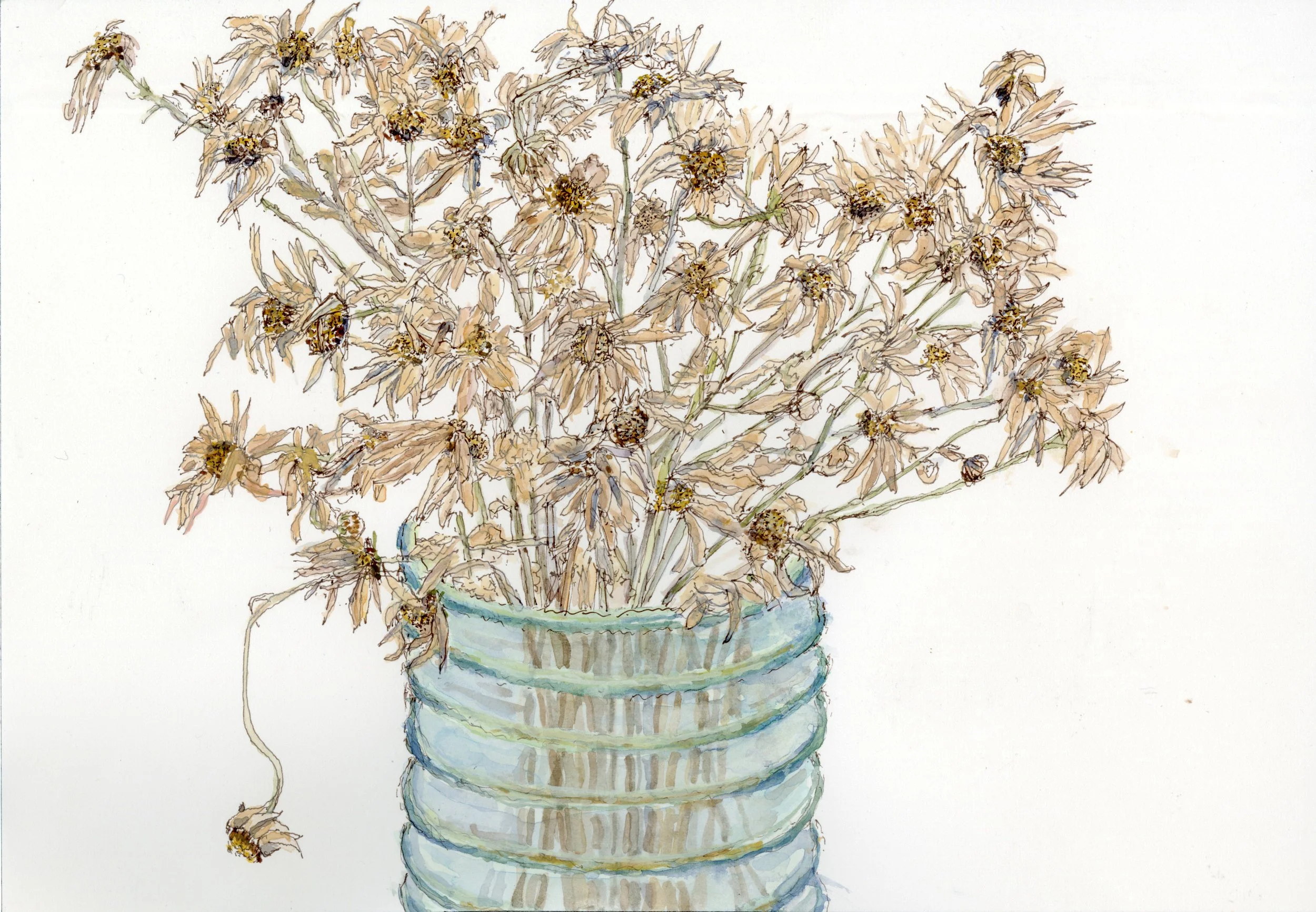
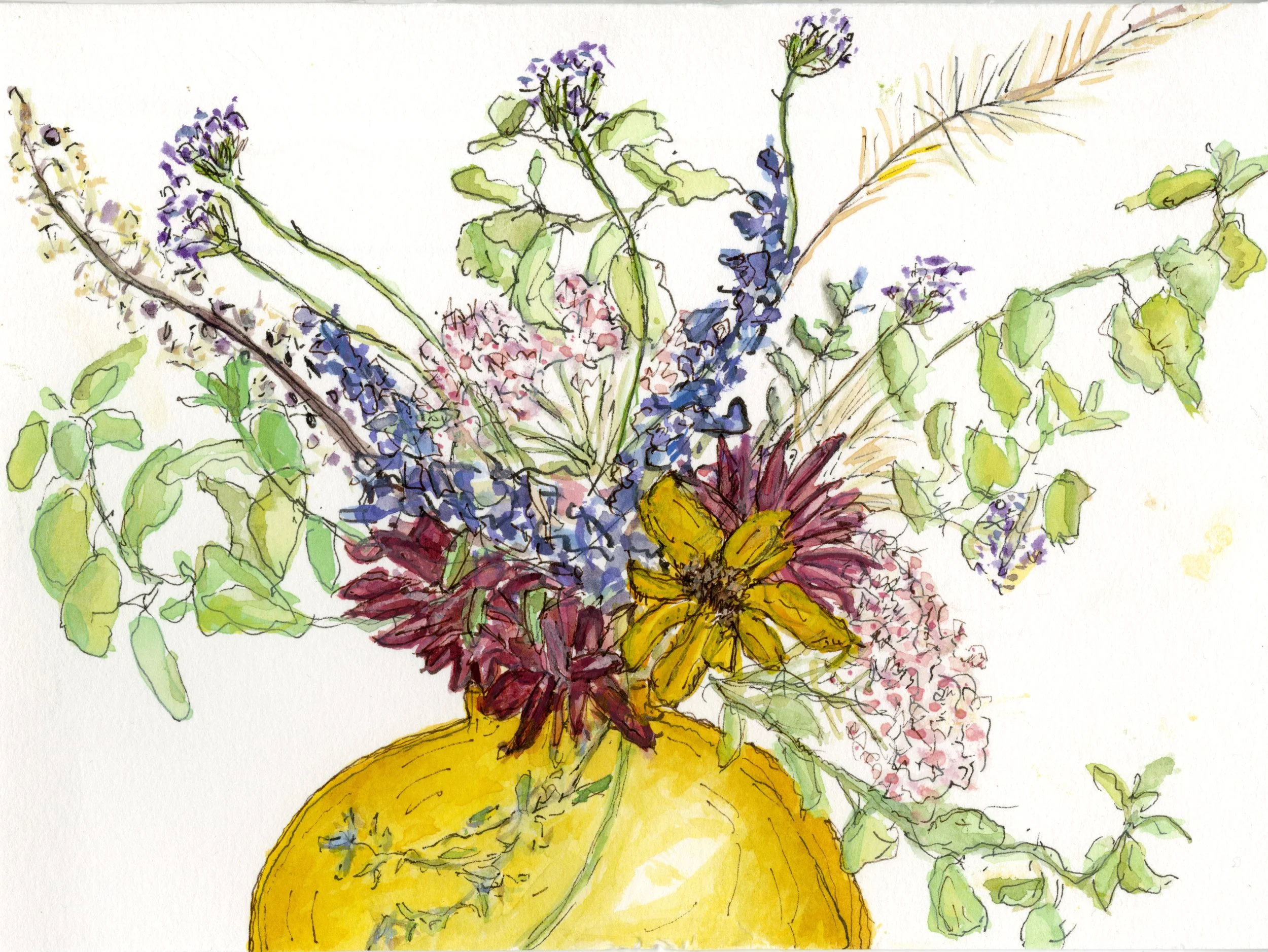
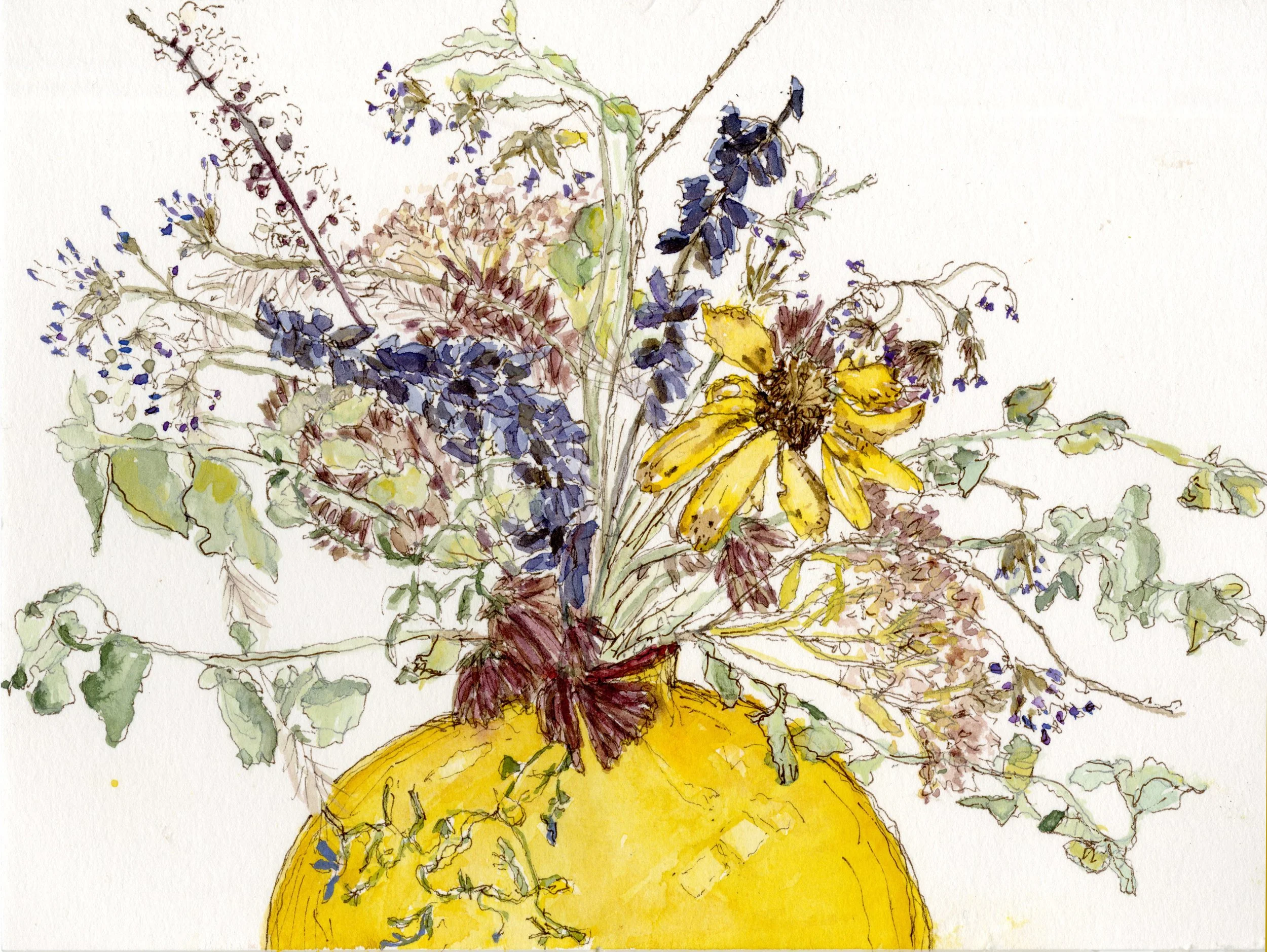
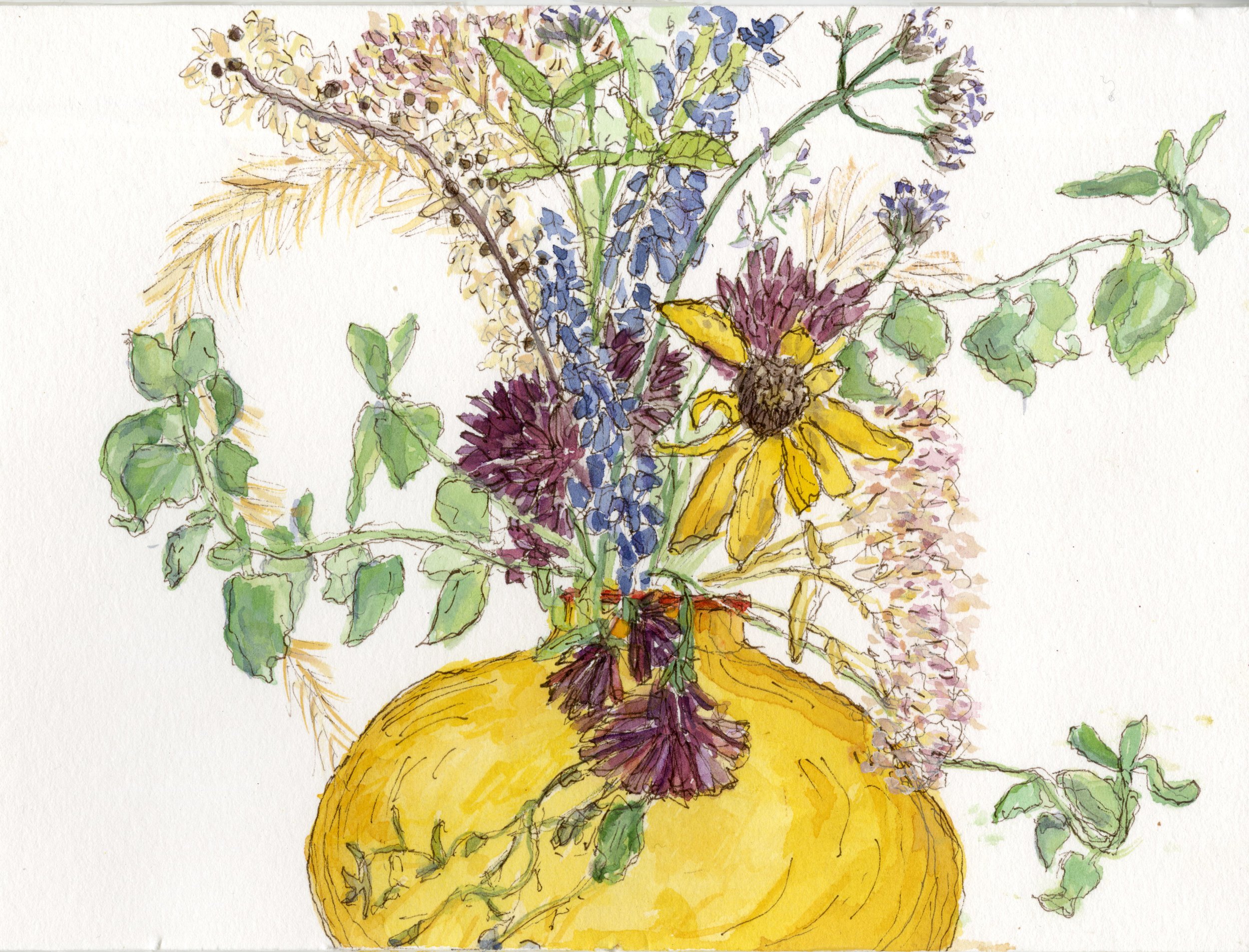
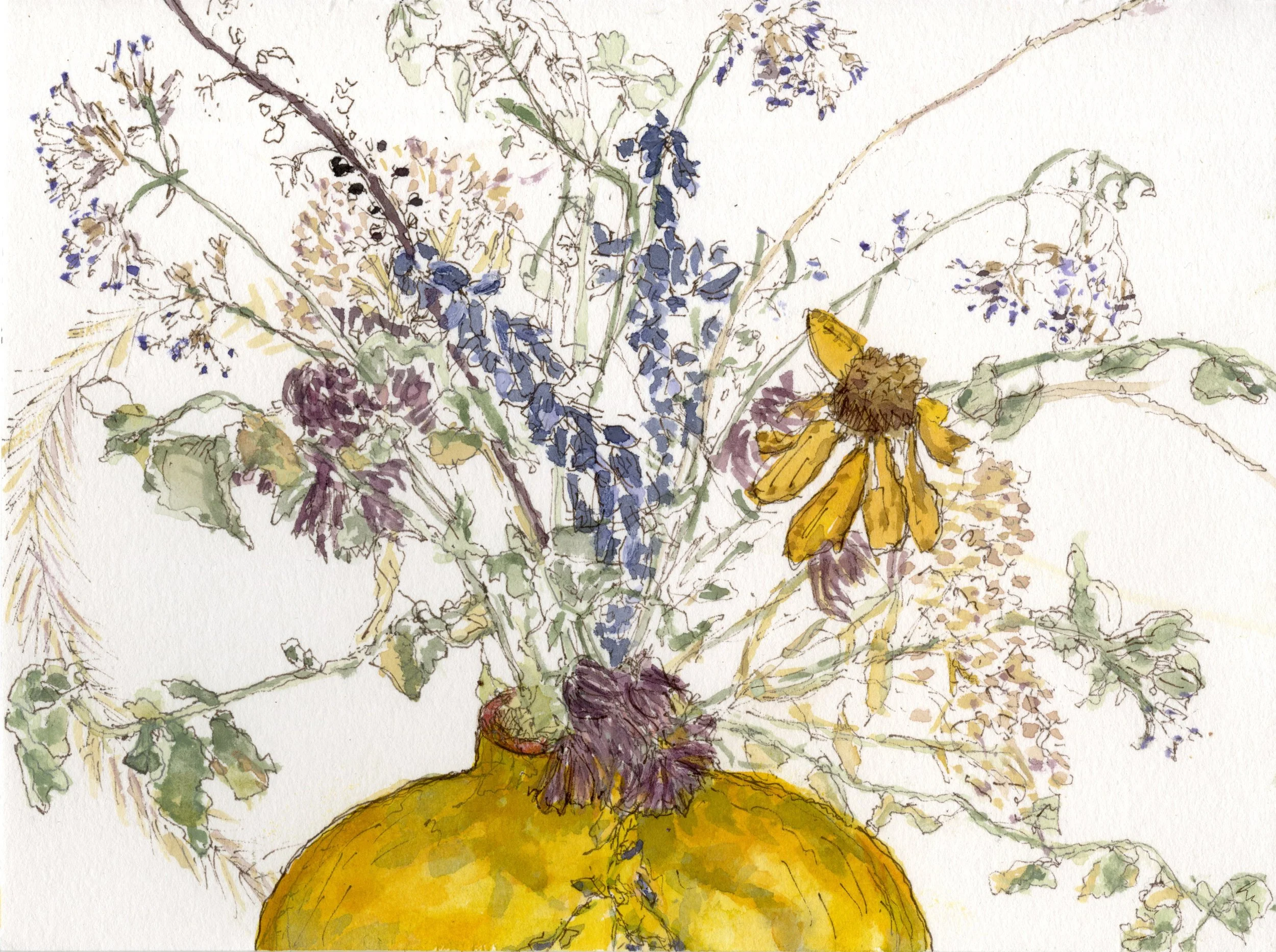
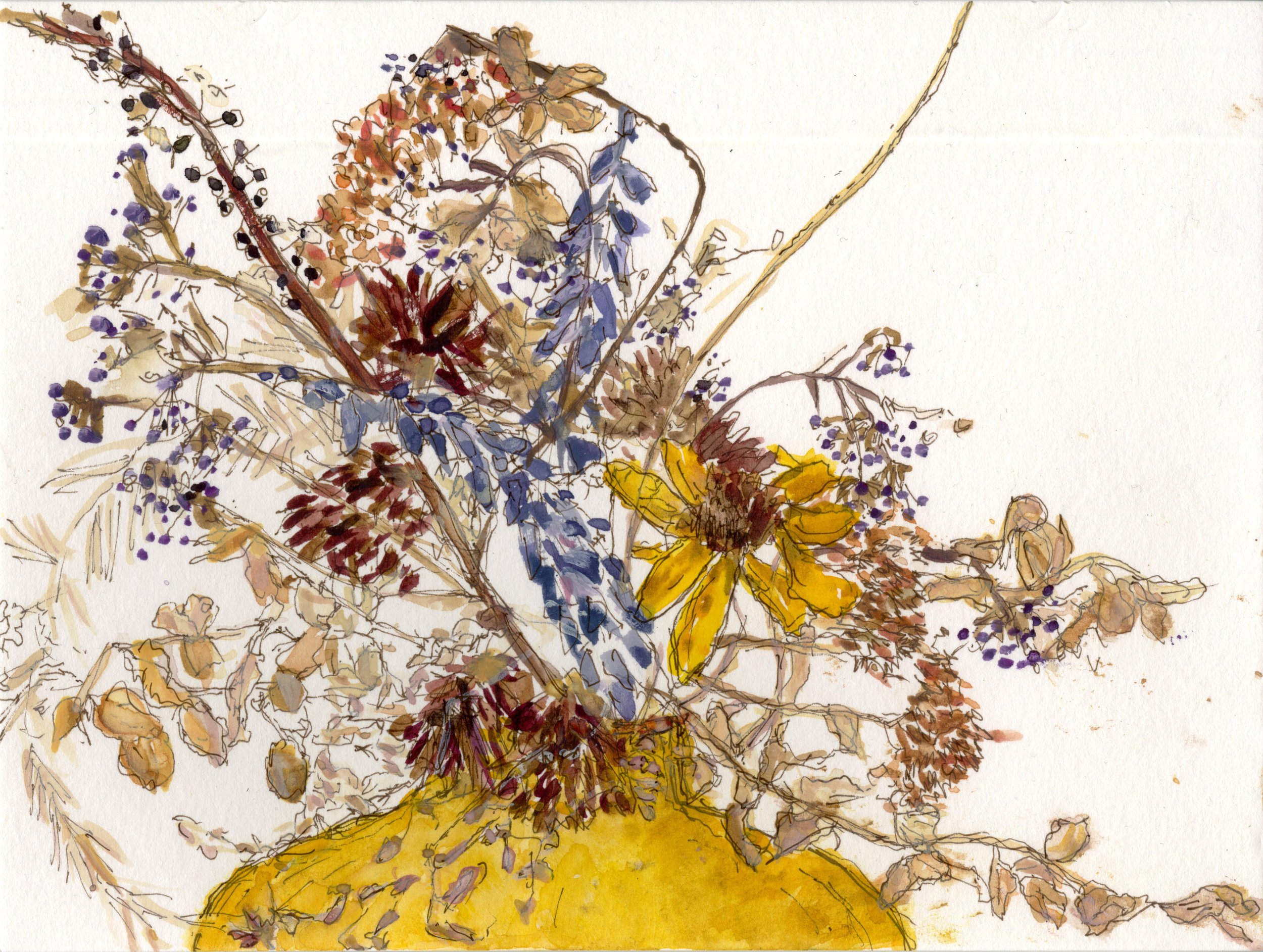
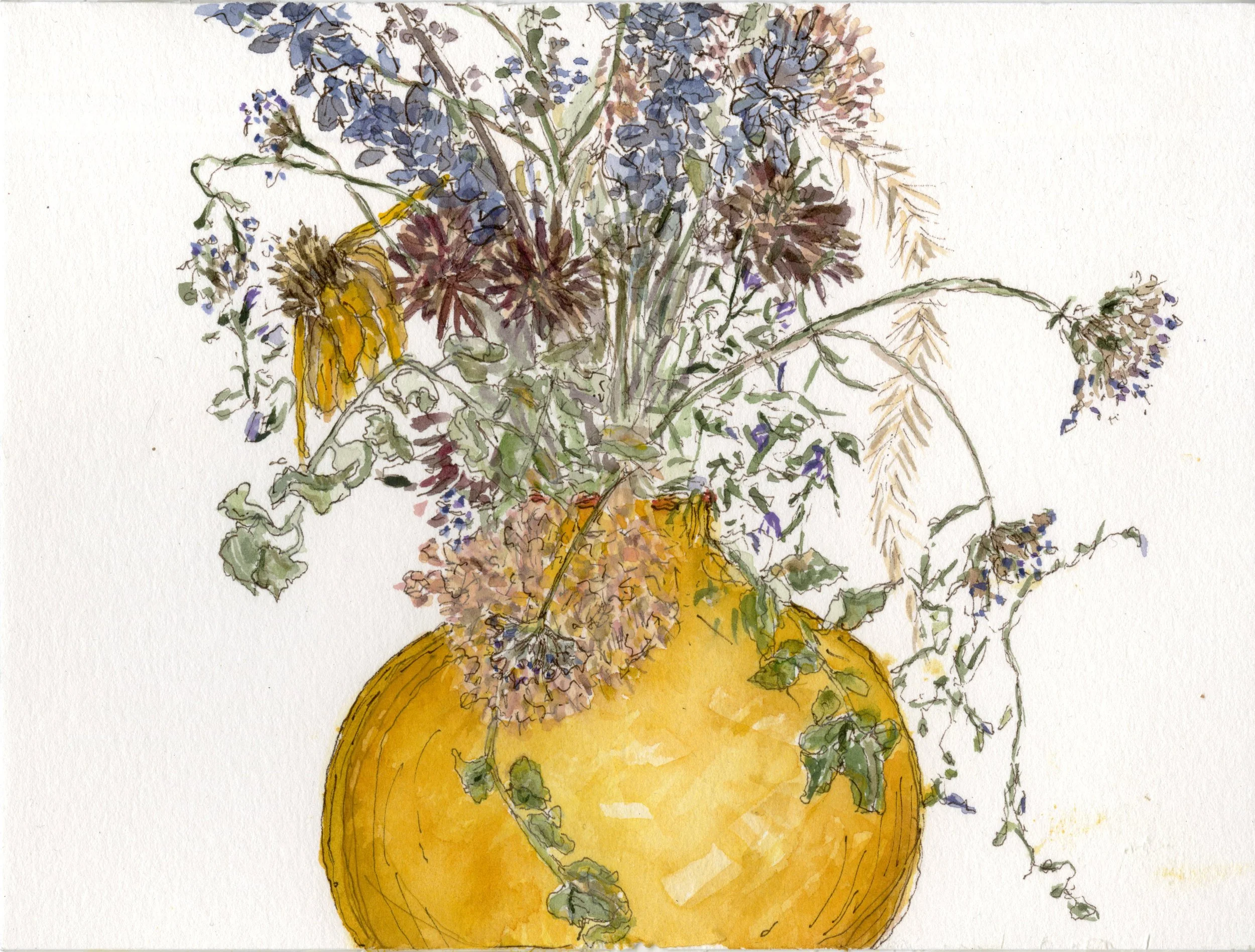
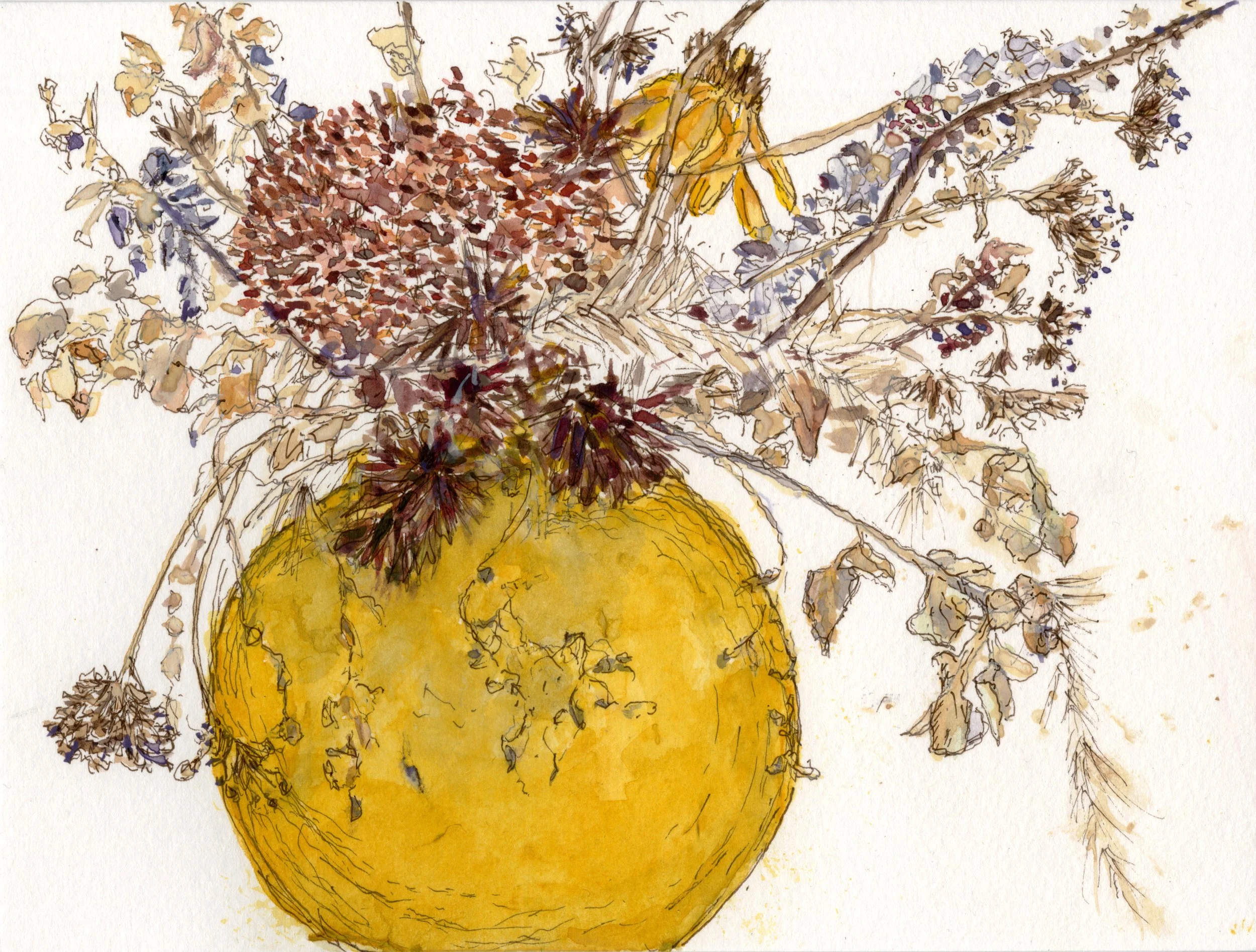
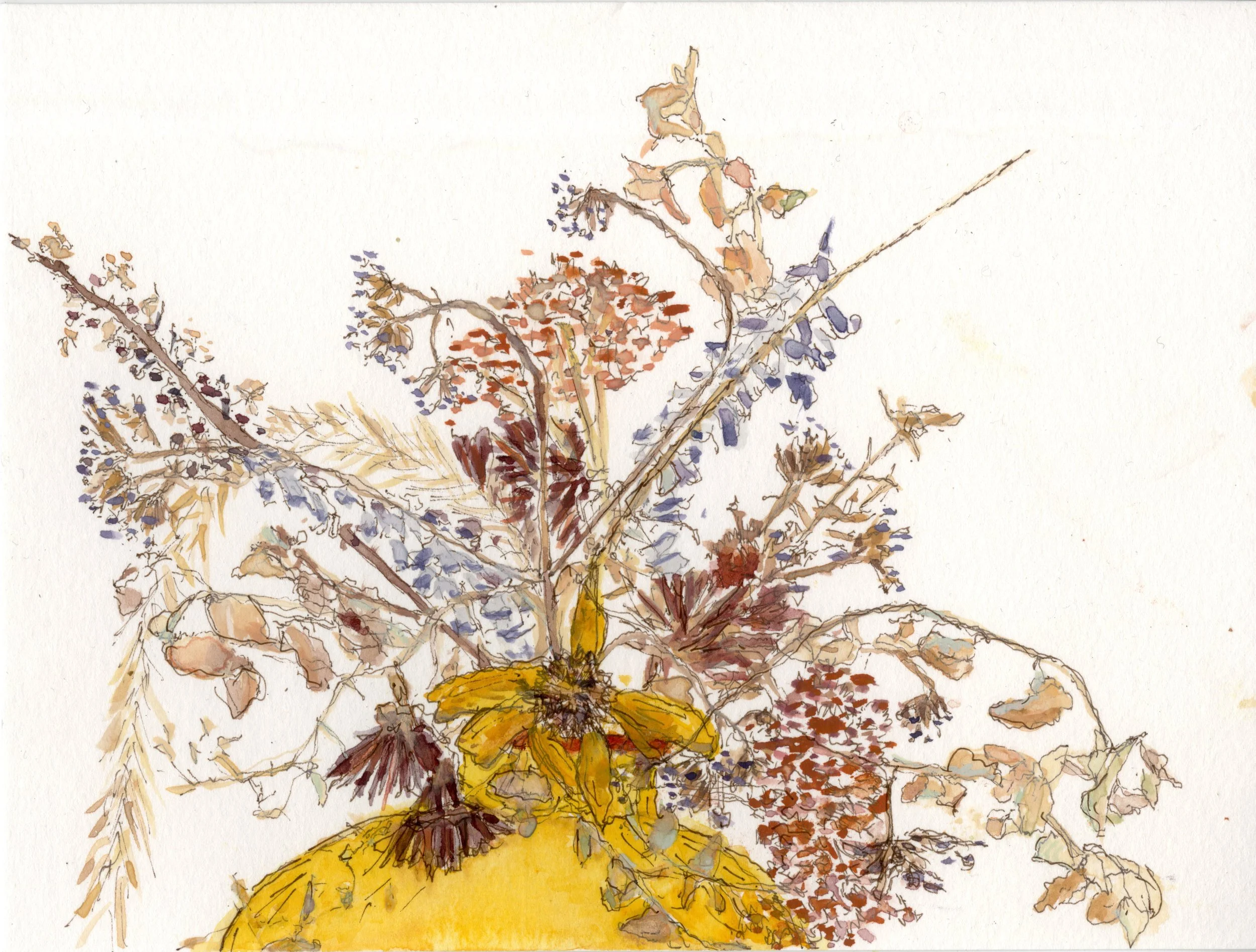
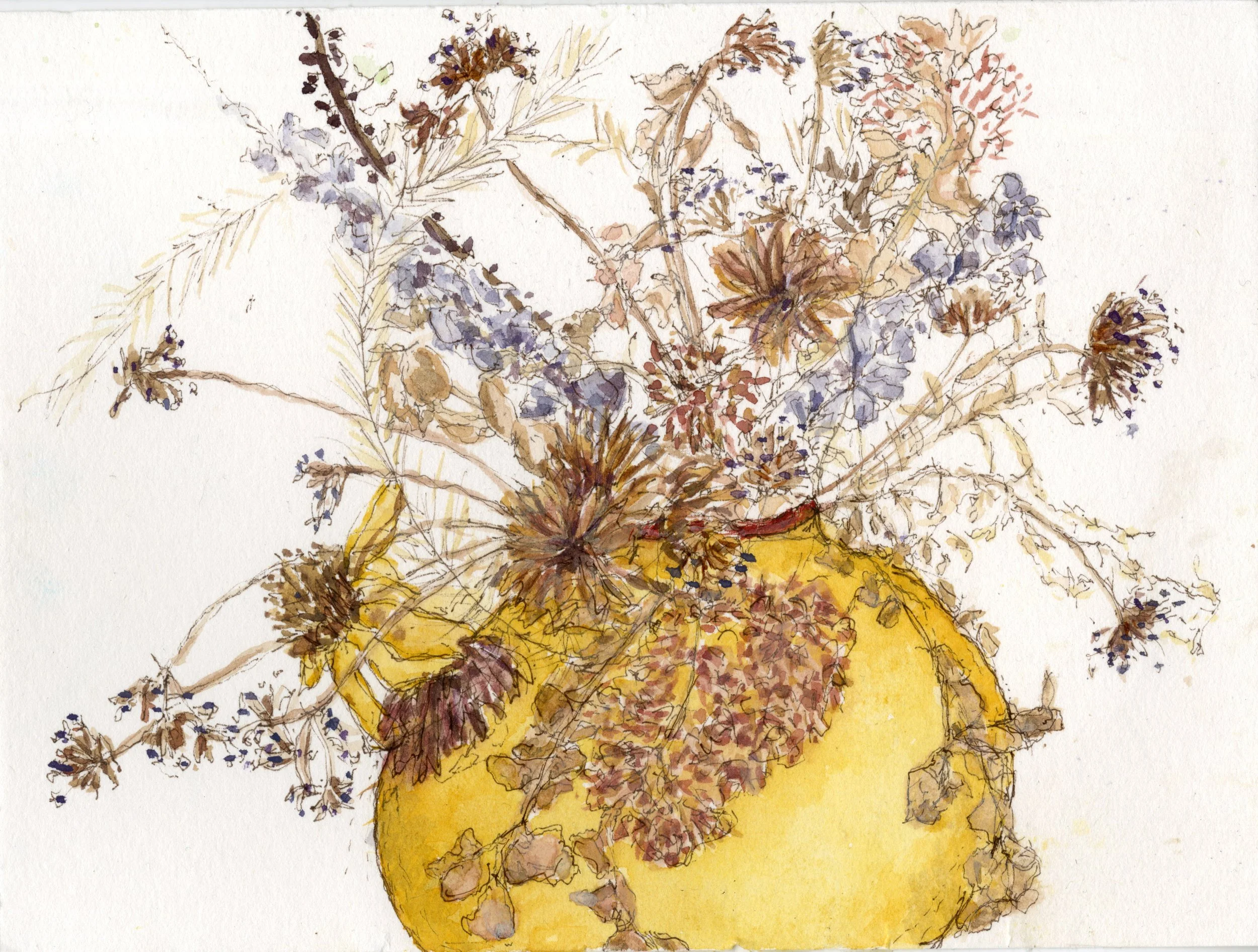
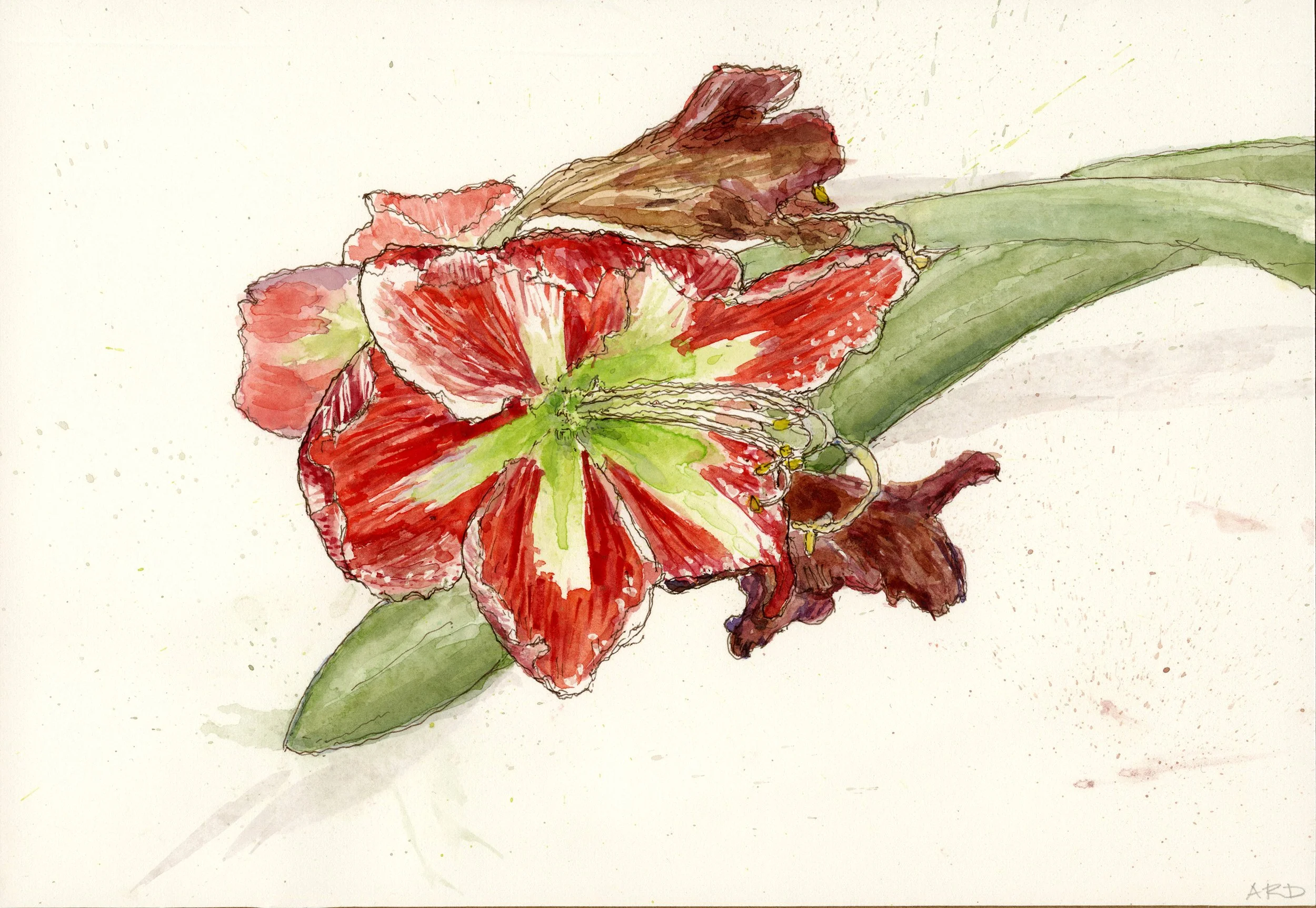
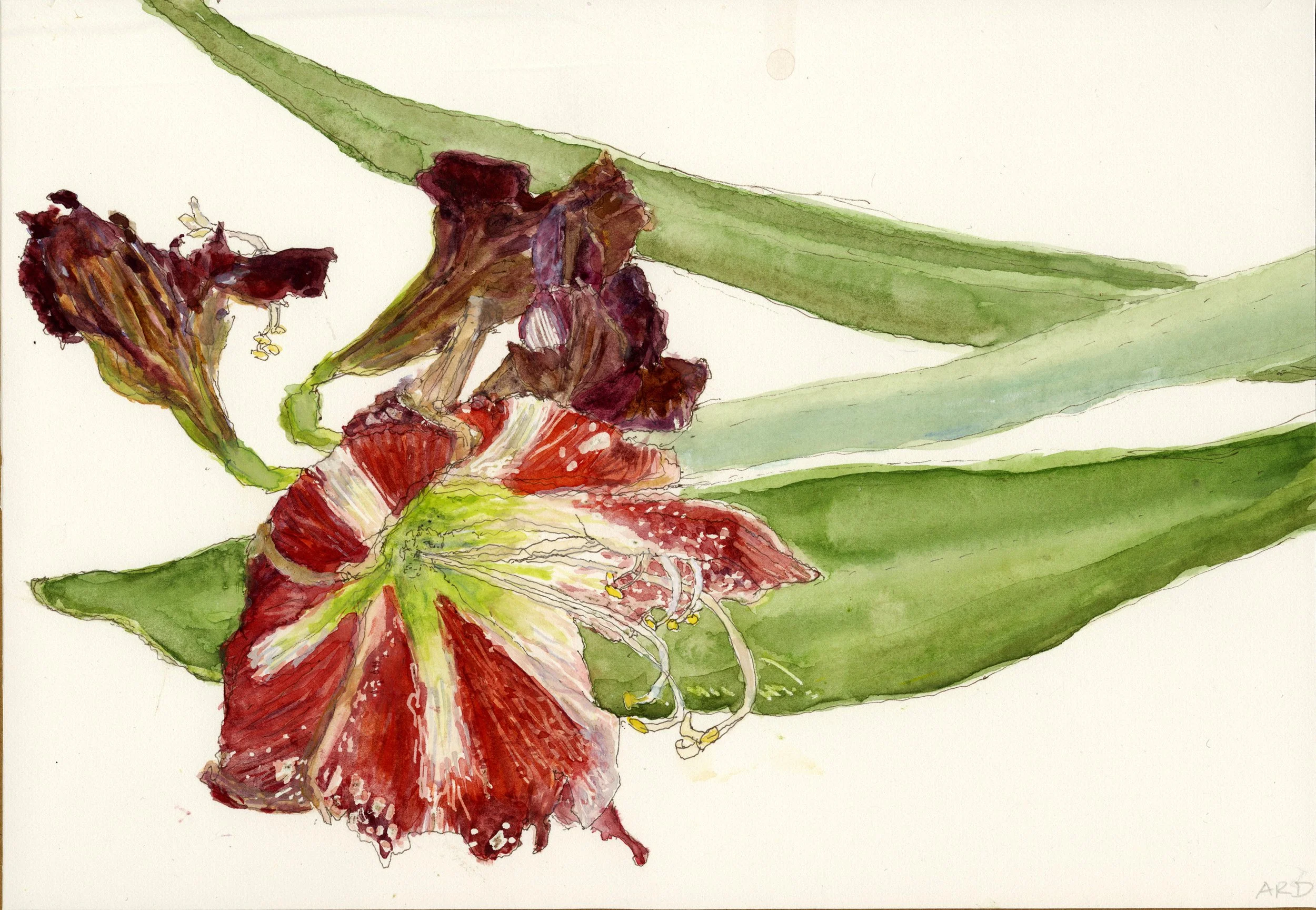
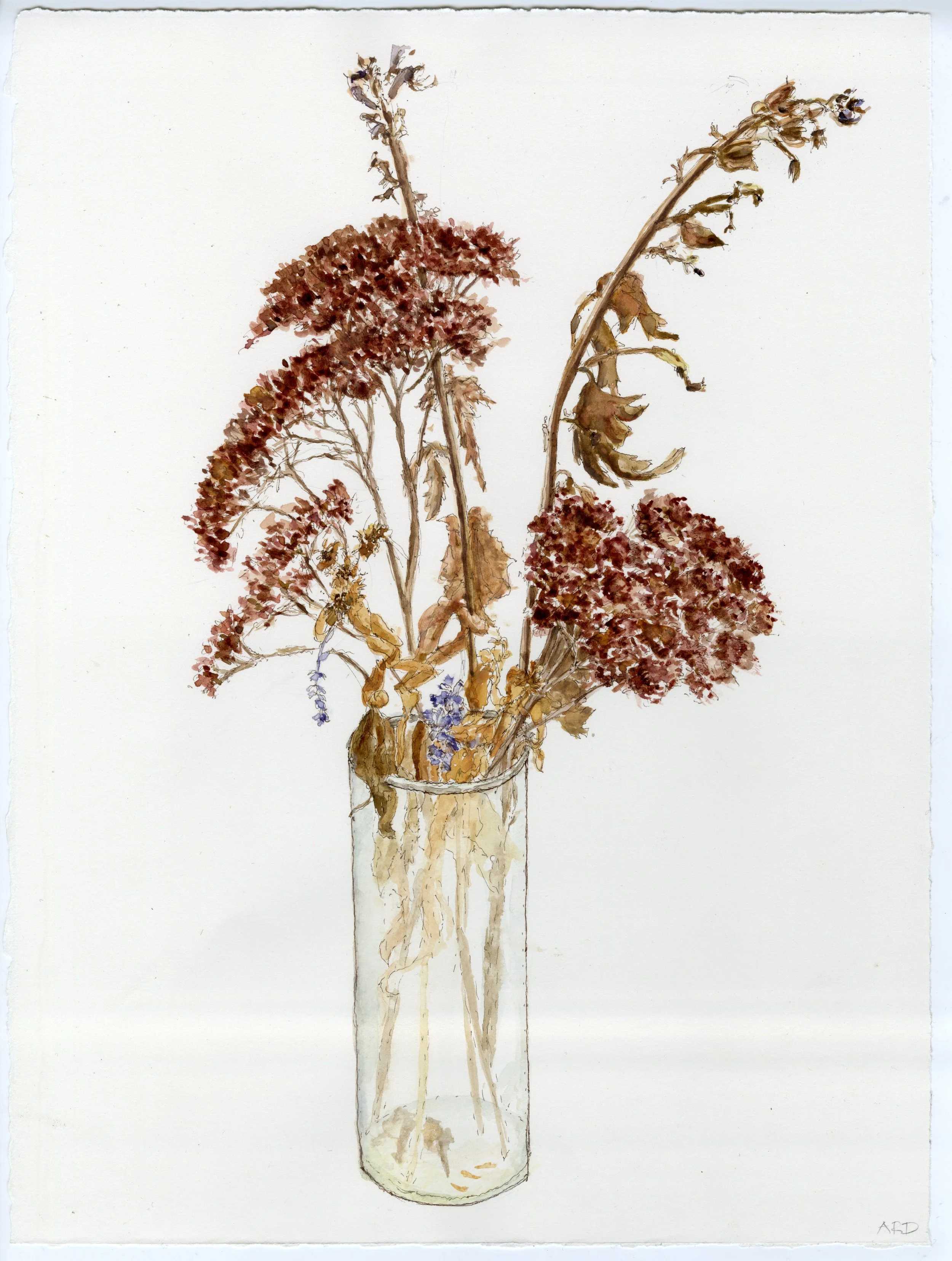
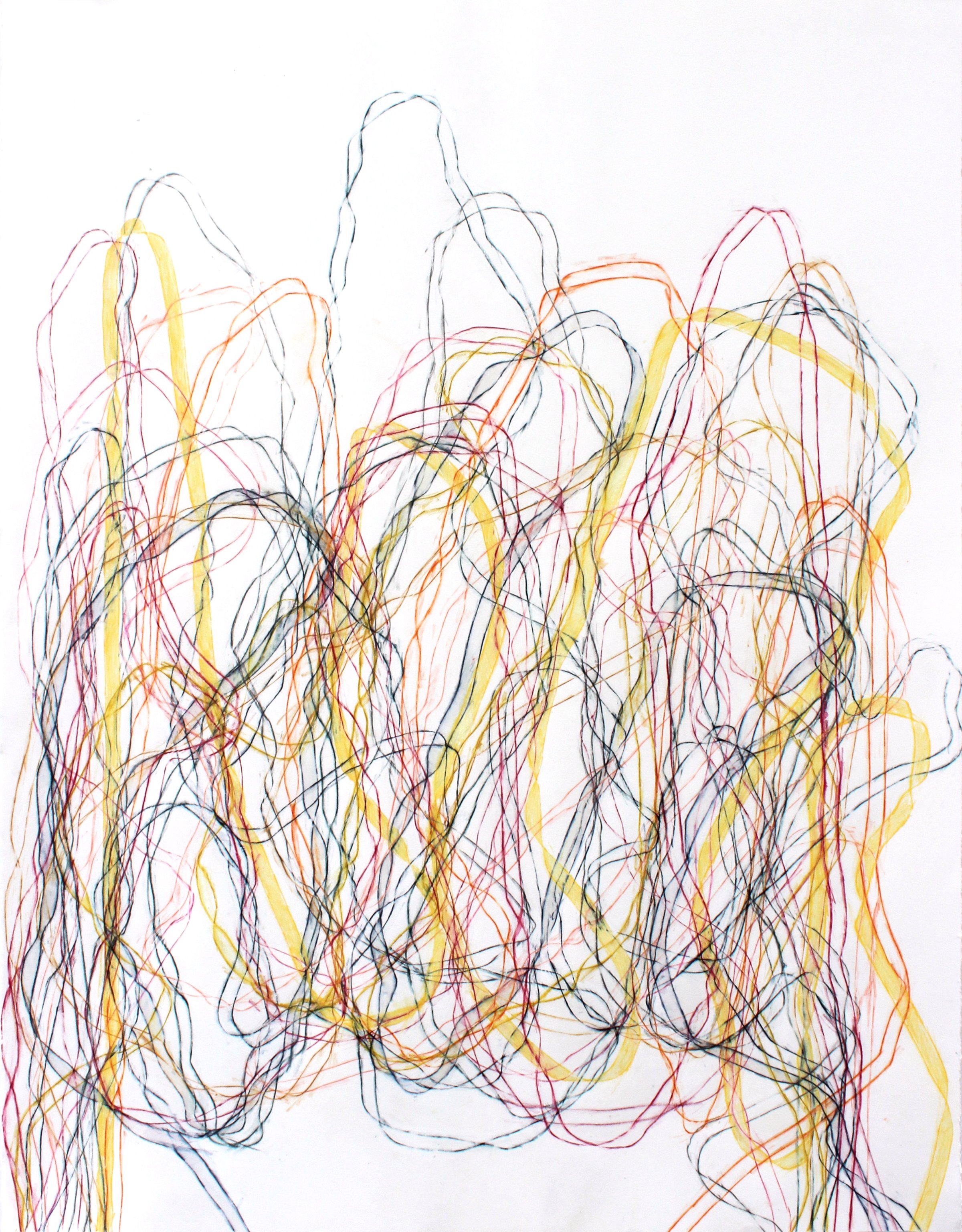
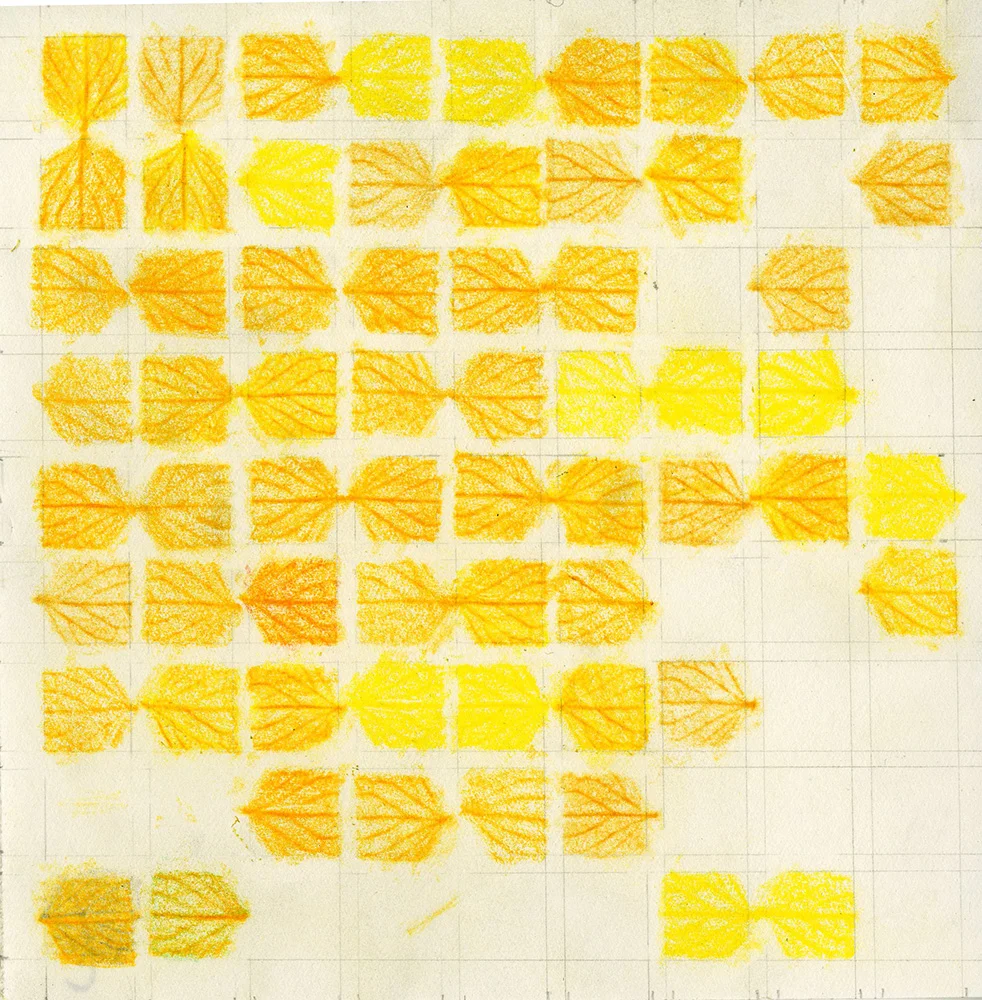
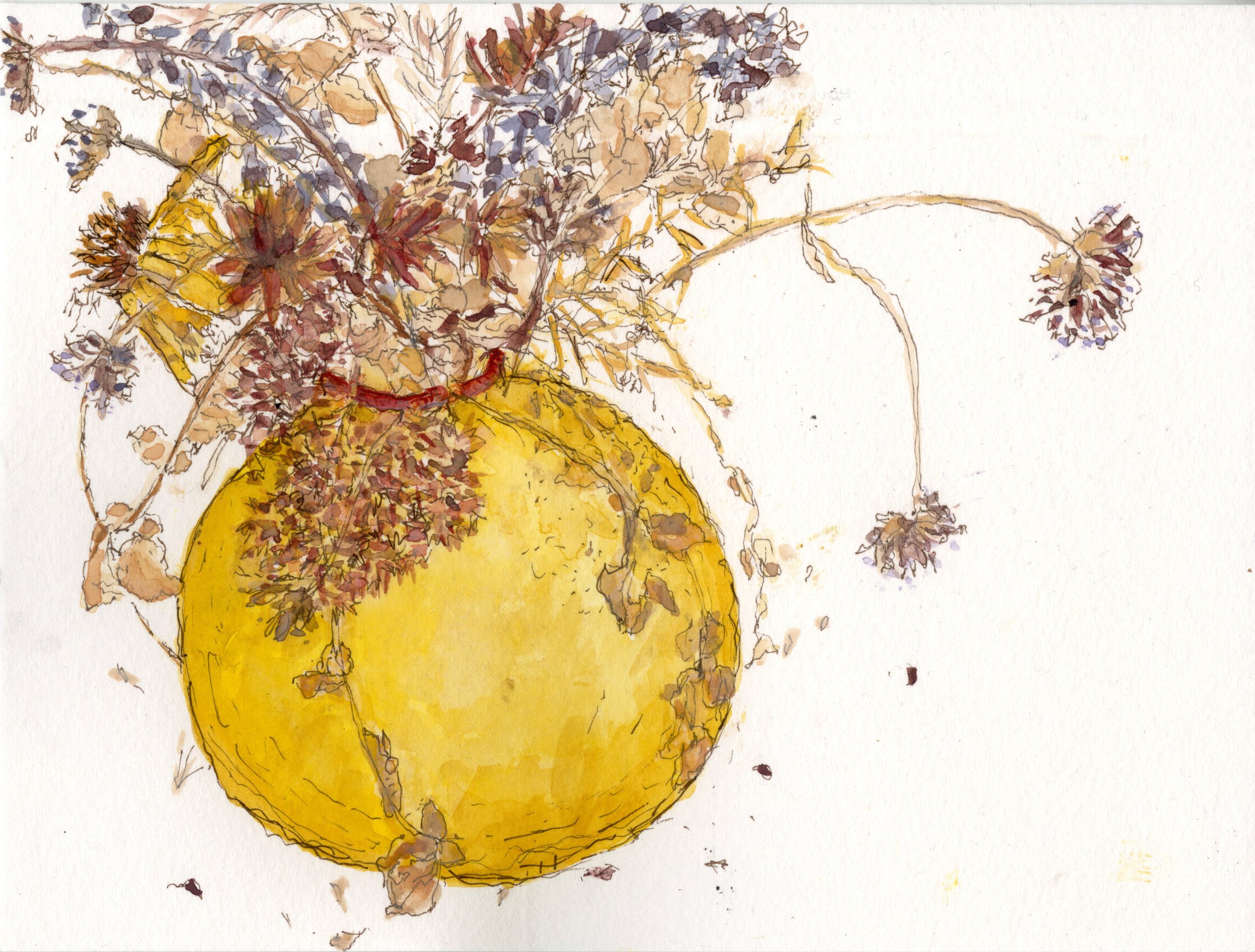
The conical form is sewn from water-resistant ripstop nylon, a lightweight protective membrane commonly used for tents and insulated outerwear. I selected the colors for this piece while drawing daffodils in early spring. I was struck by the parallels between the delicate petals drying as I recorded changes in the bouquets over time and the increasing folds of the installation as it gradually crumpled.
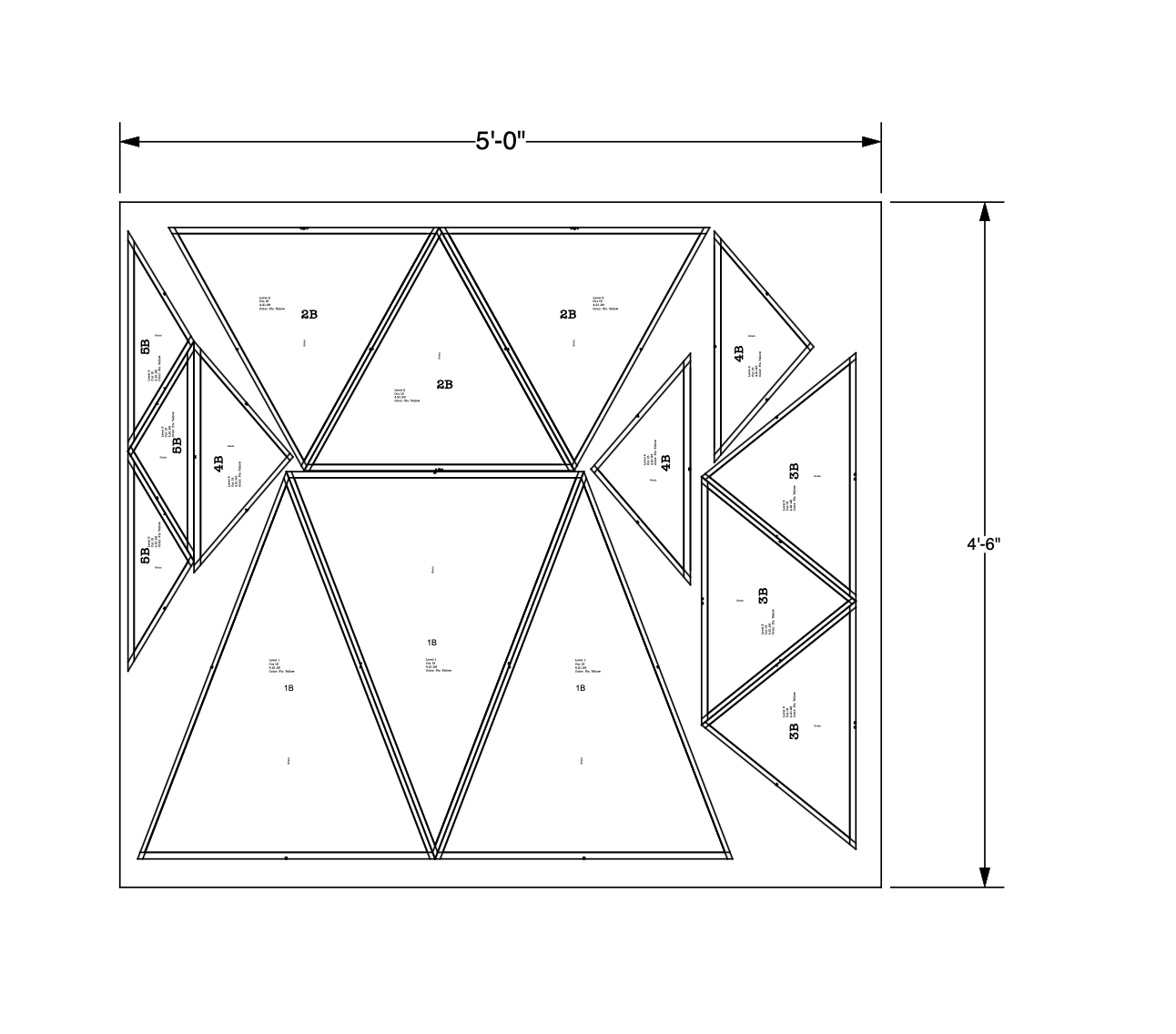
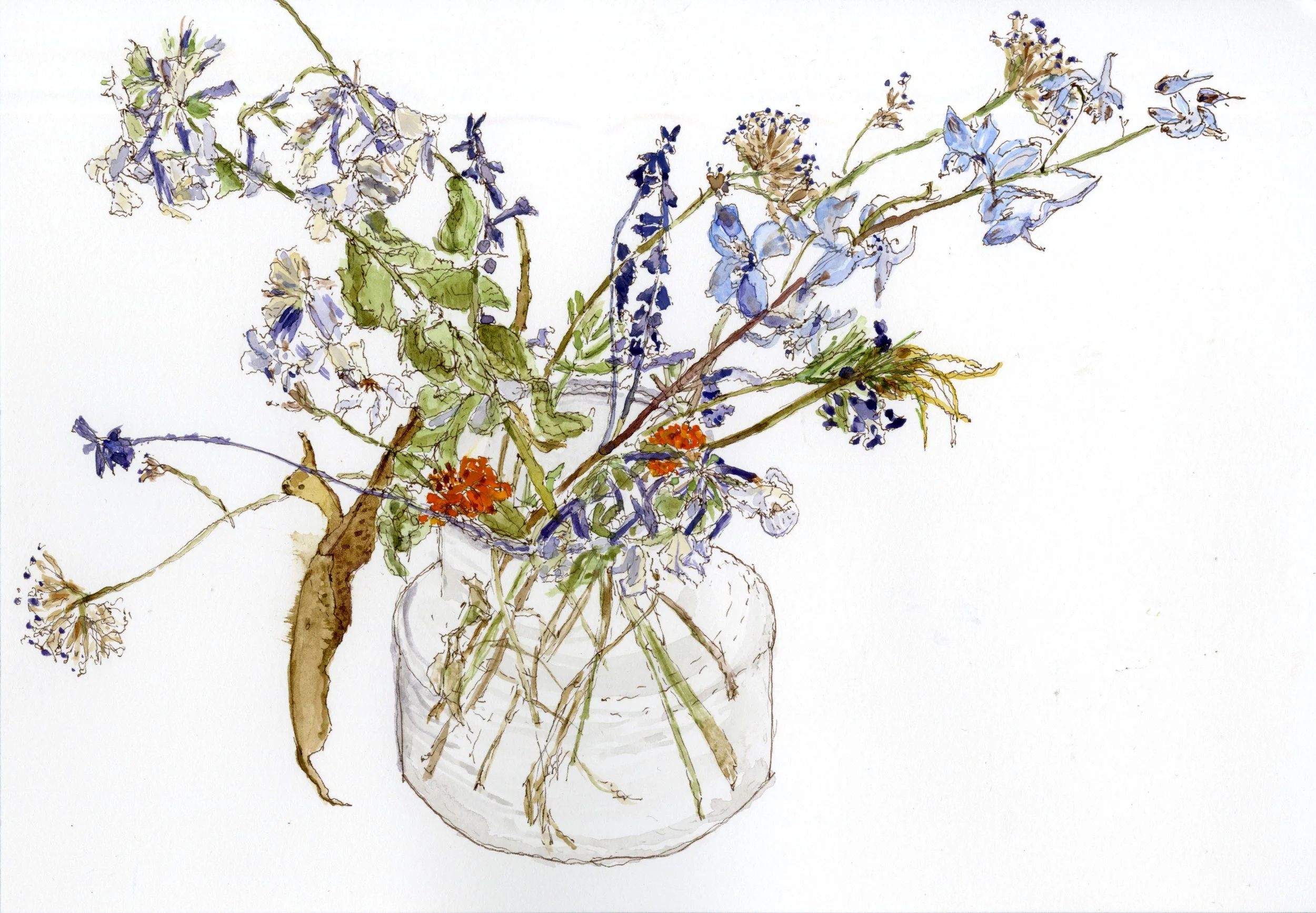
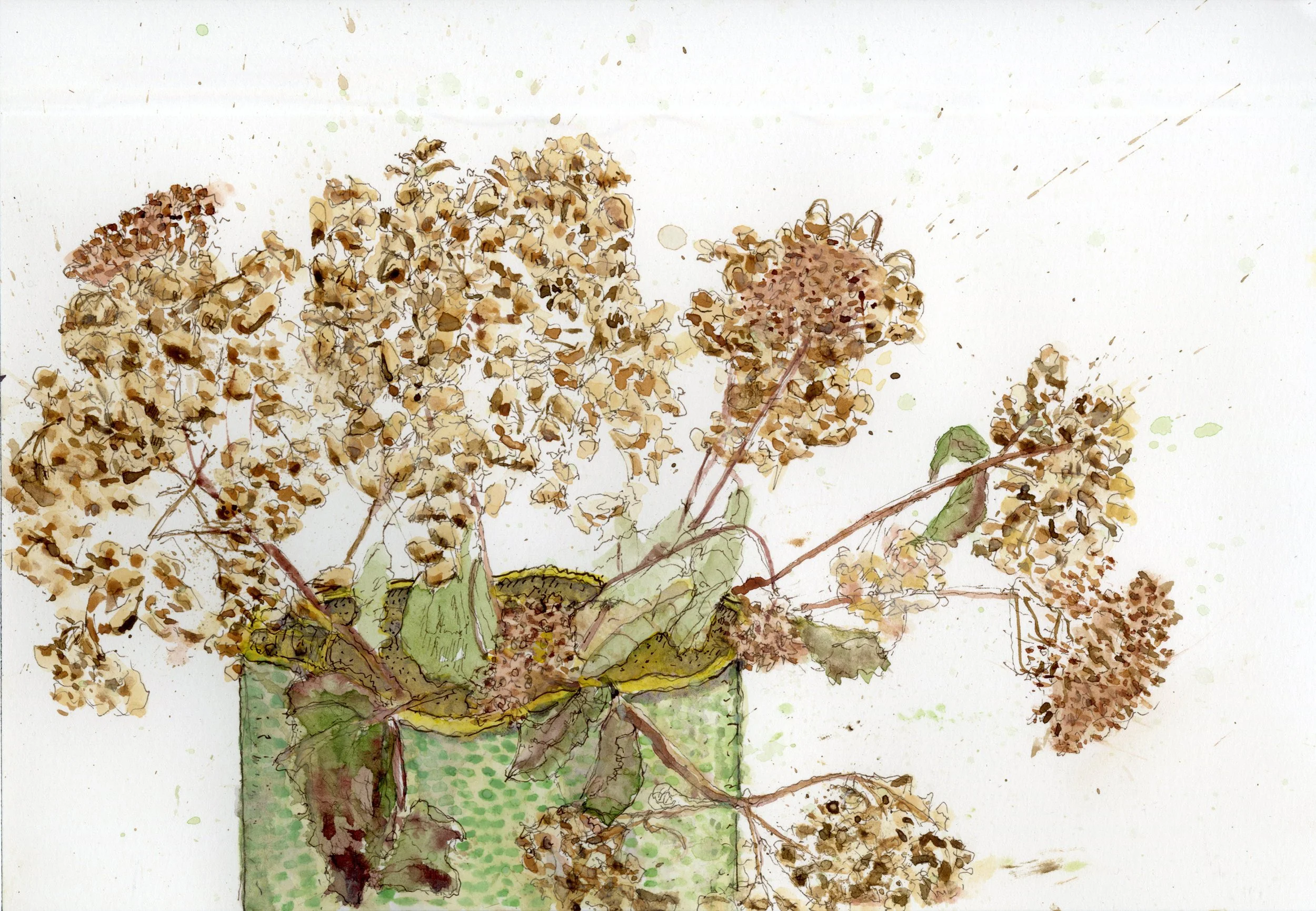
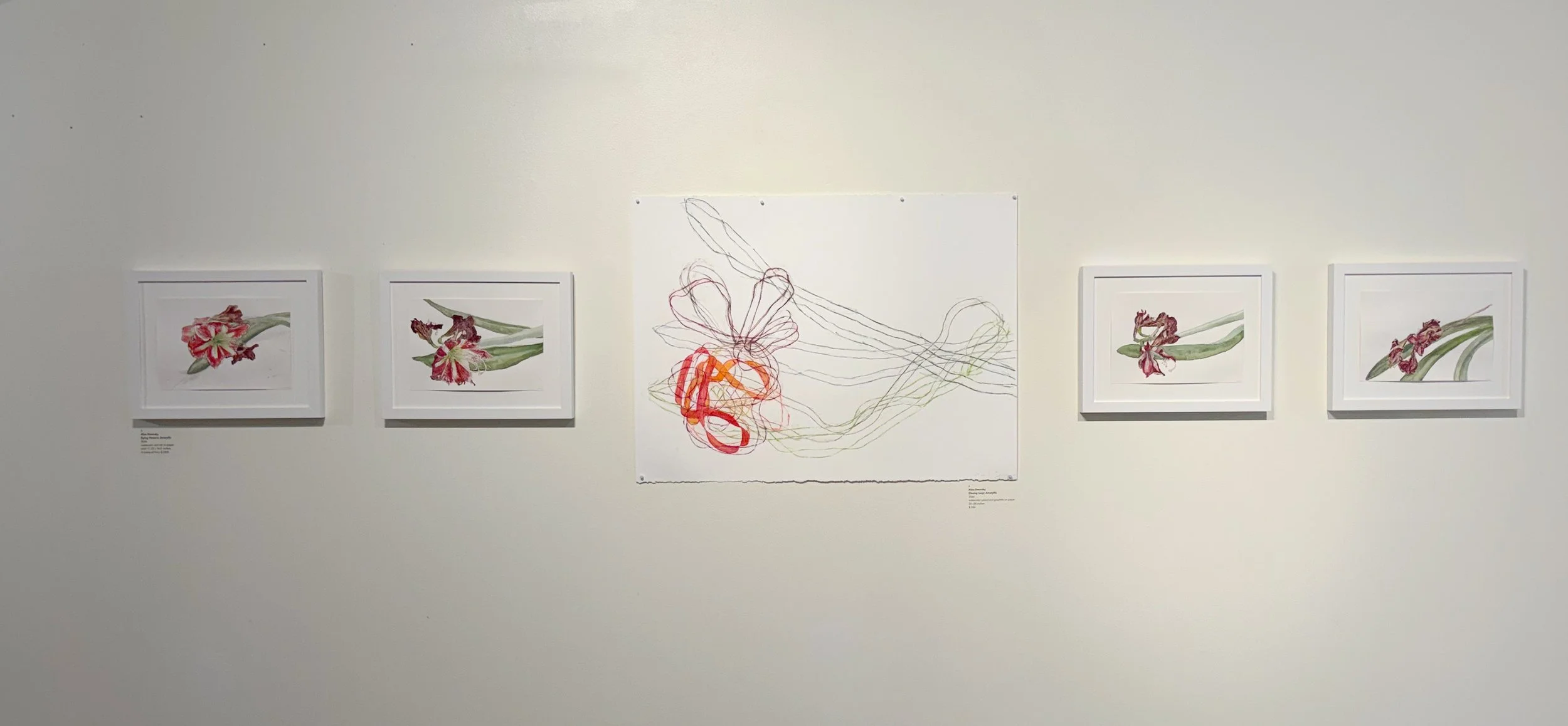
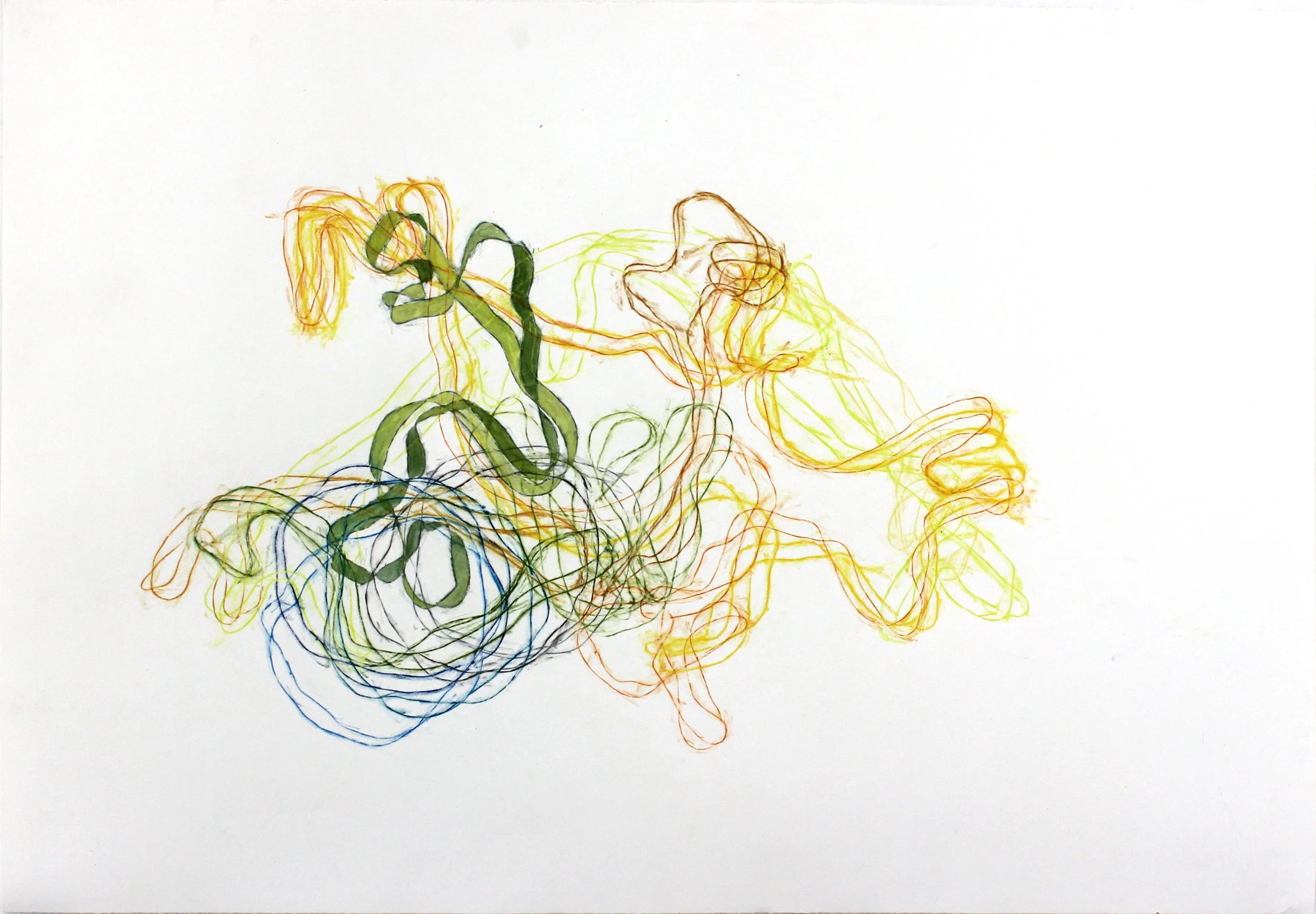
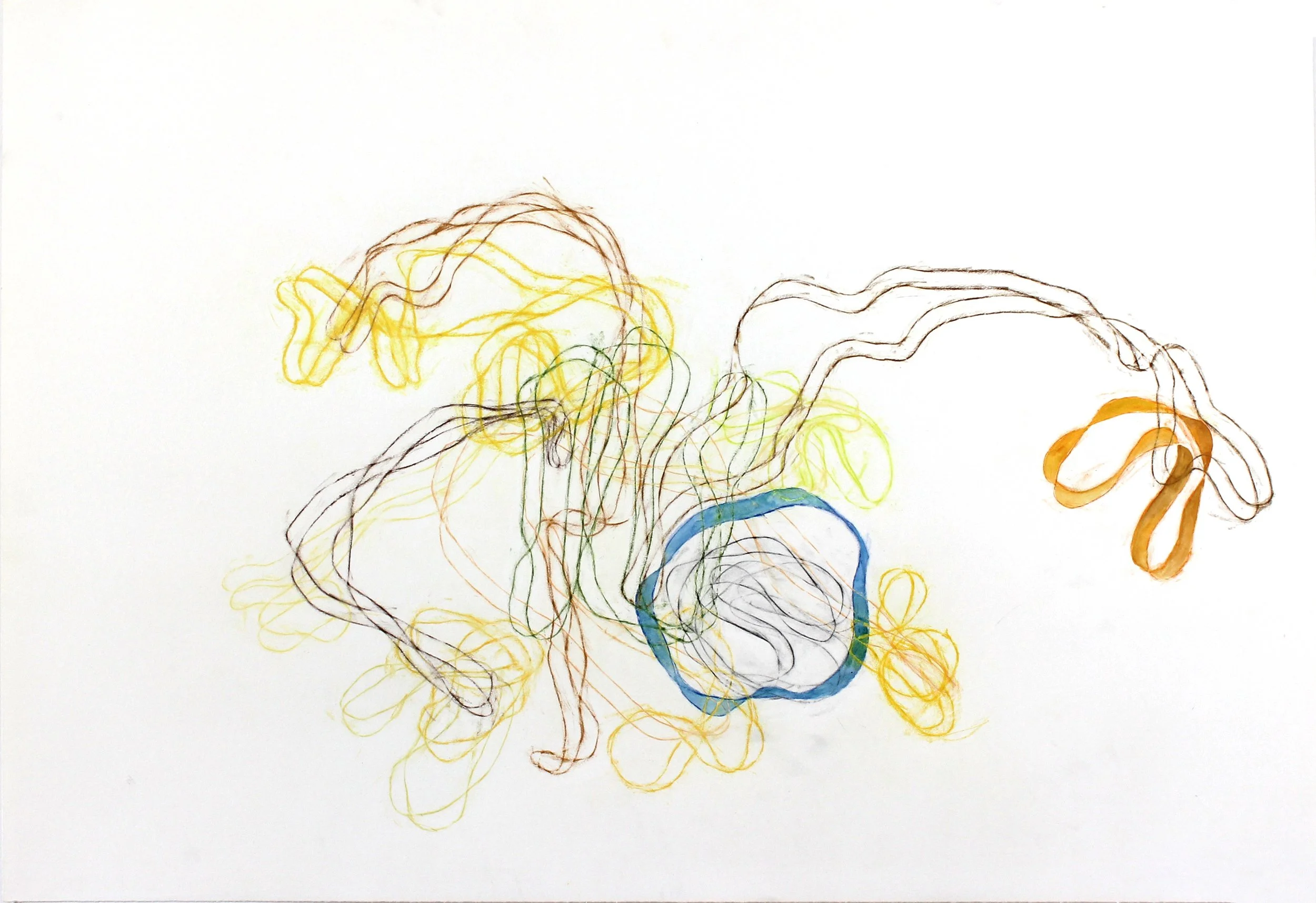
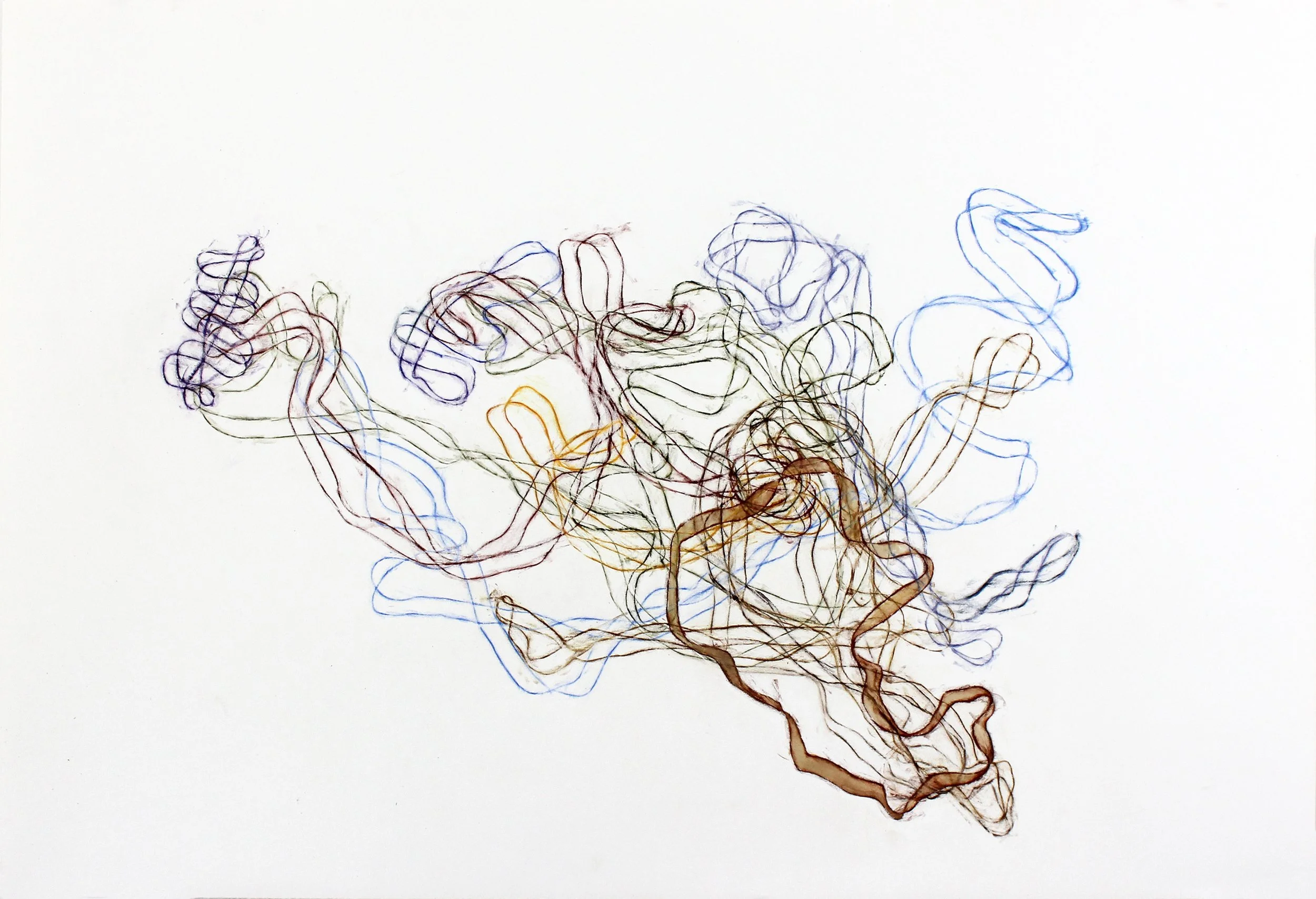
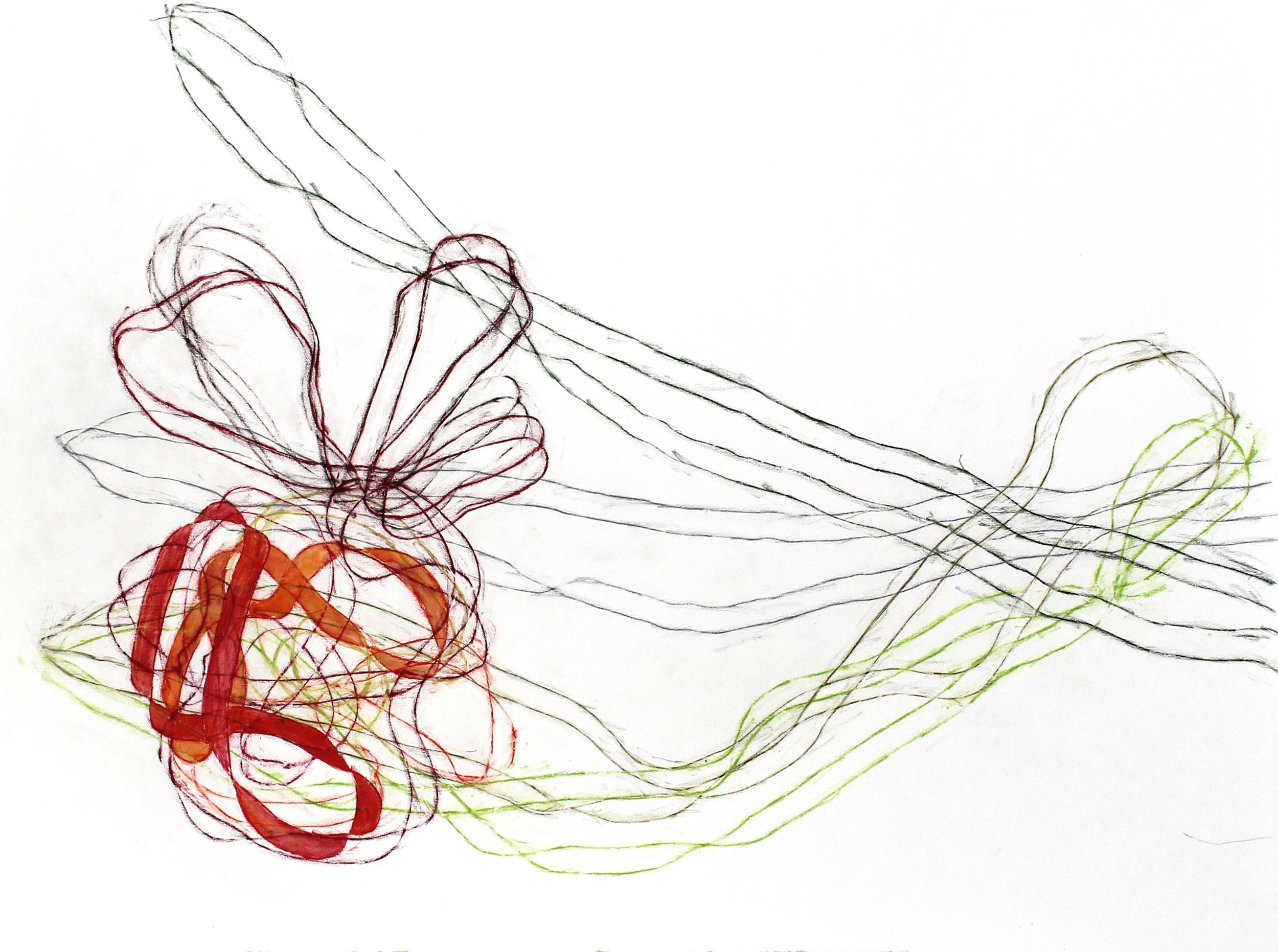
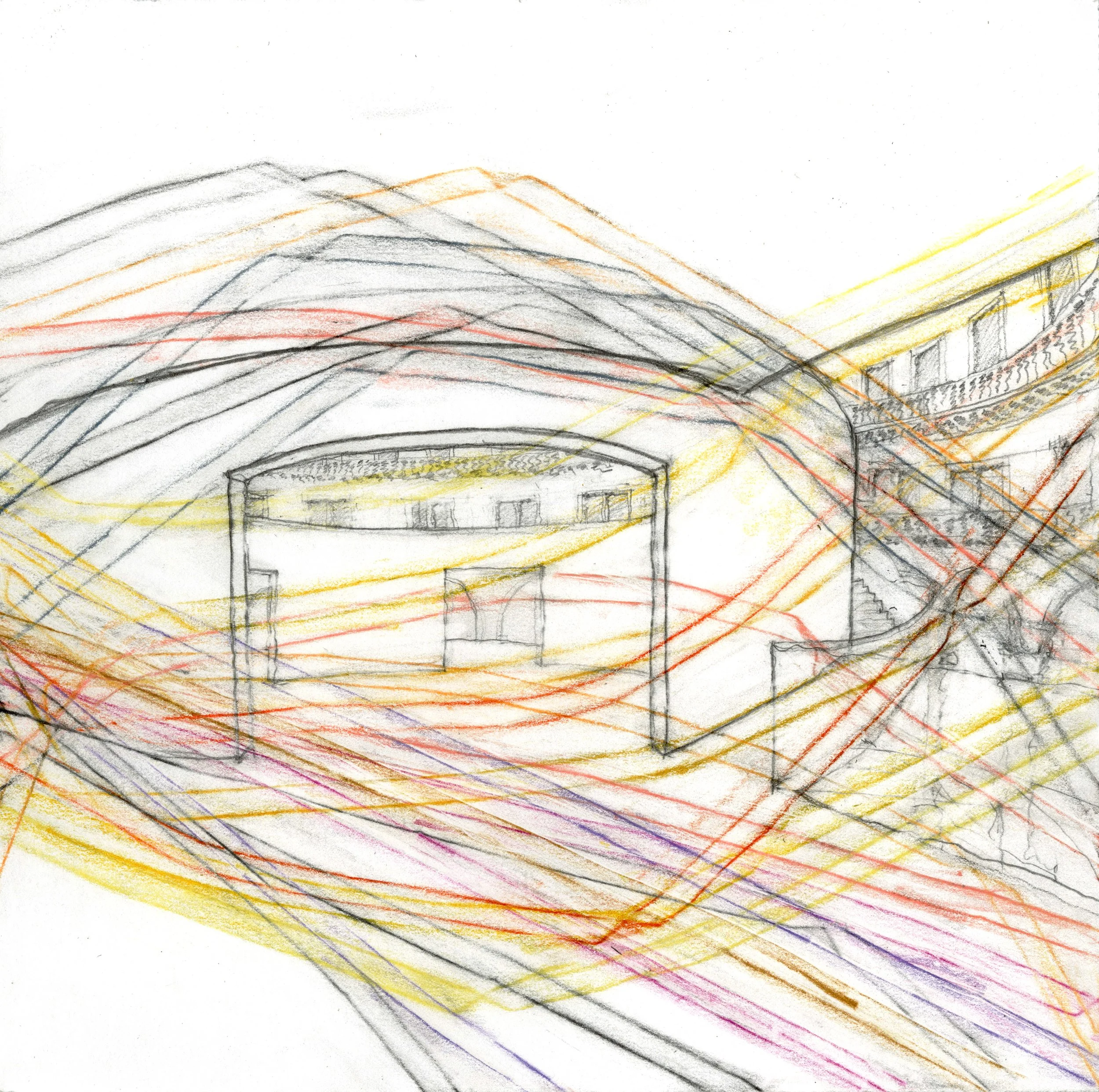
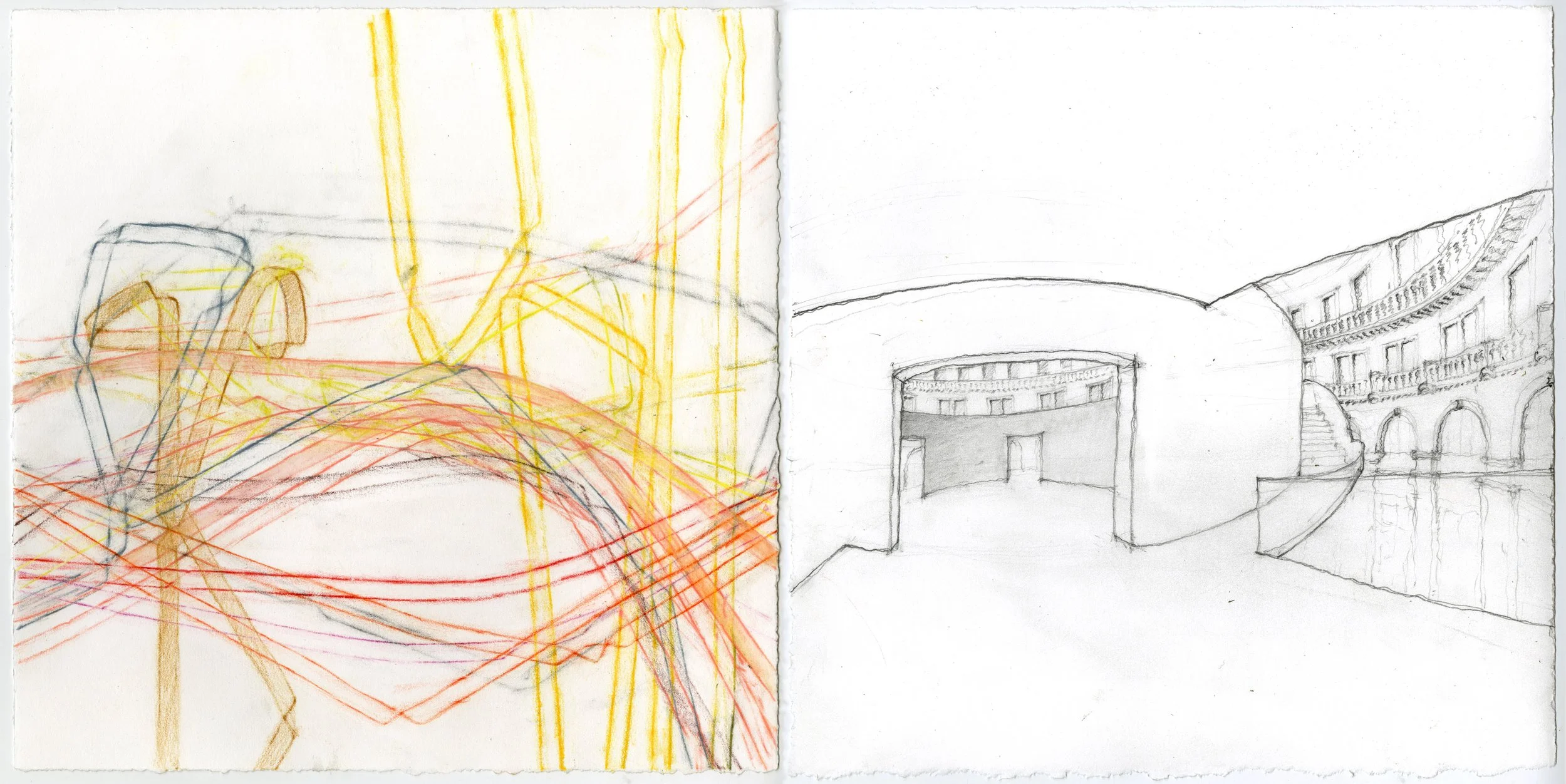
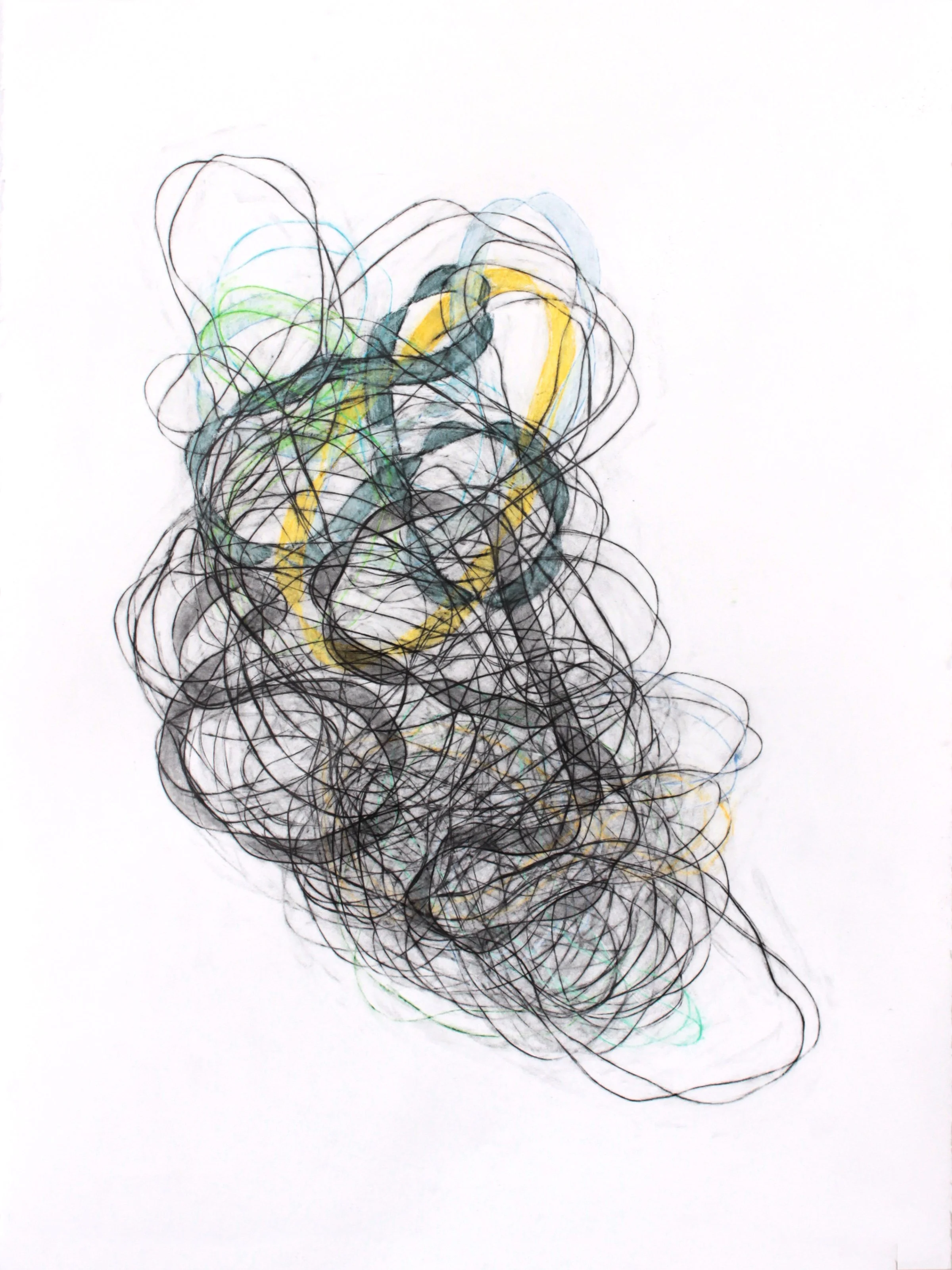
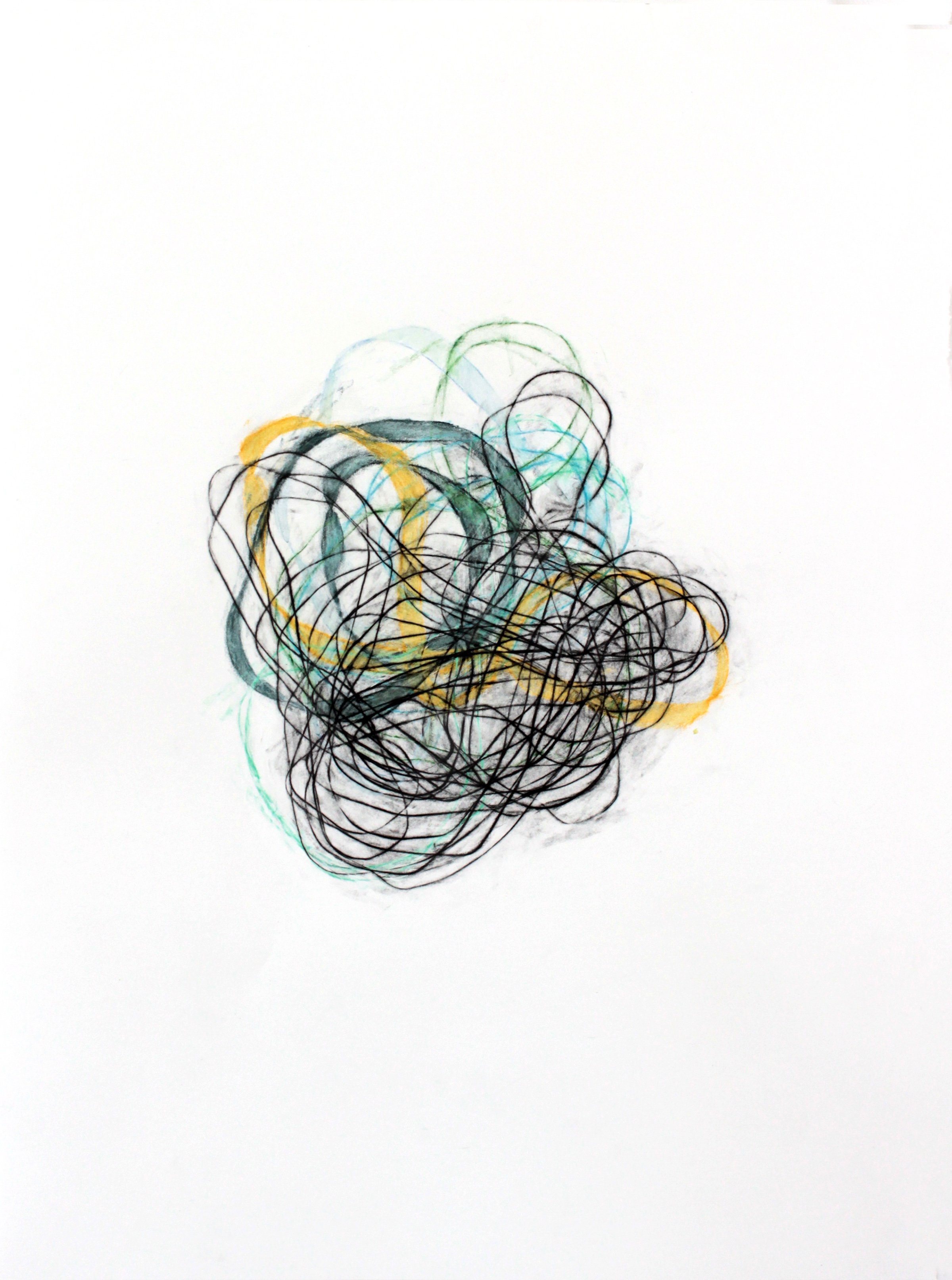
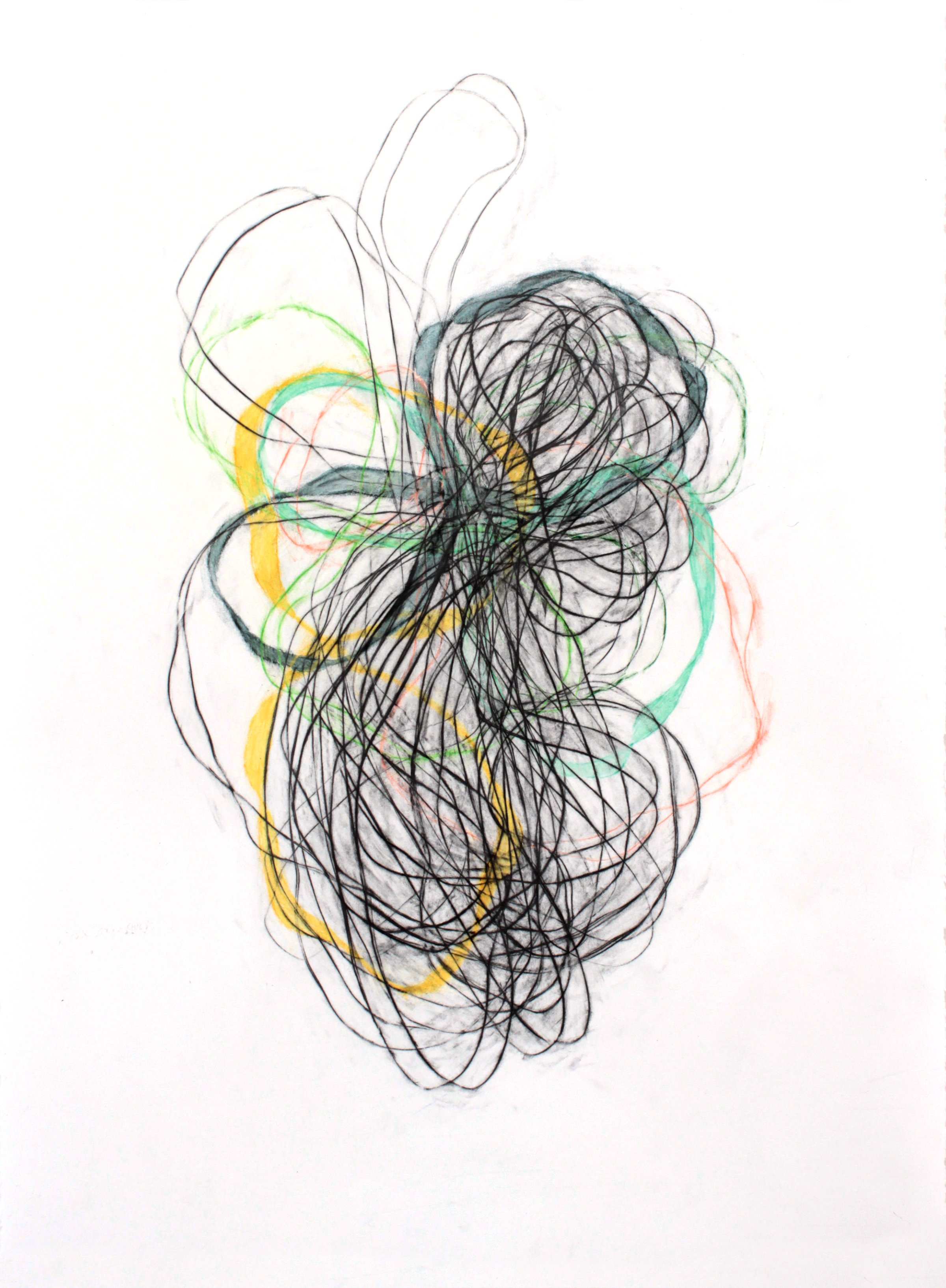
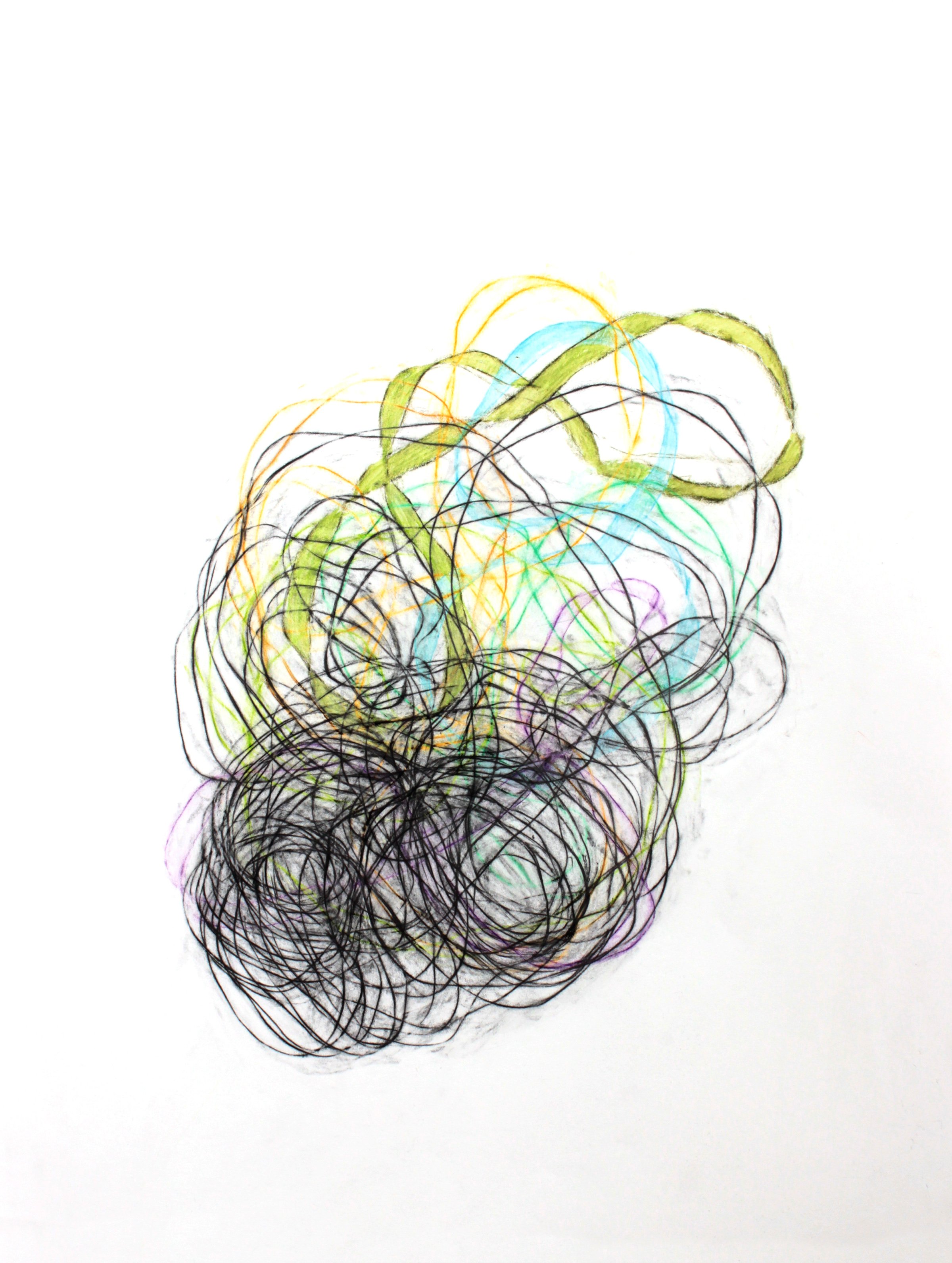
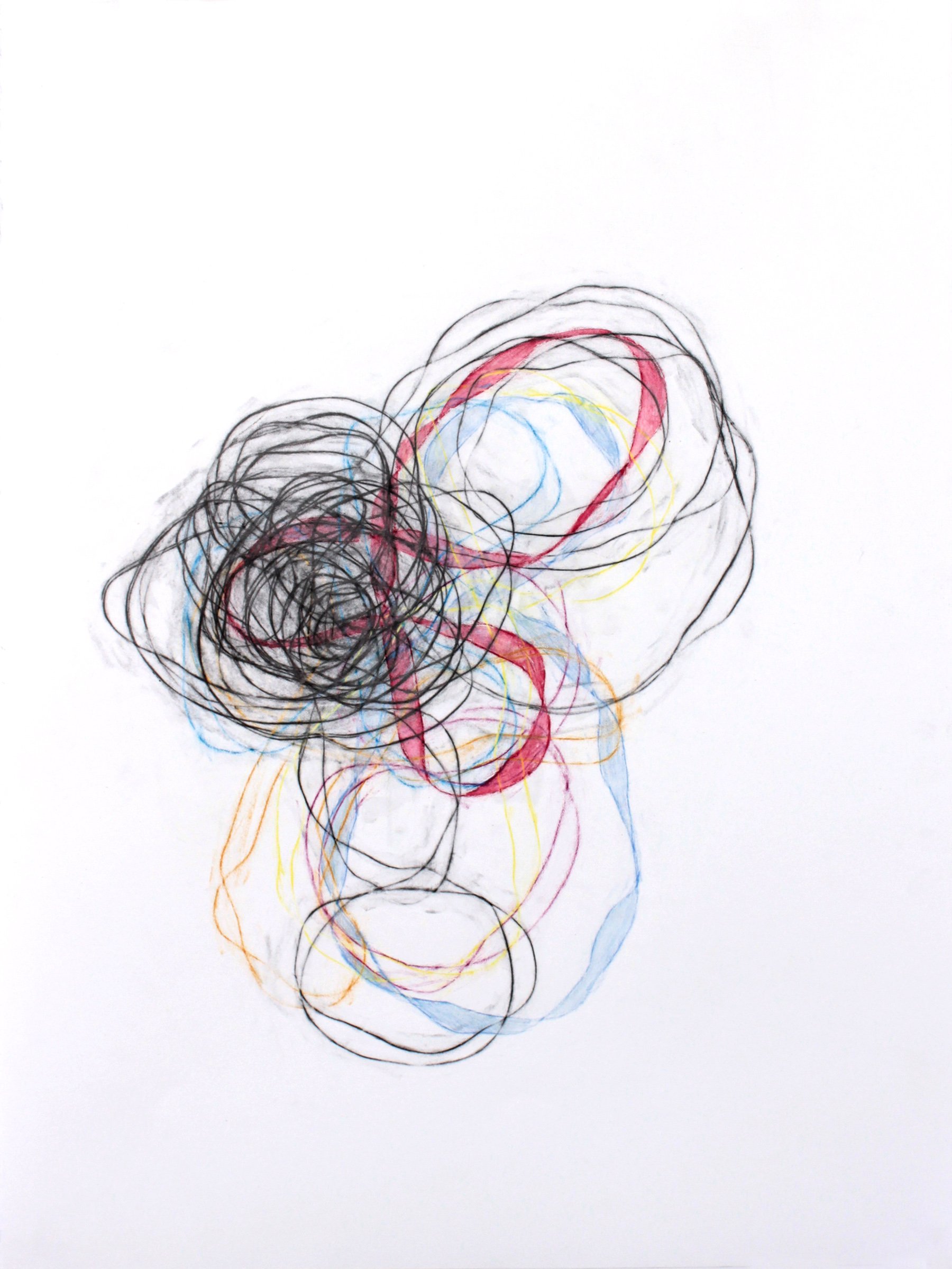
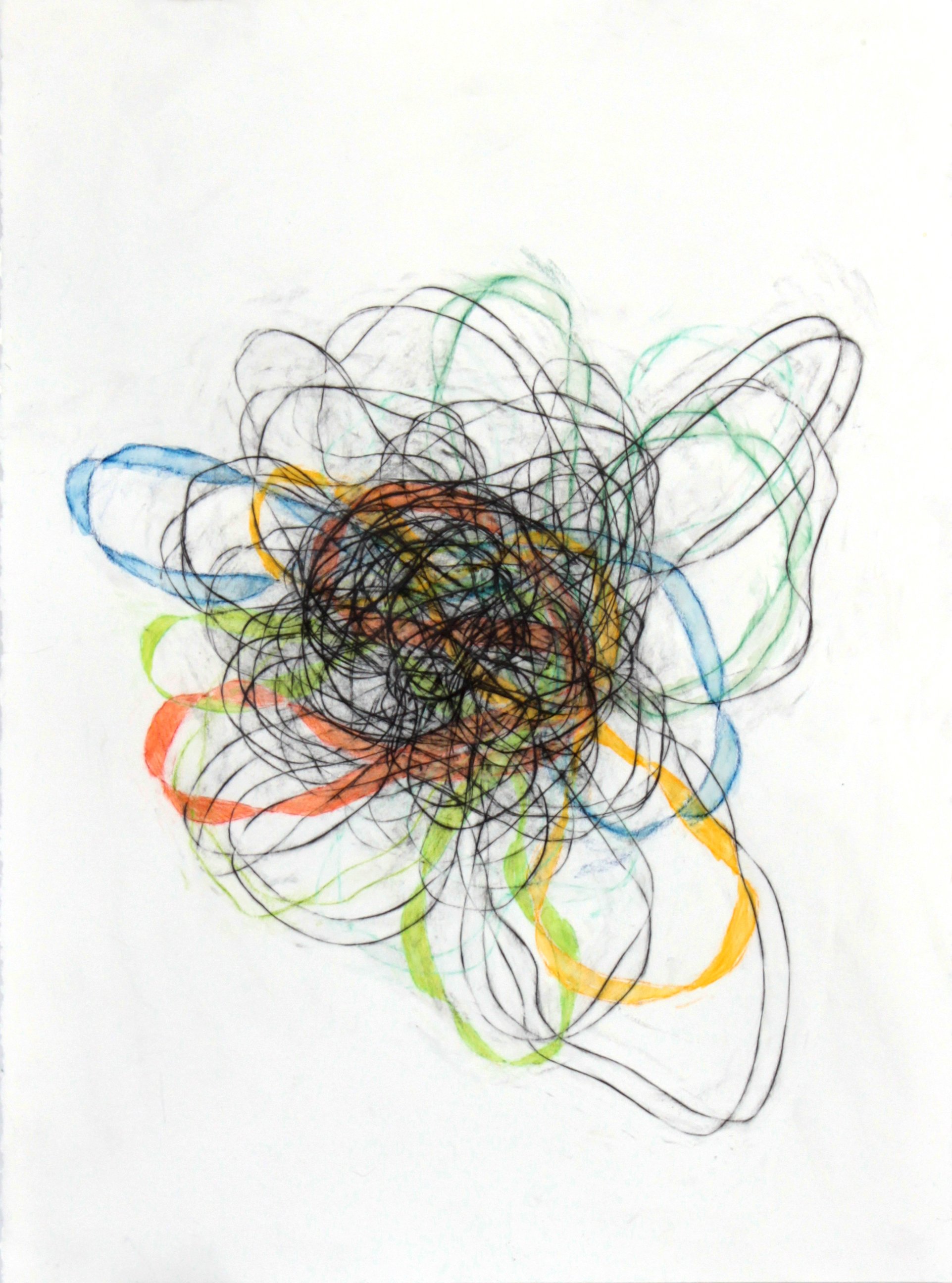
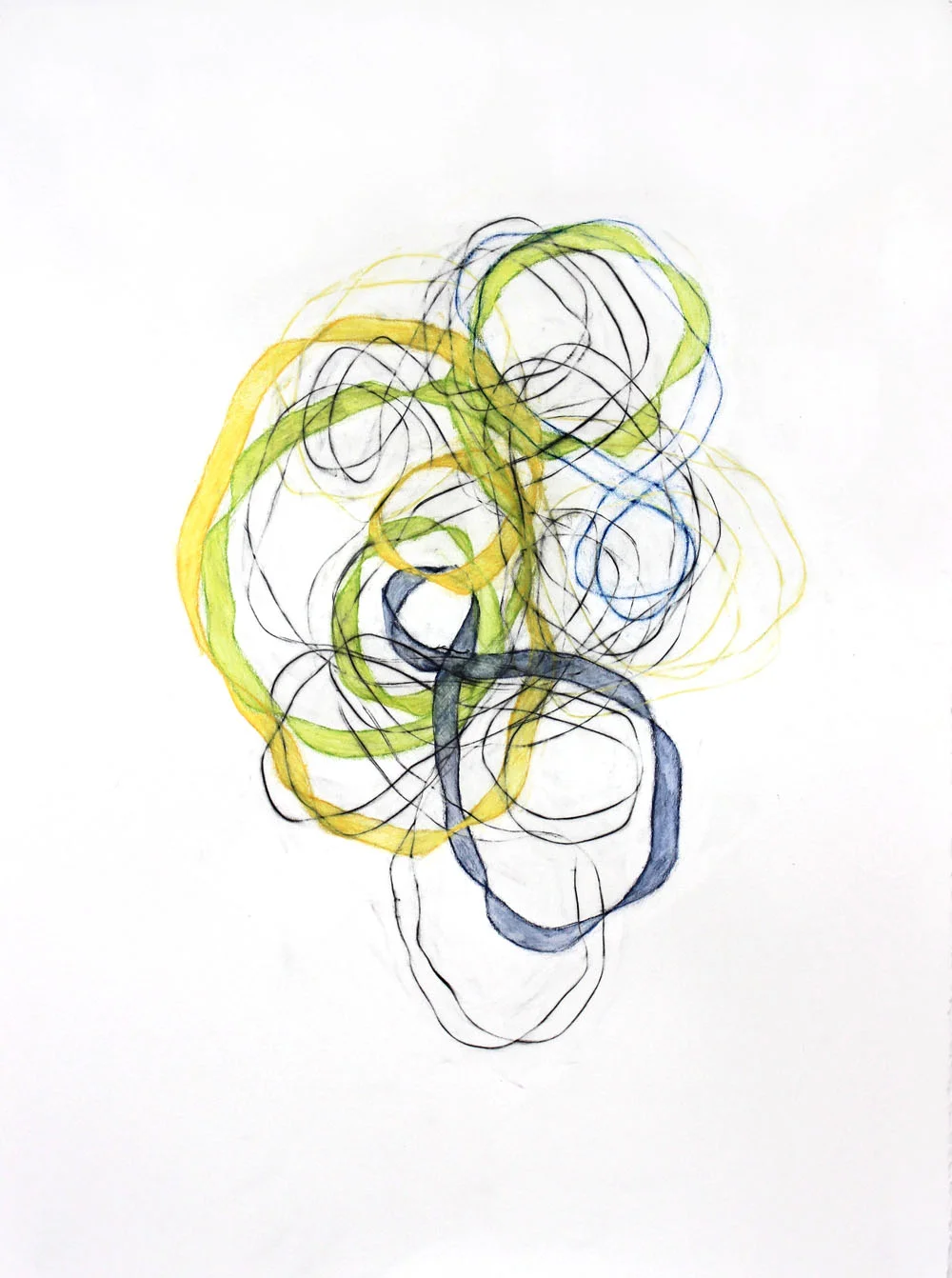
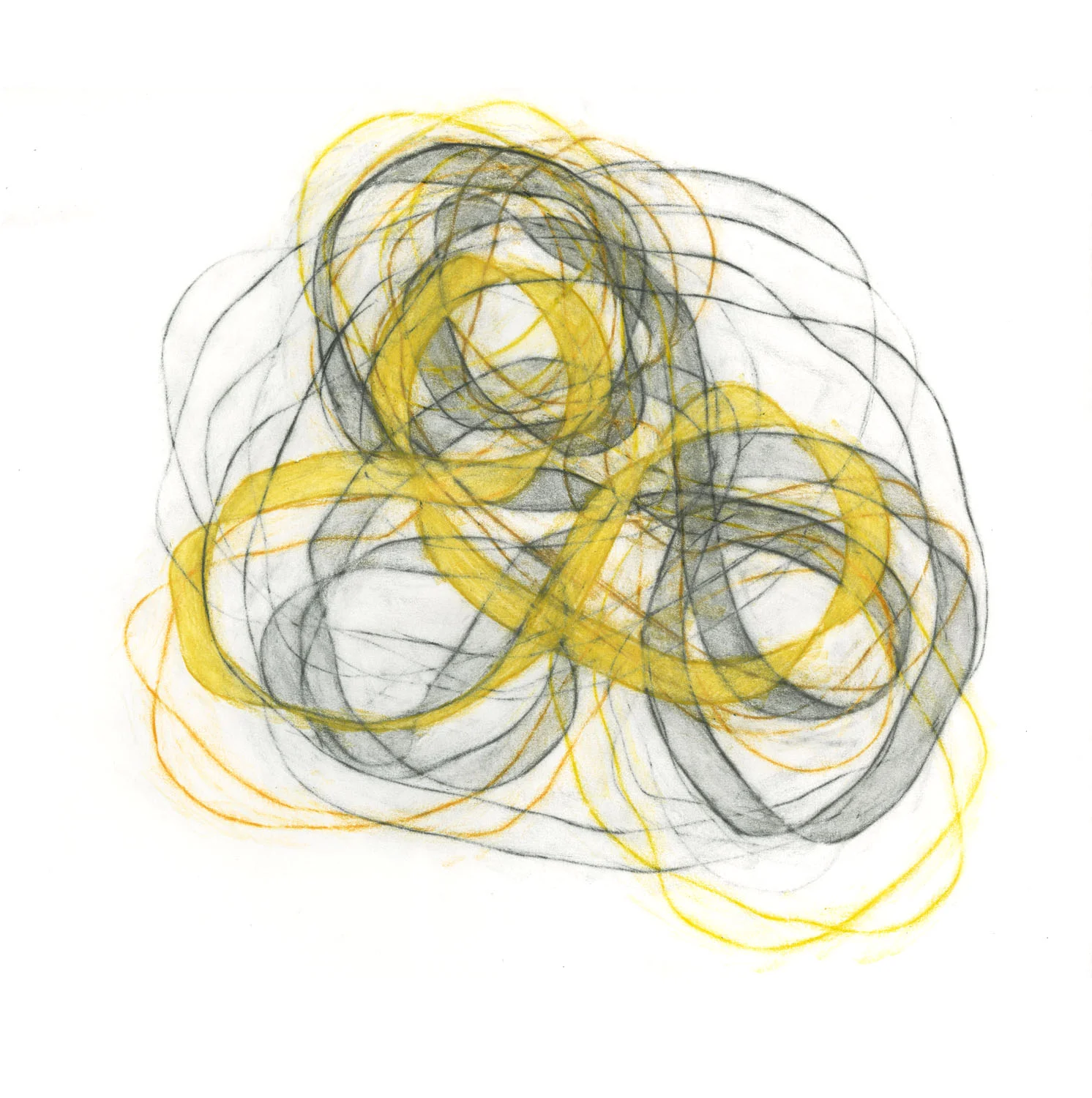
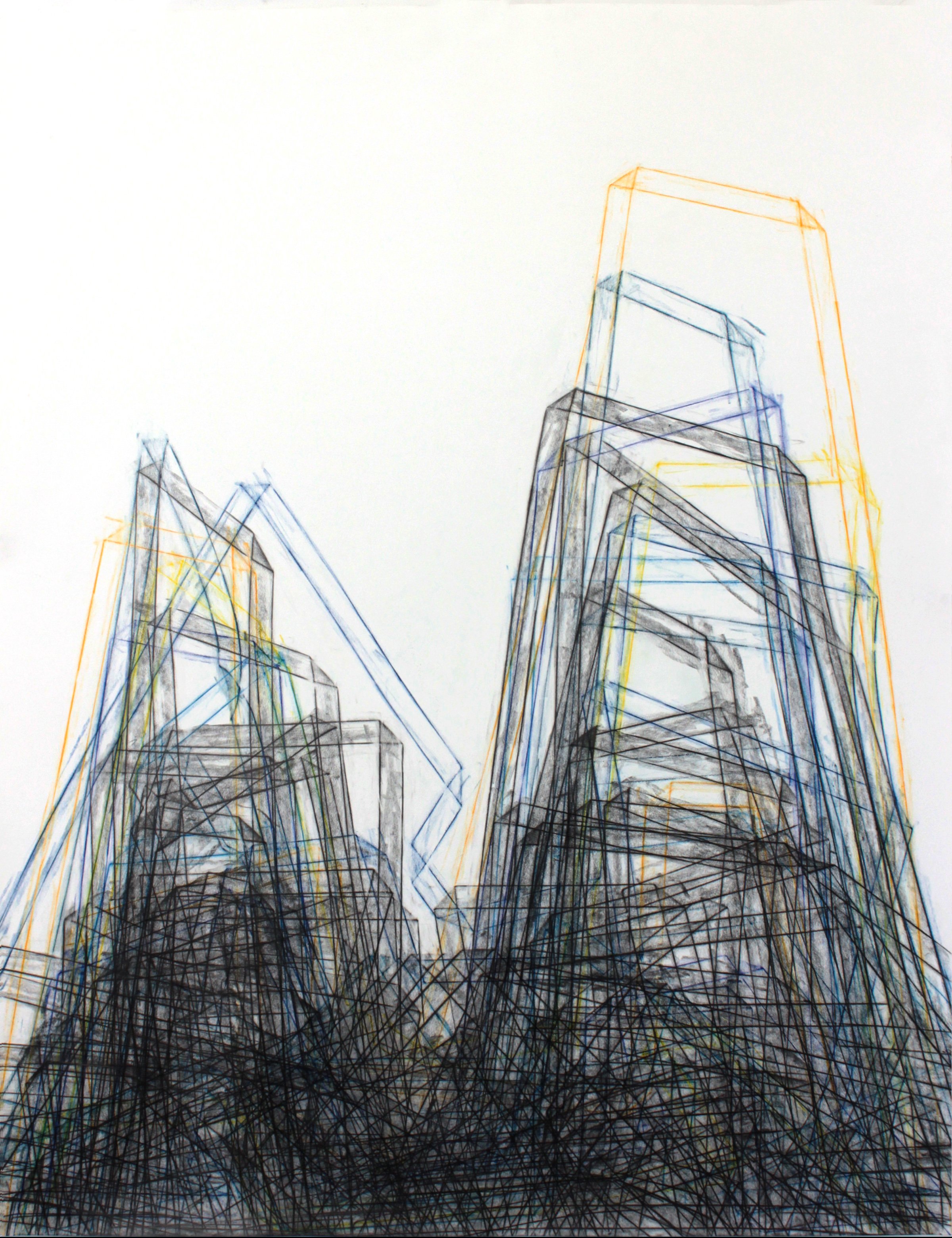
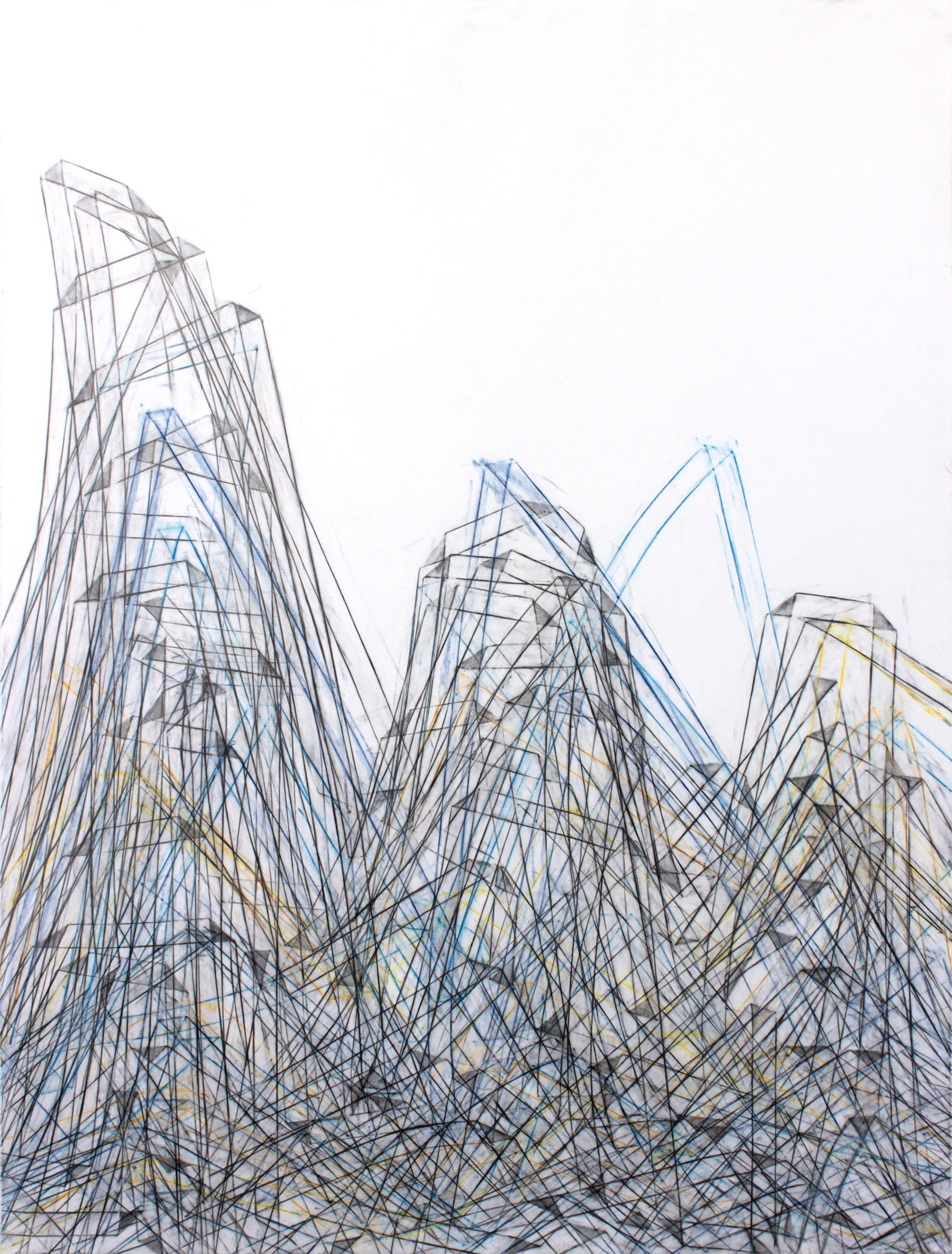
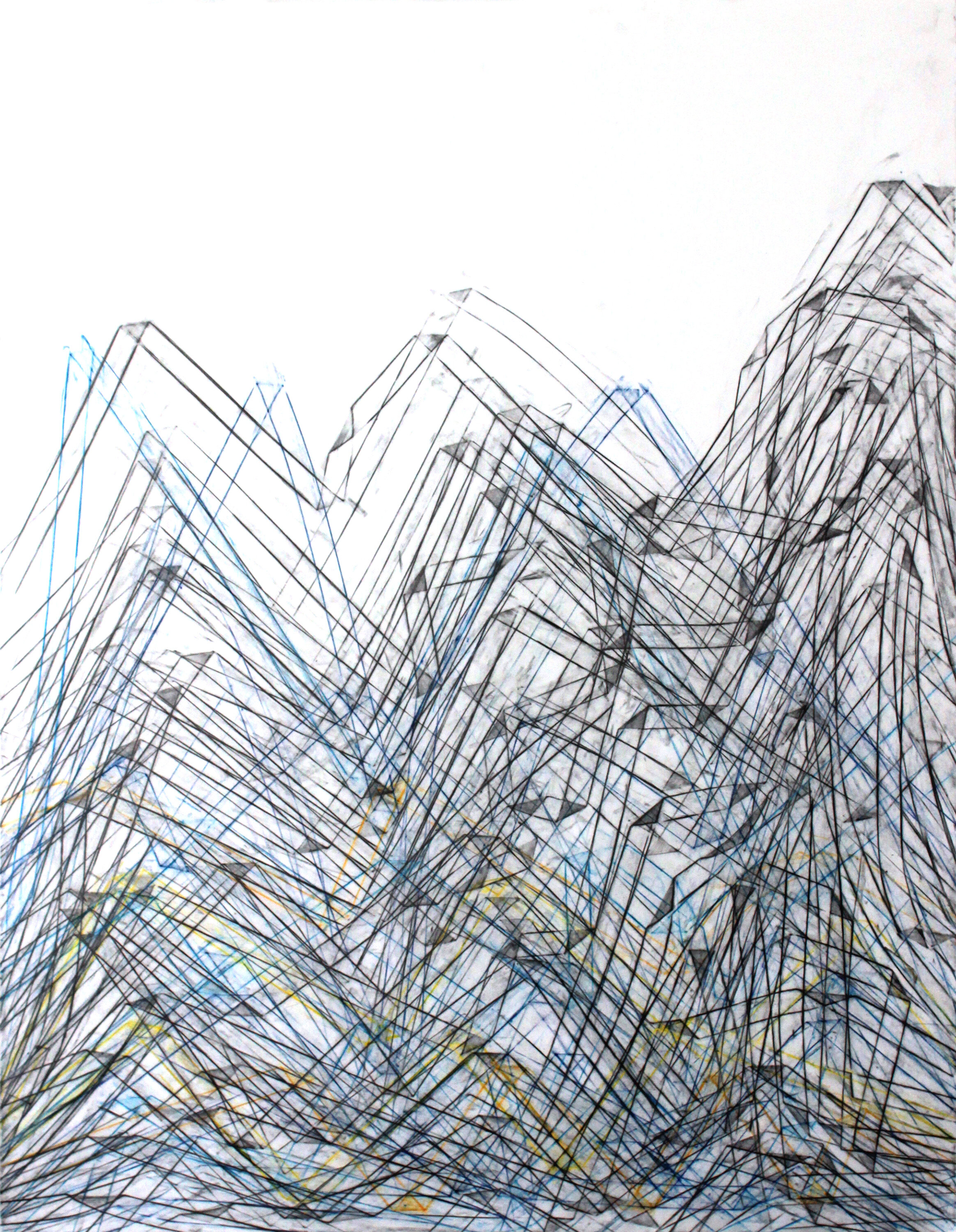
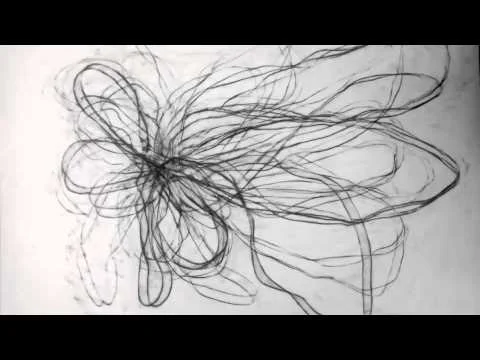
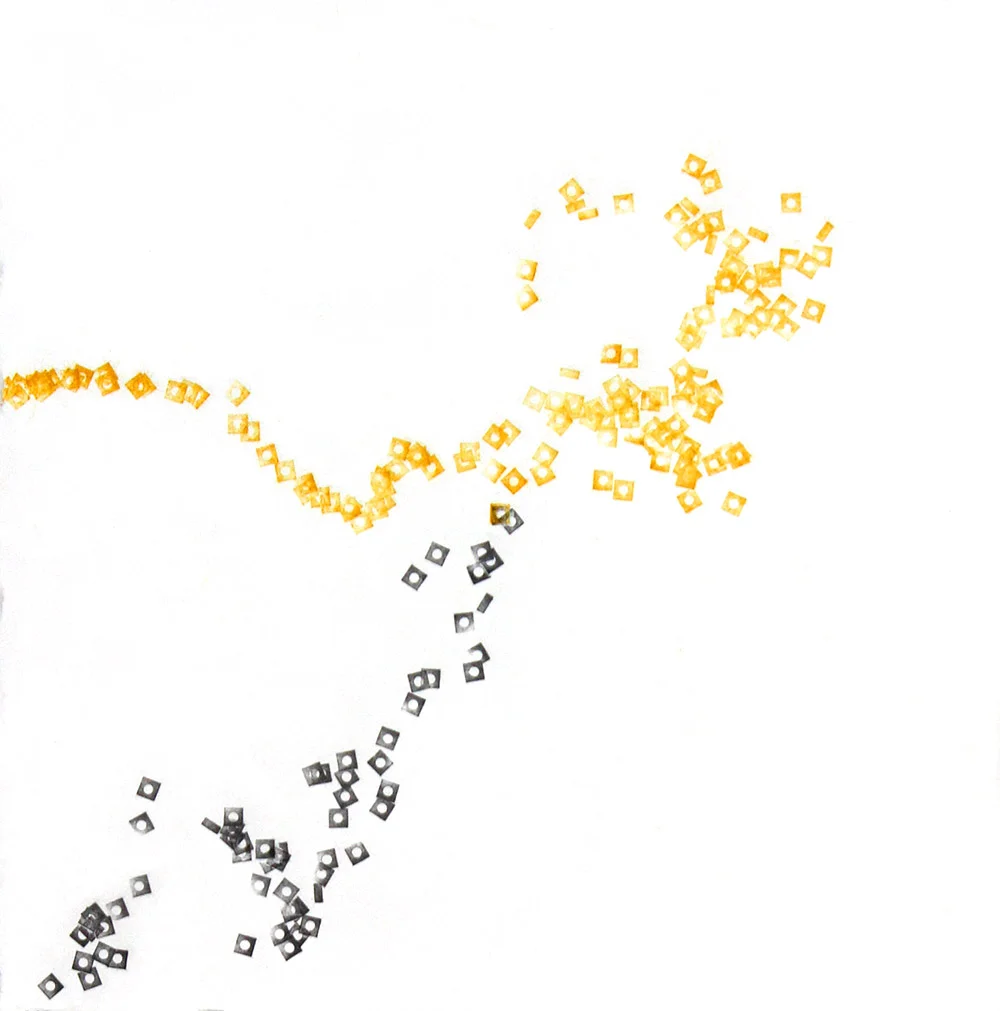
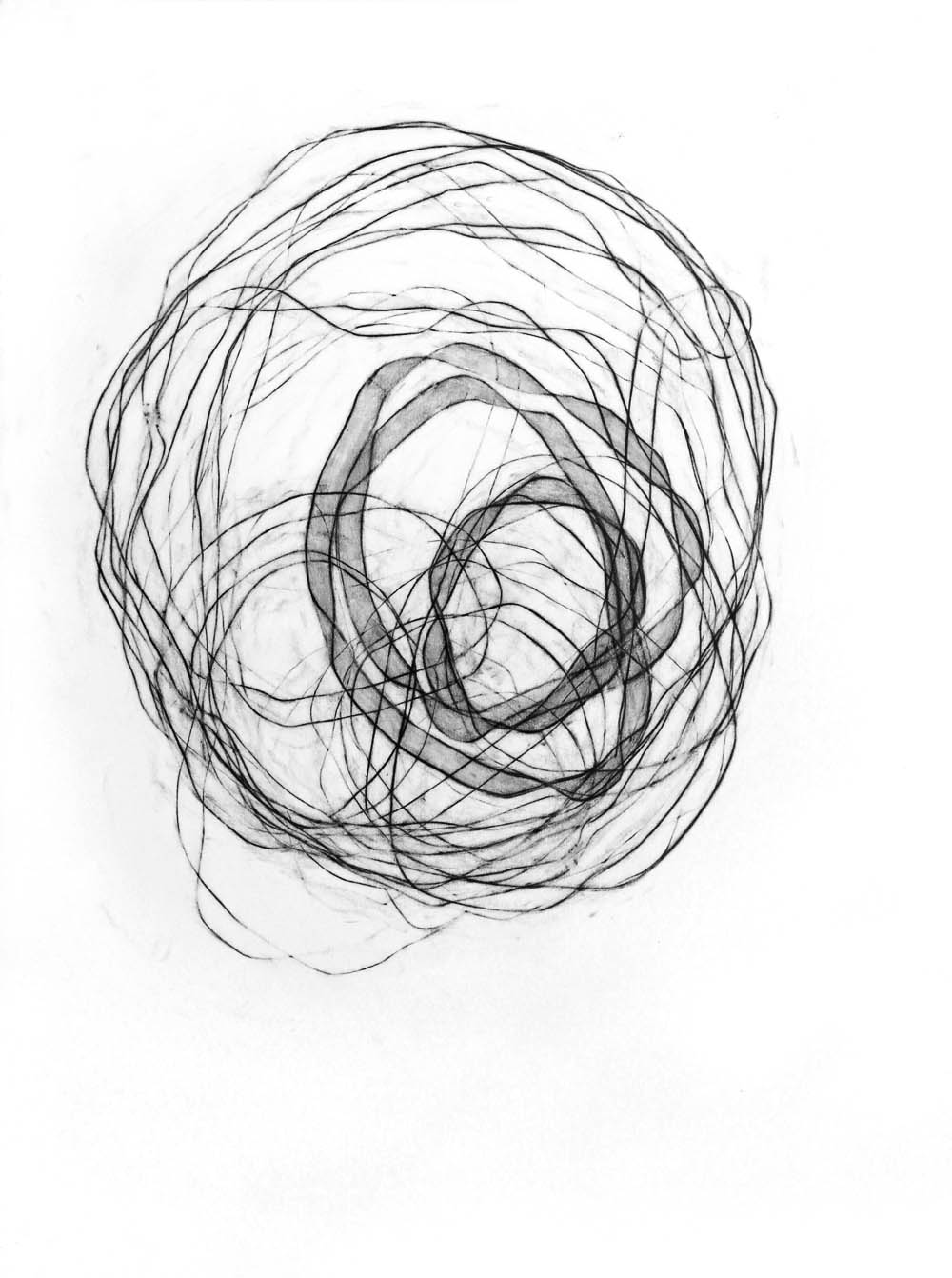
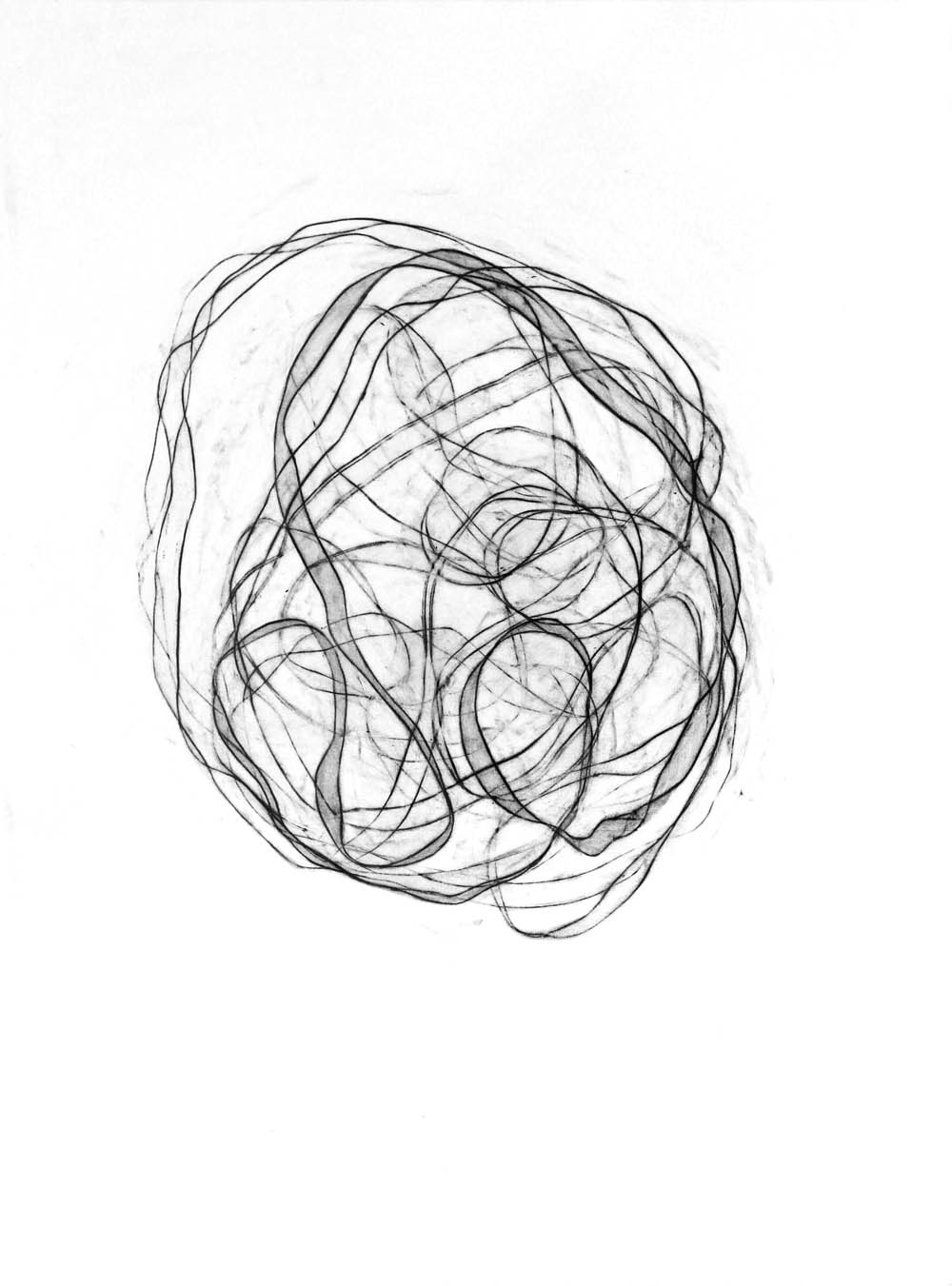
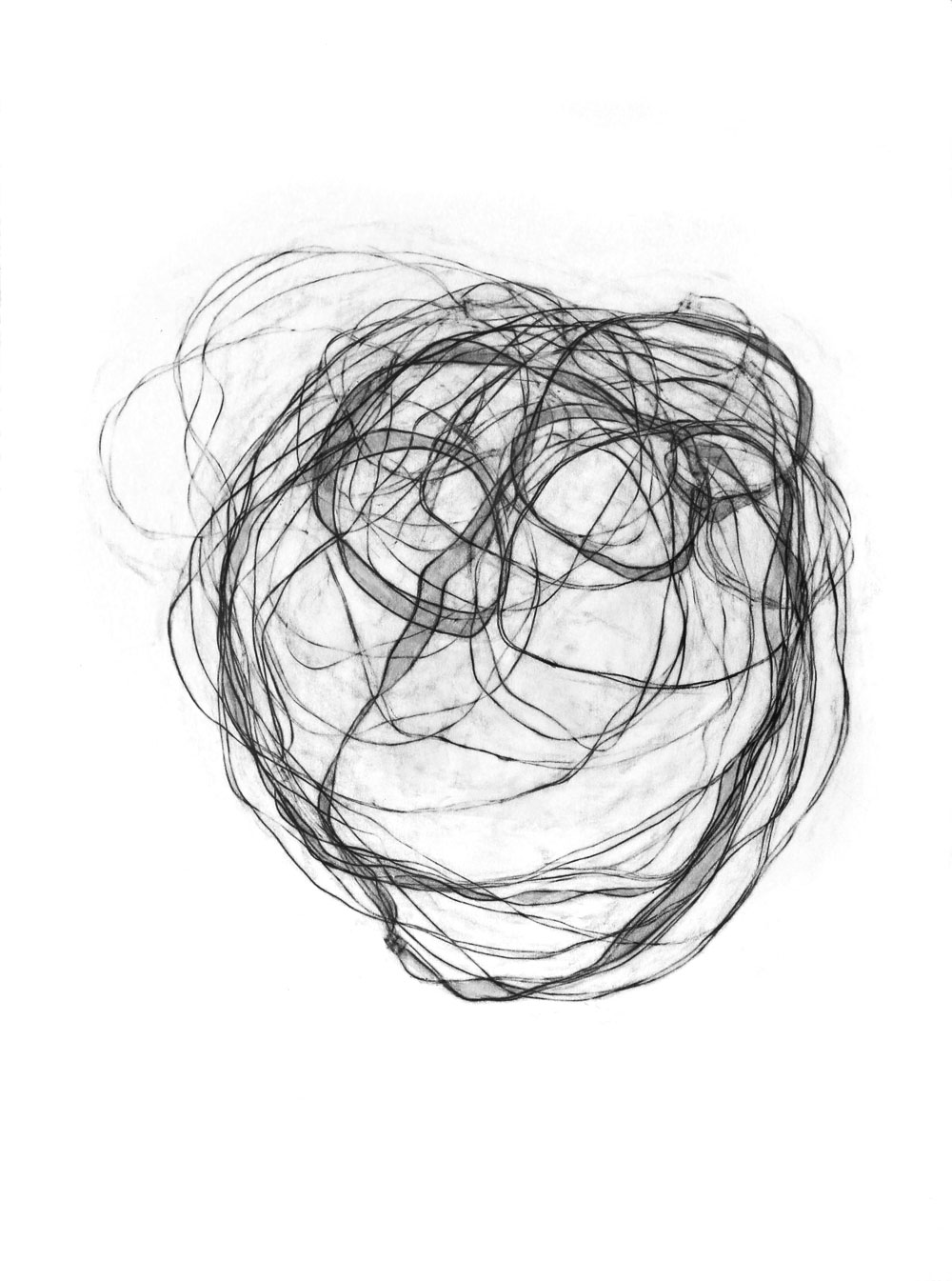
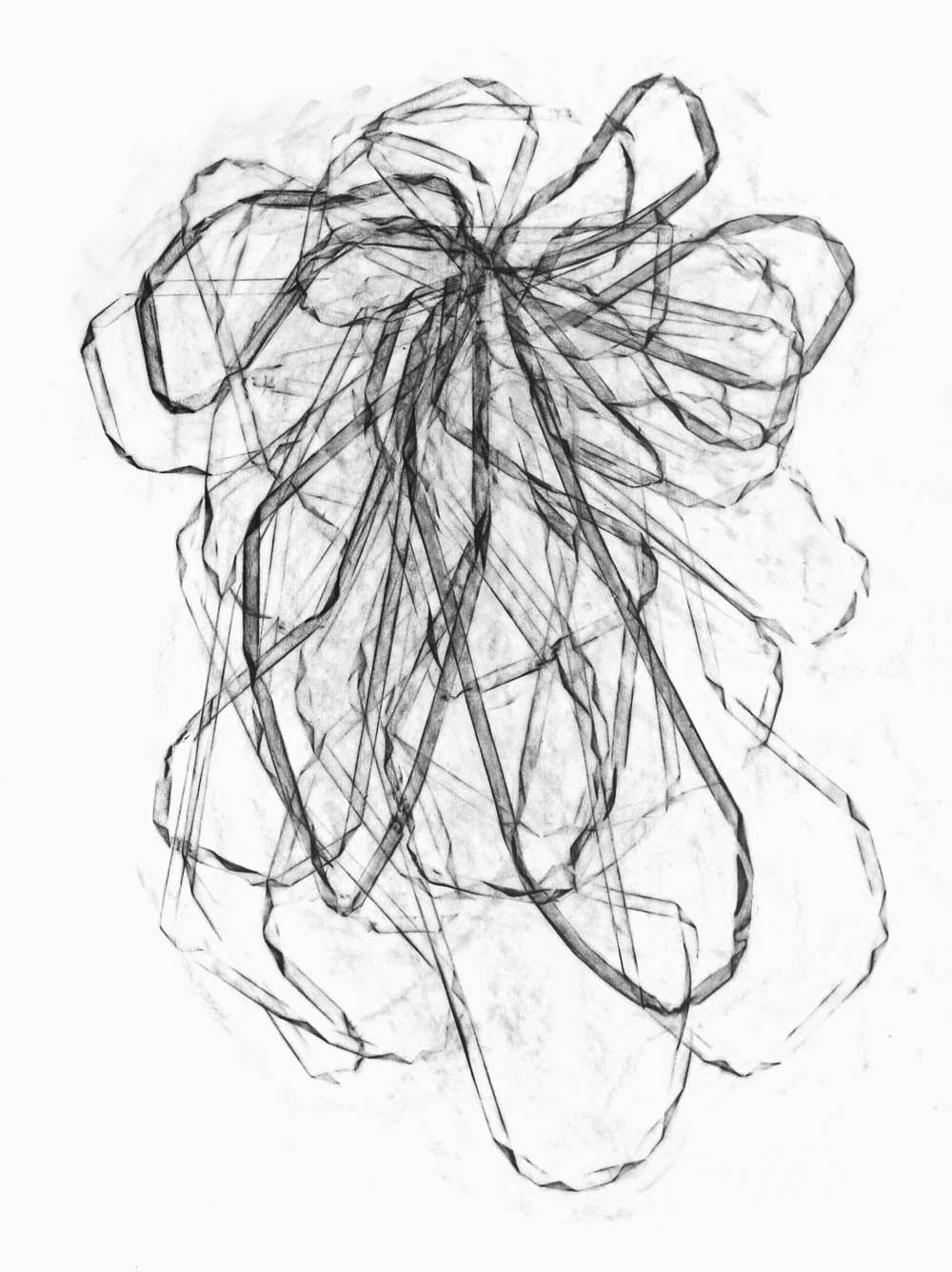
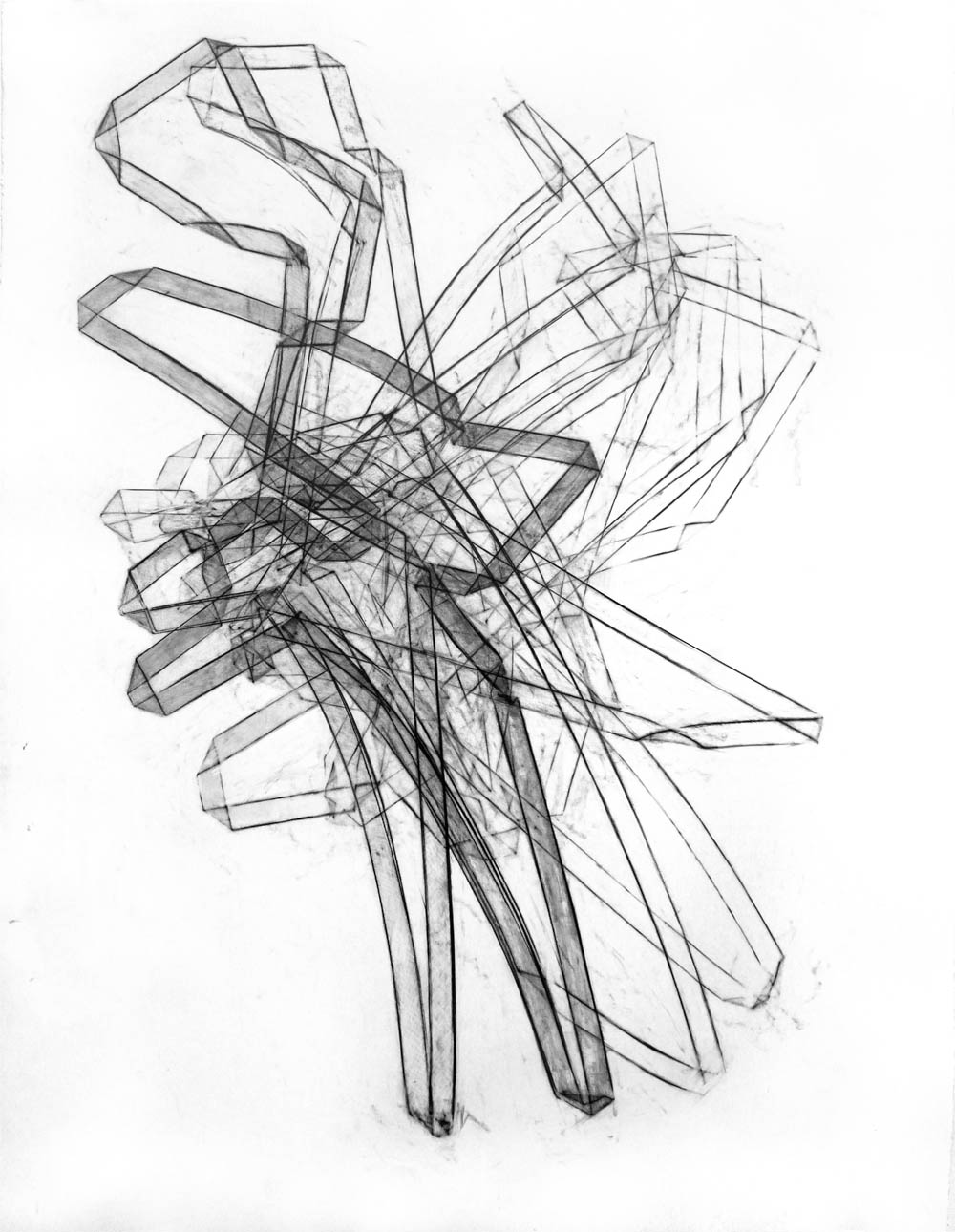
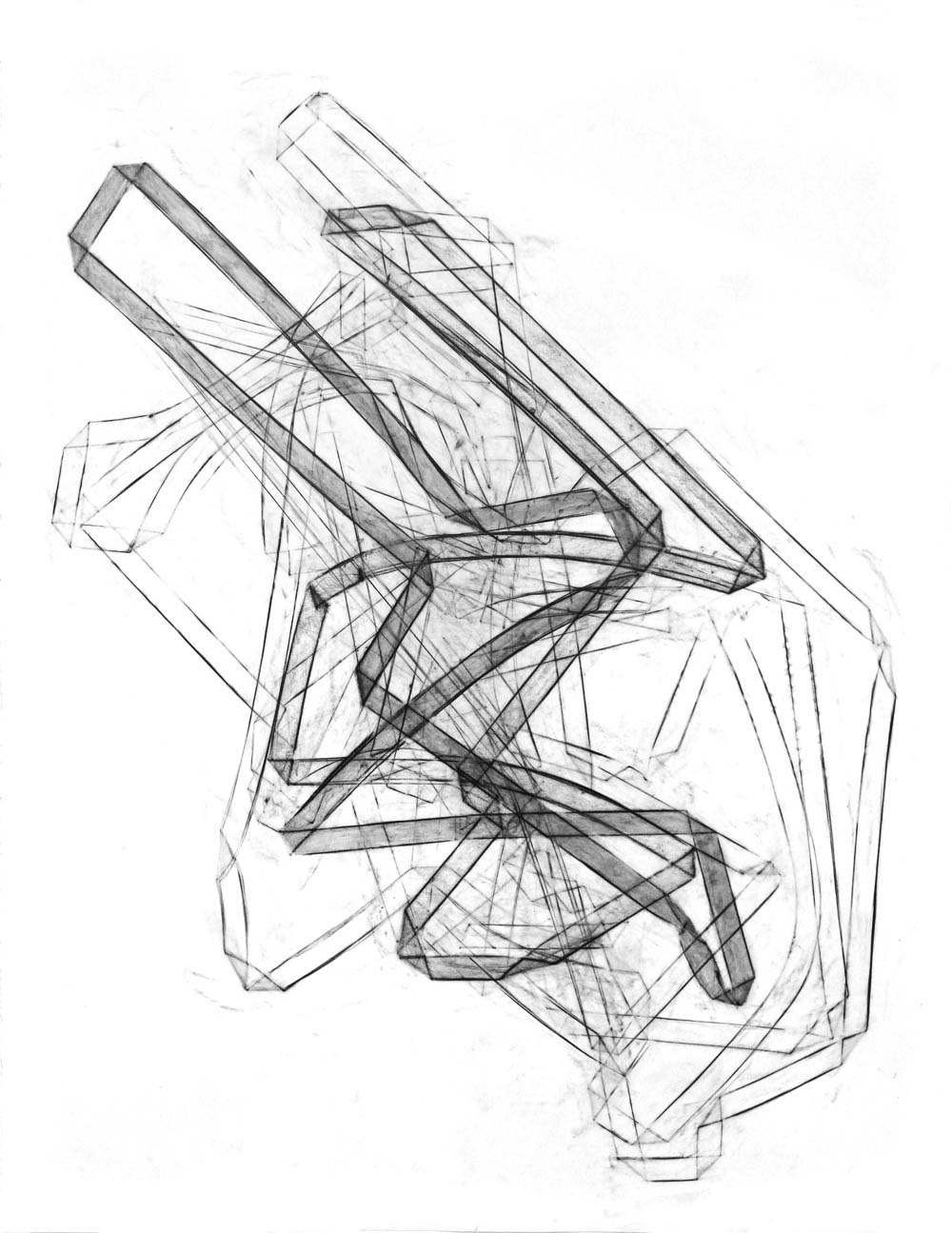
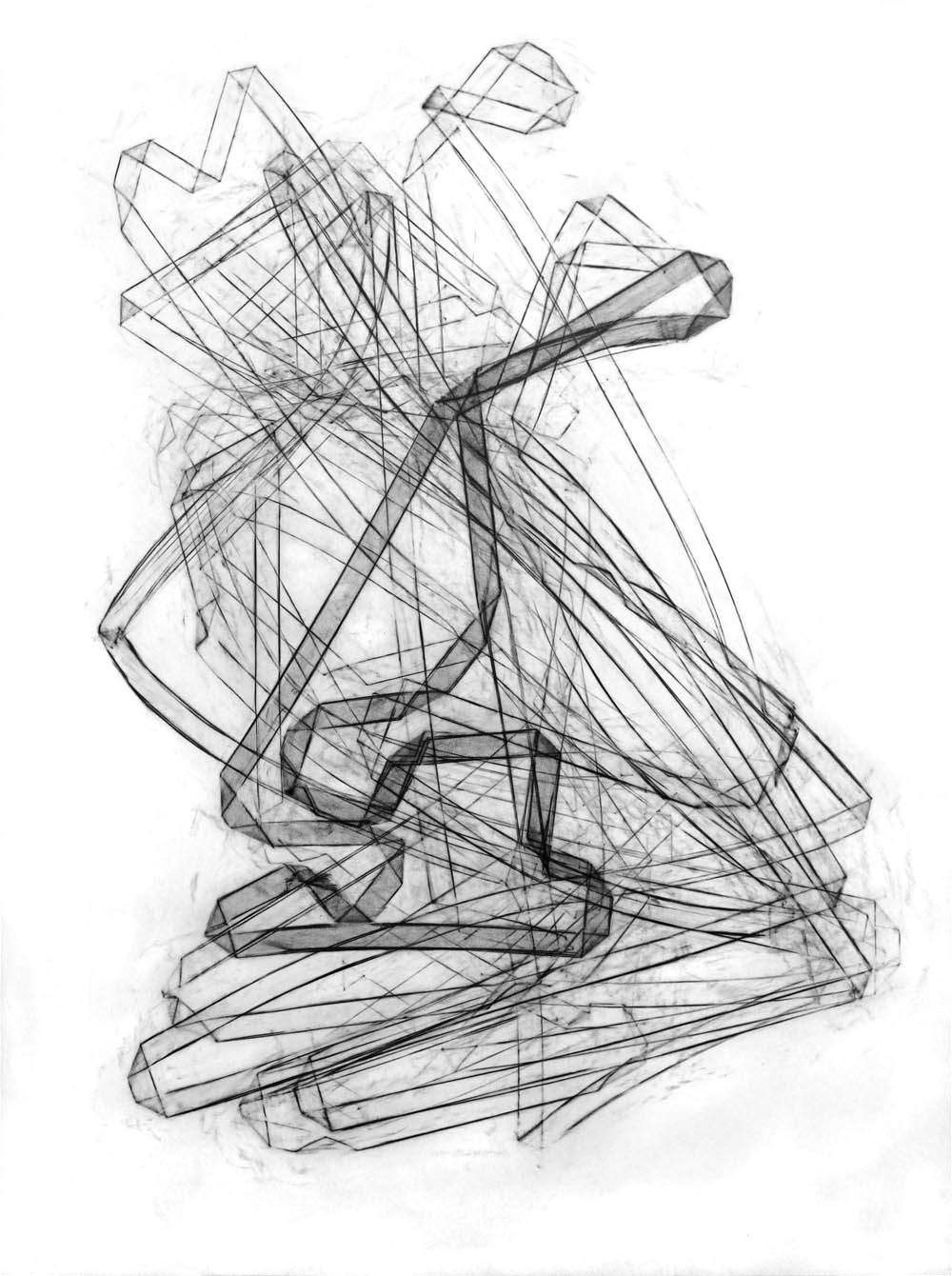
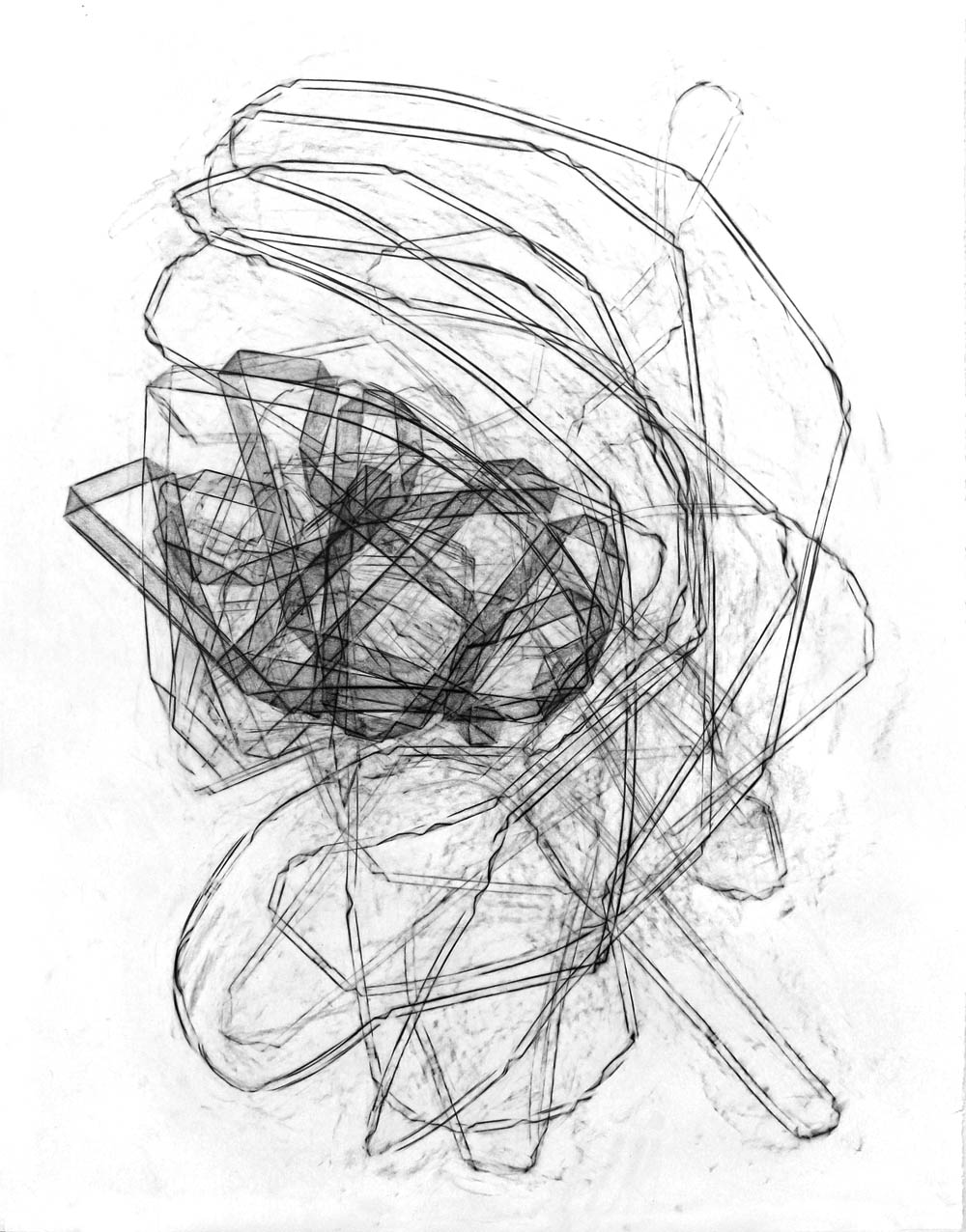
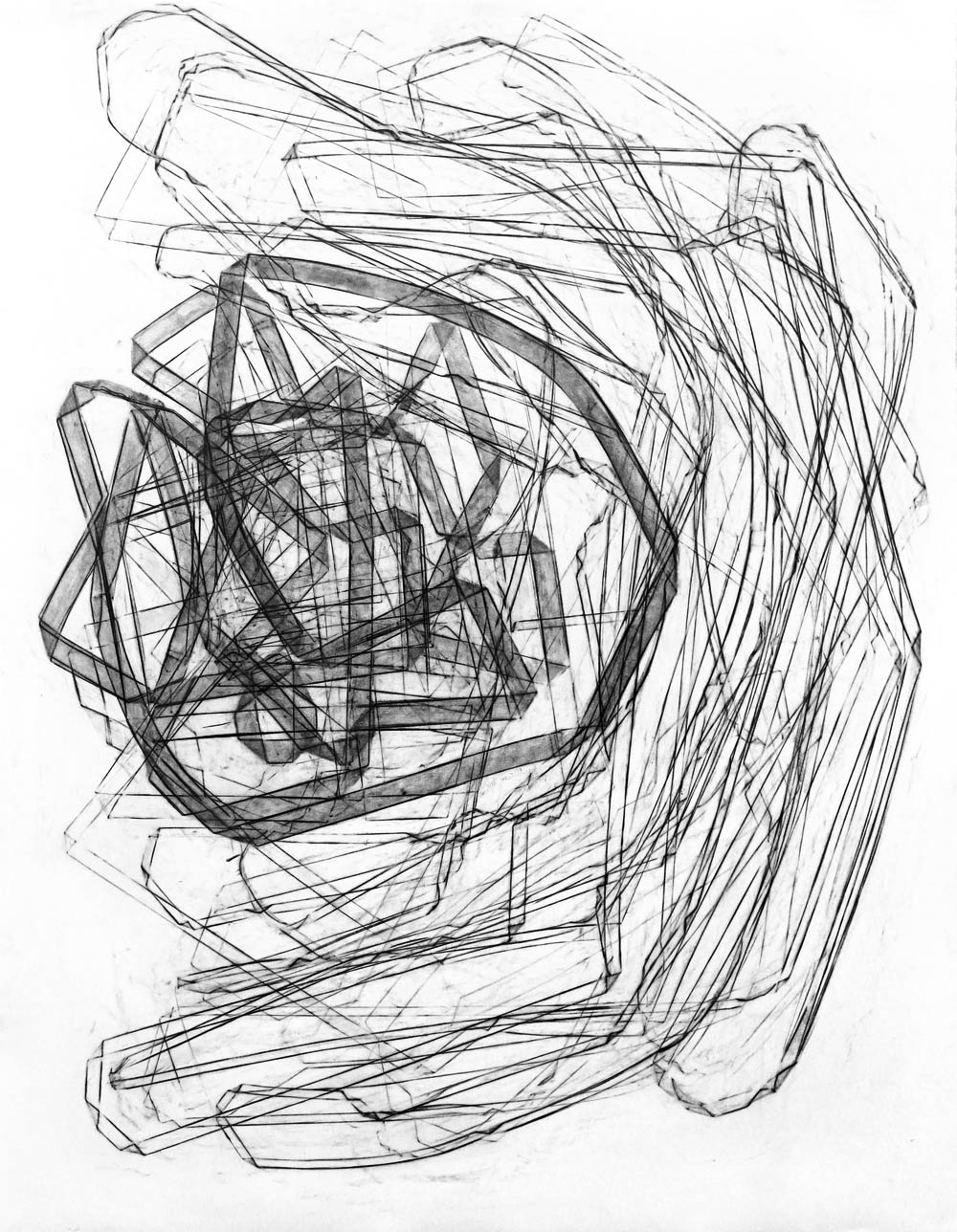
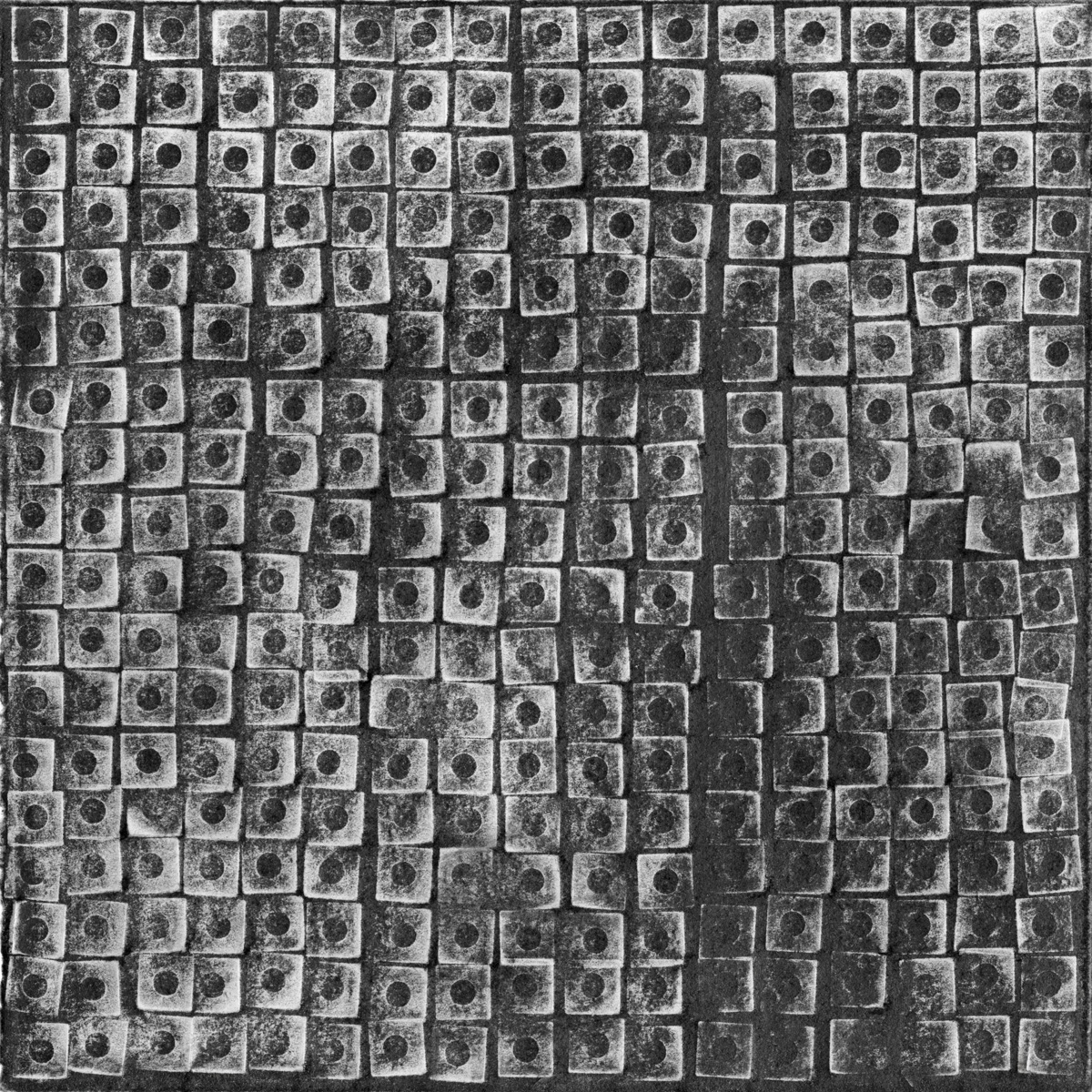
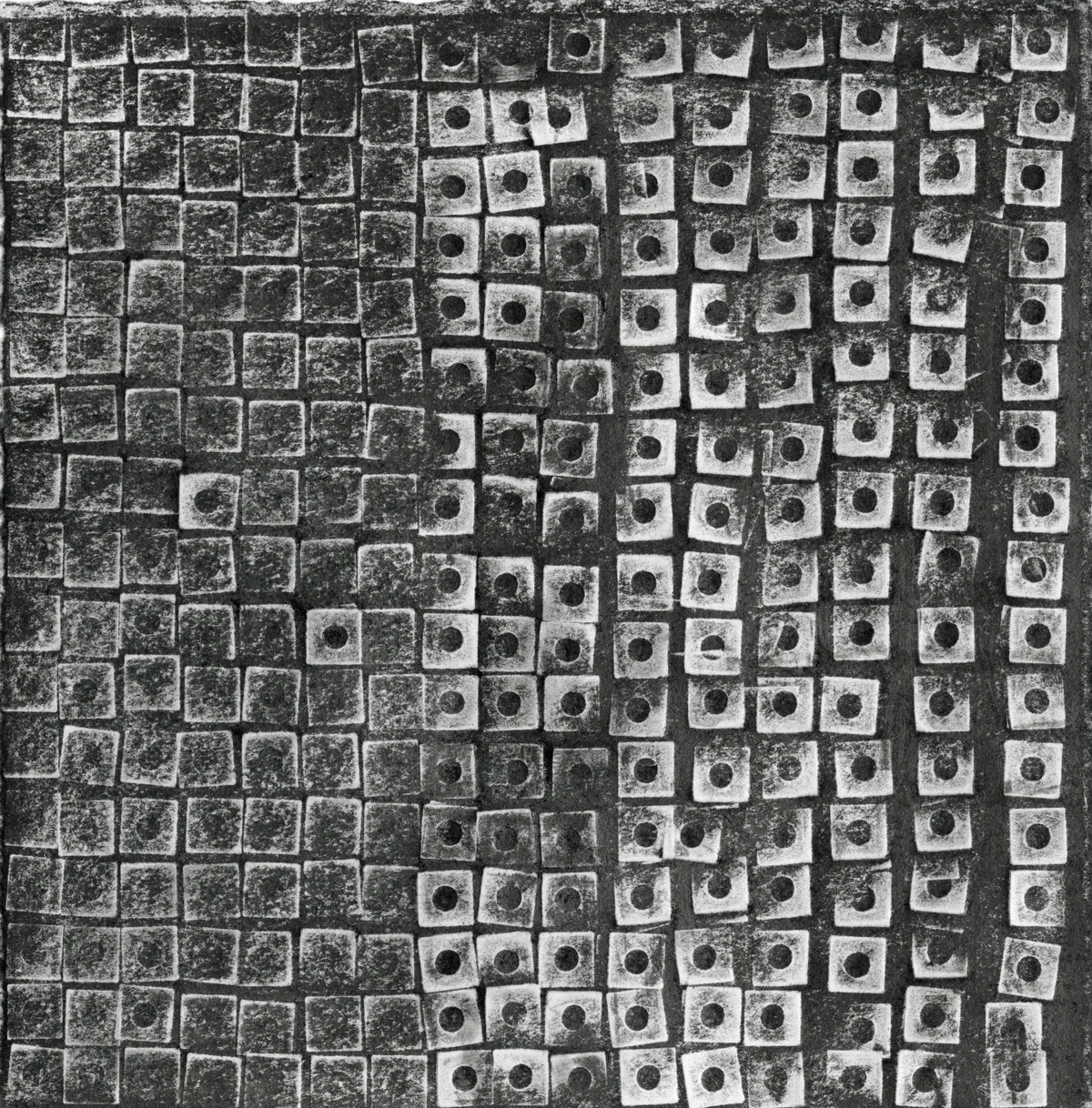
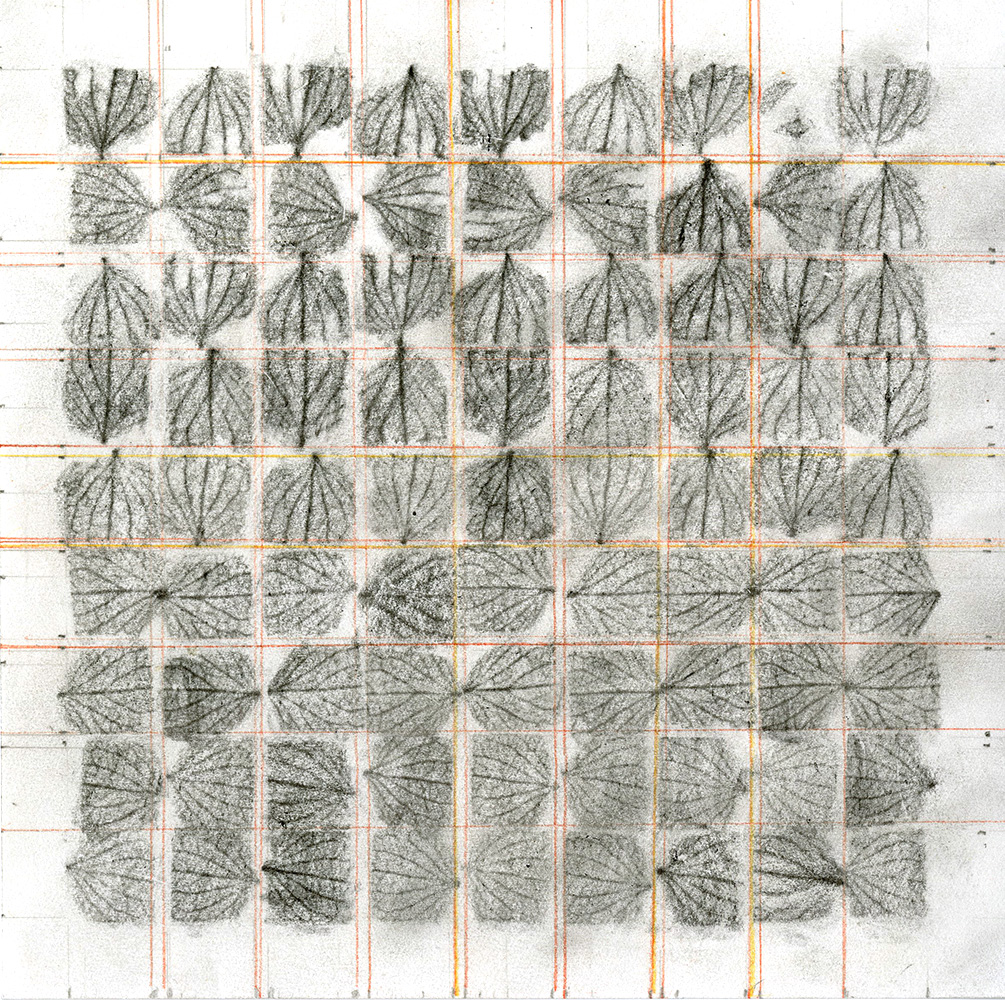
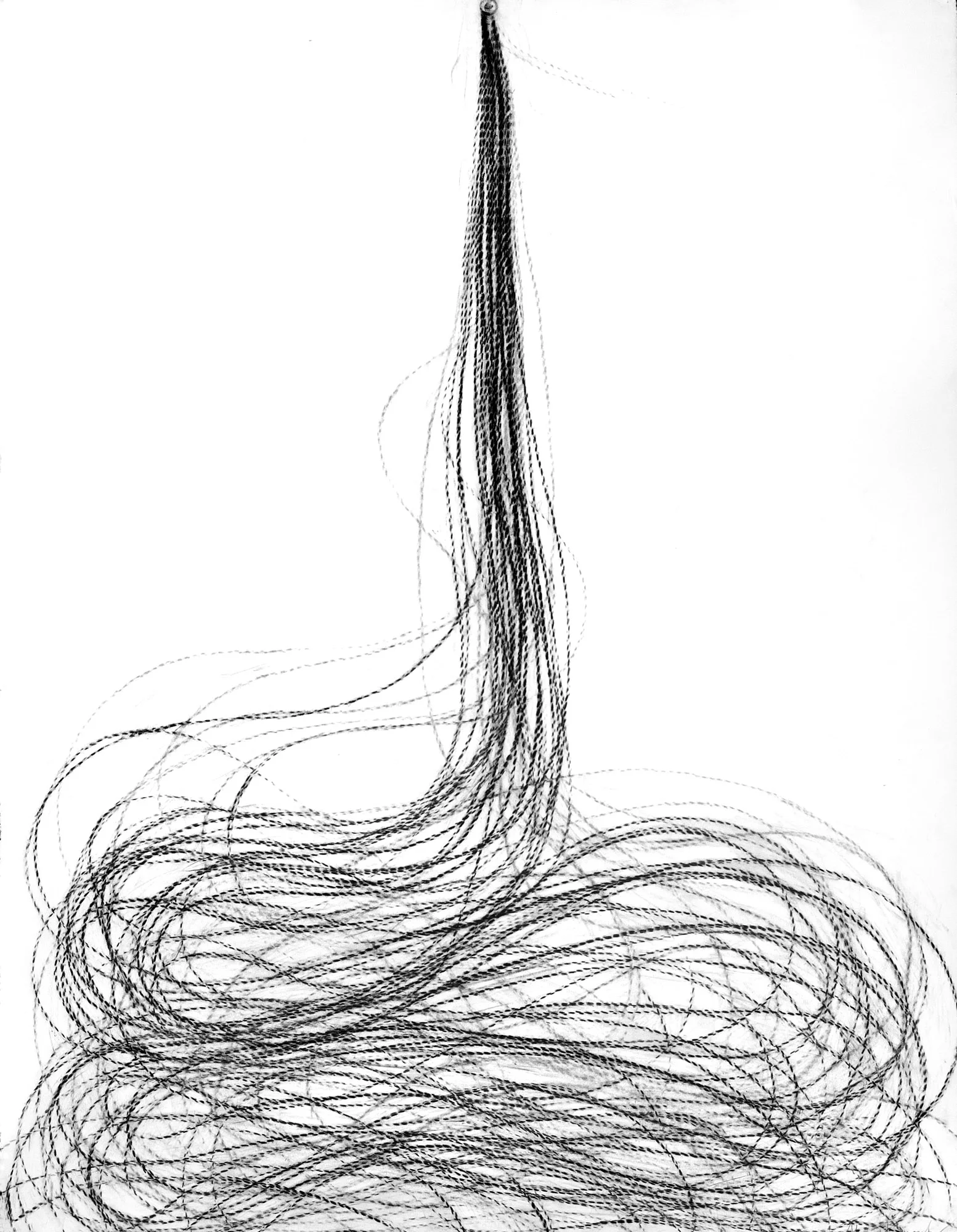
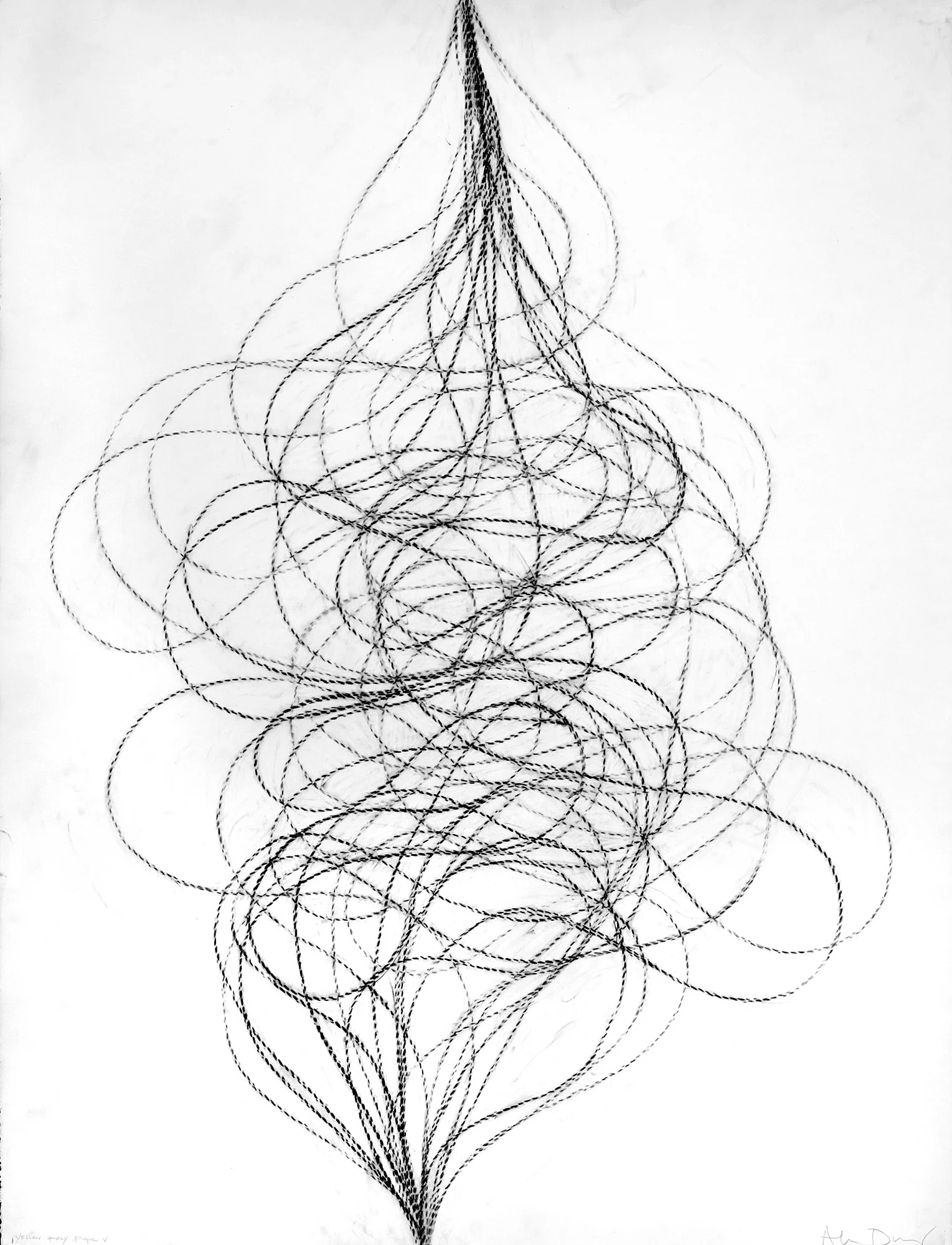
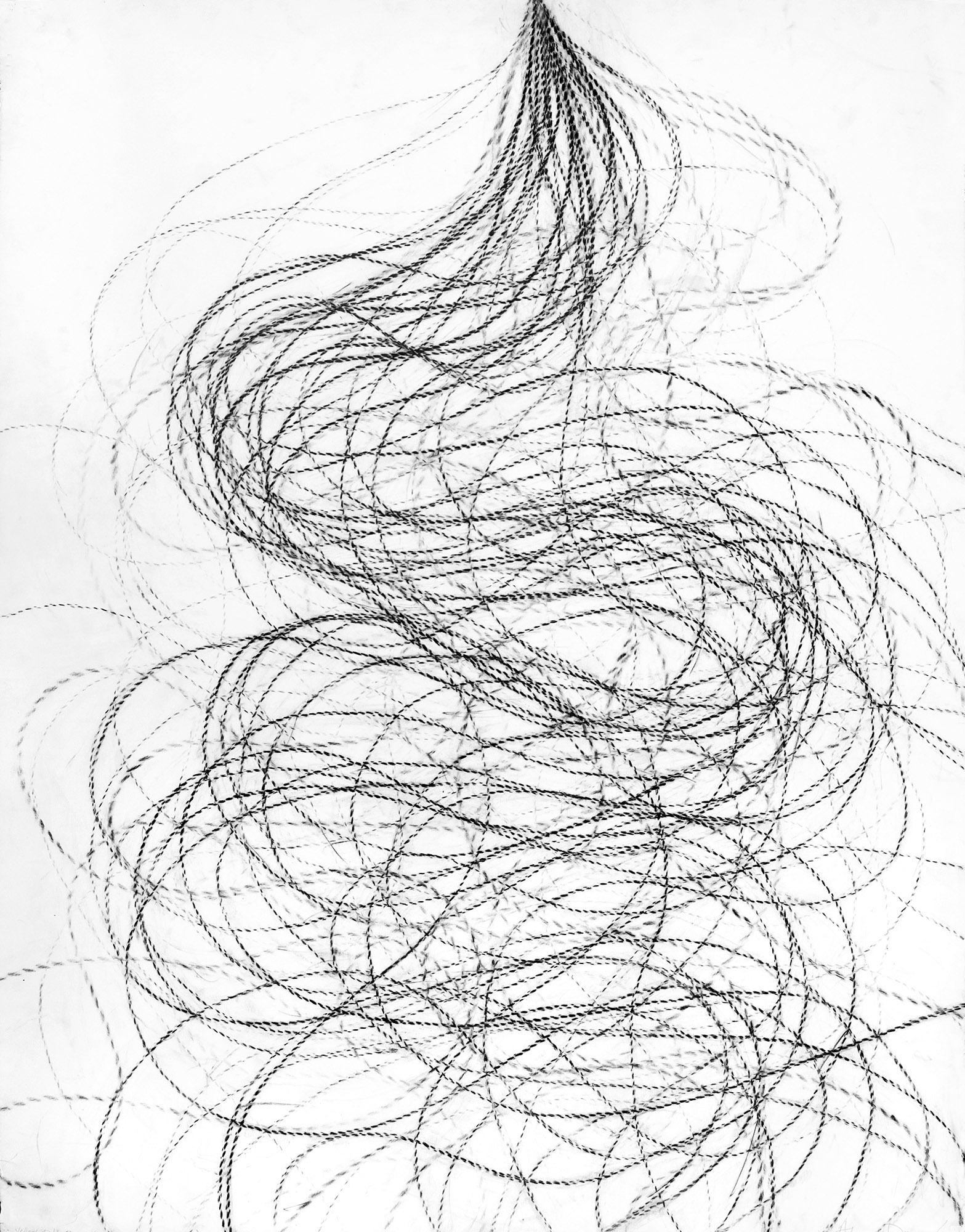
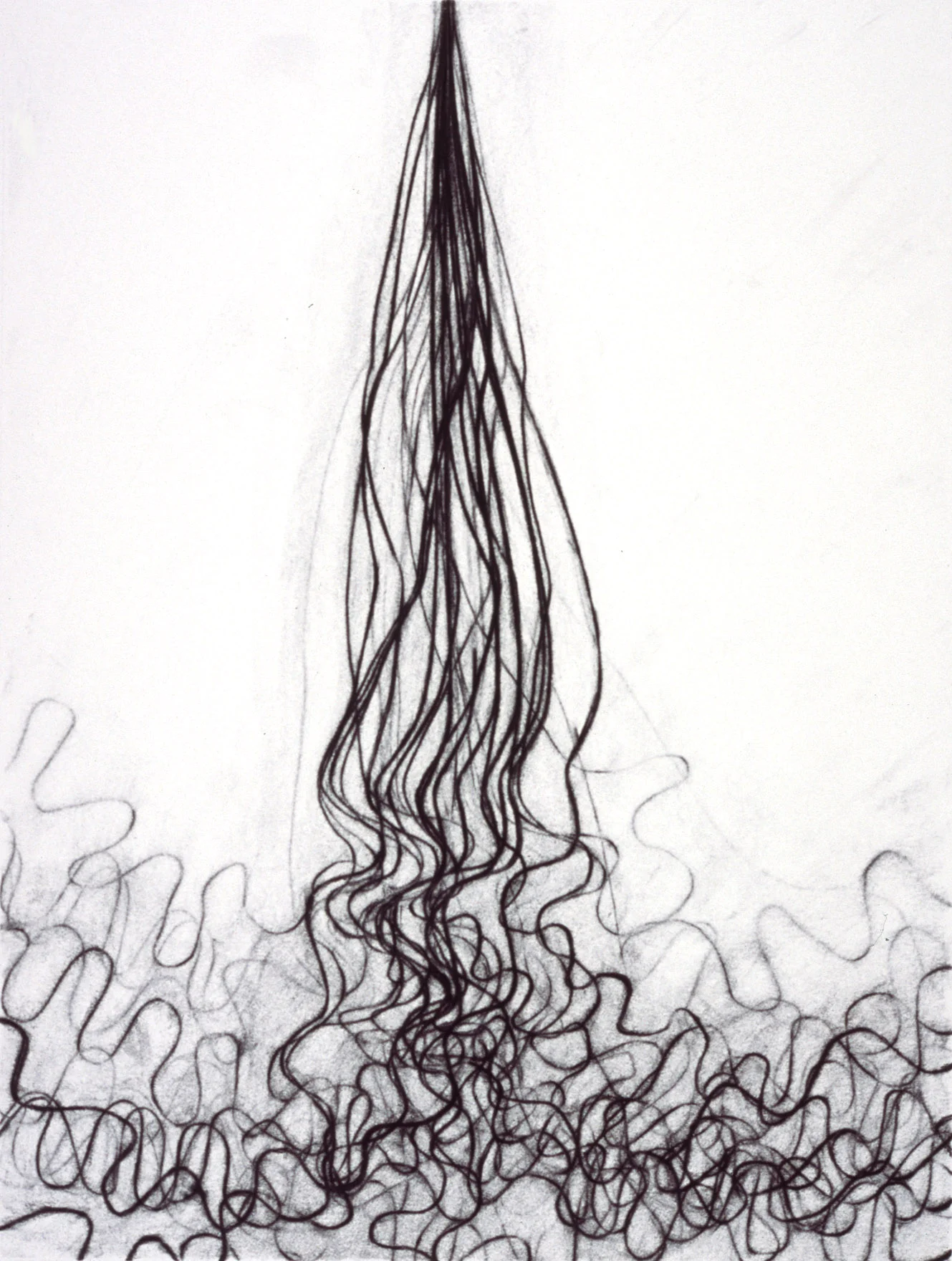
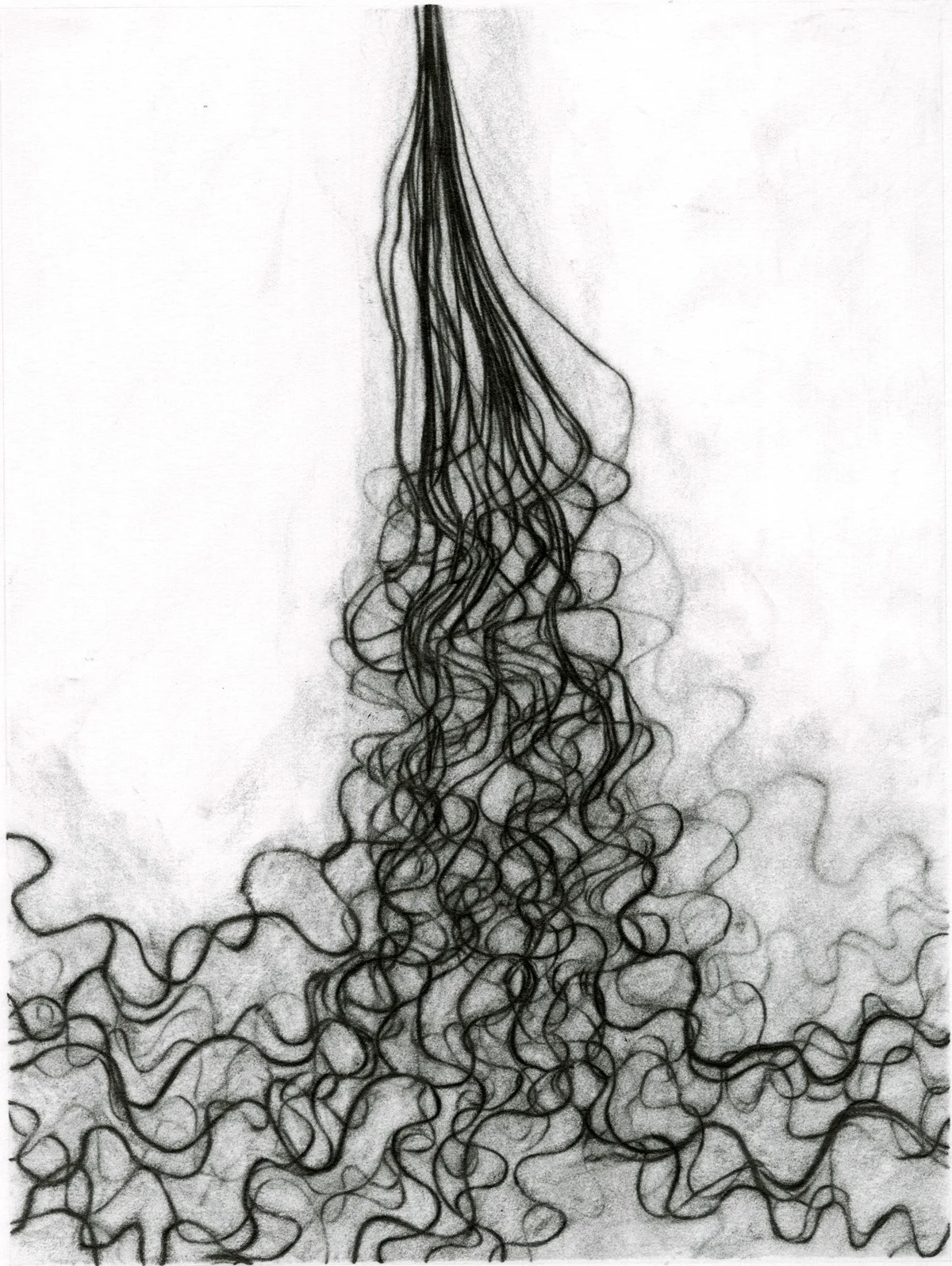
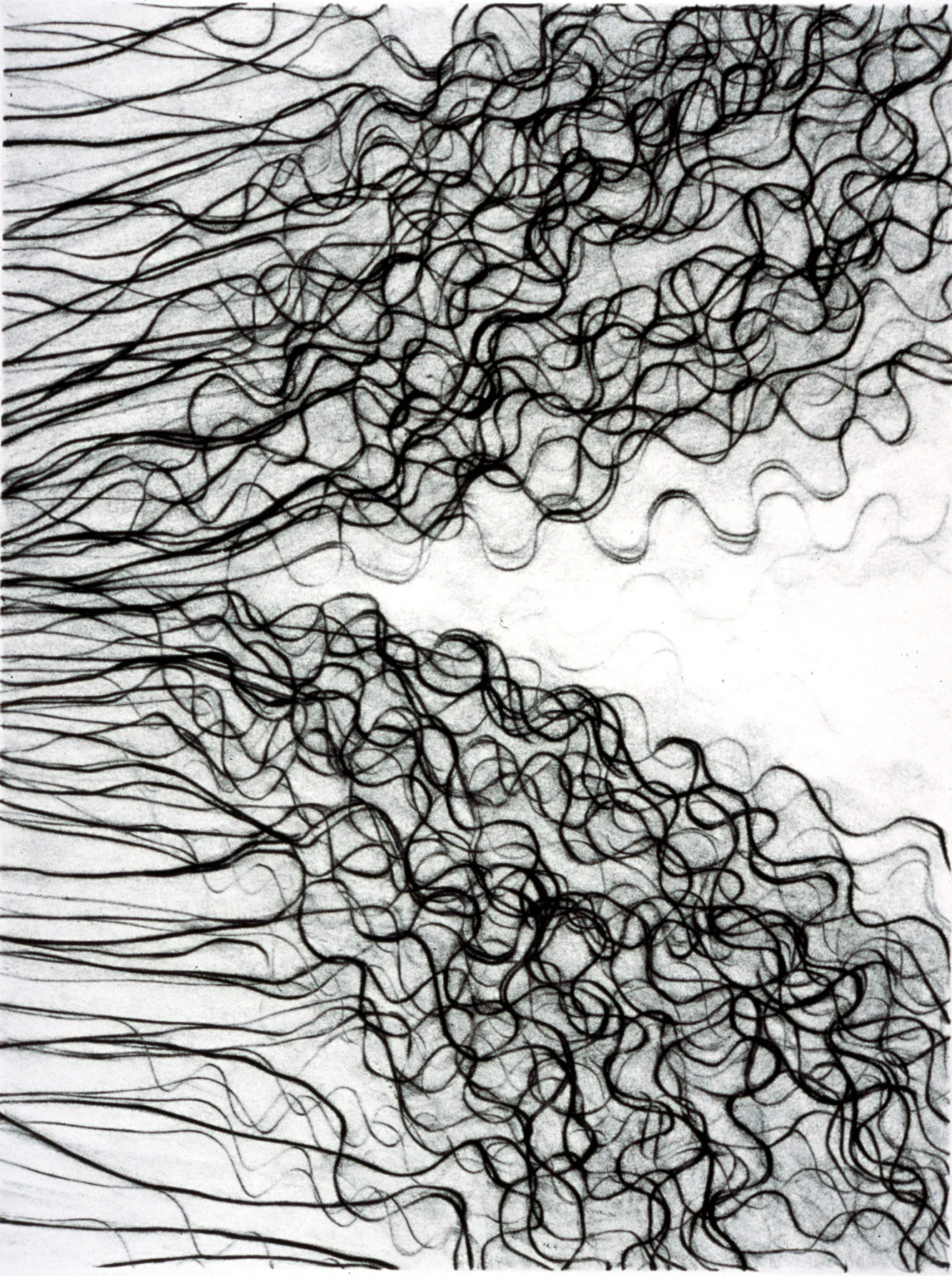
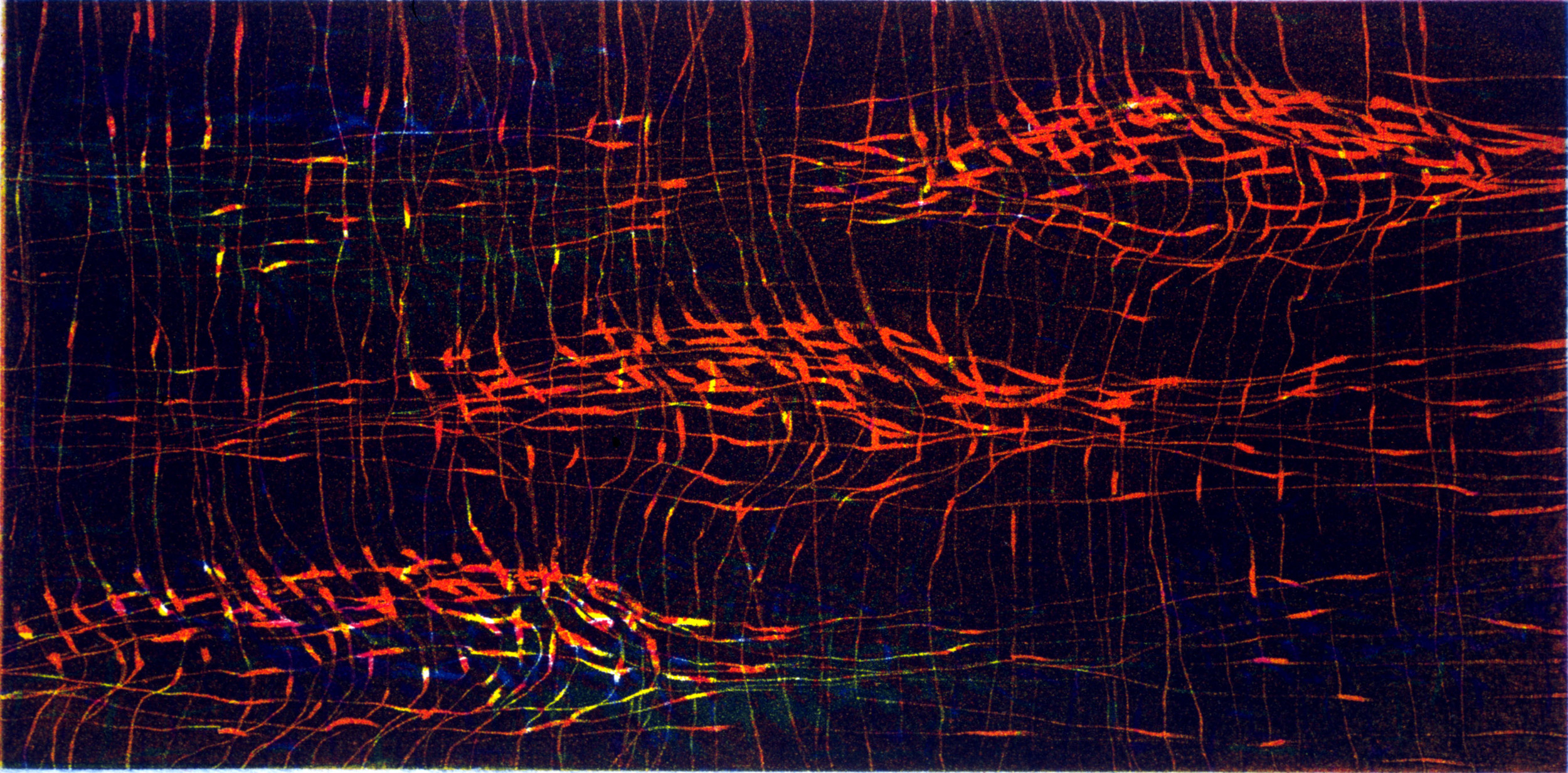
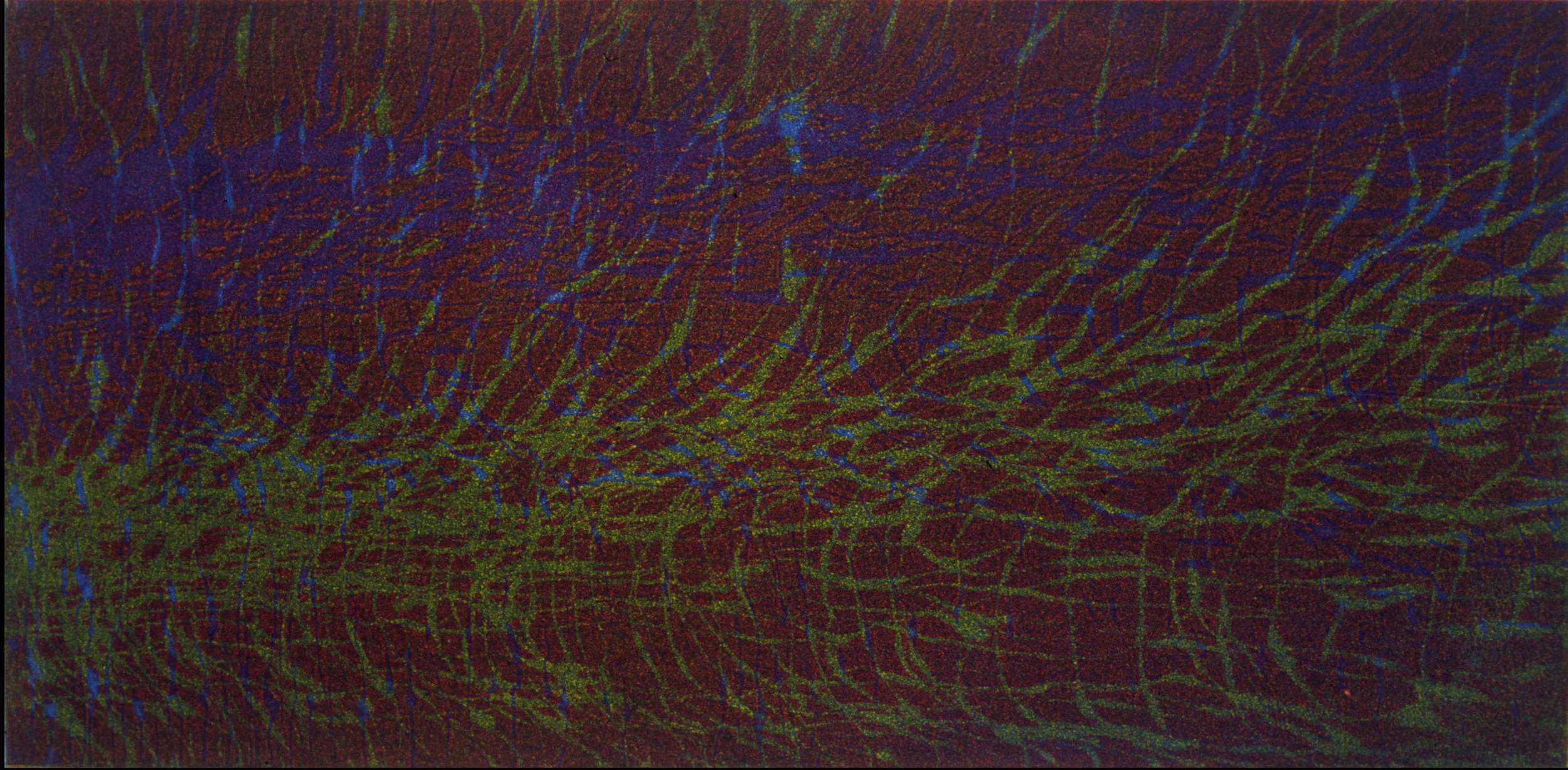
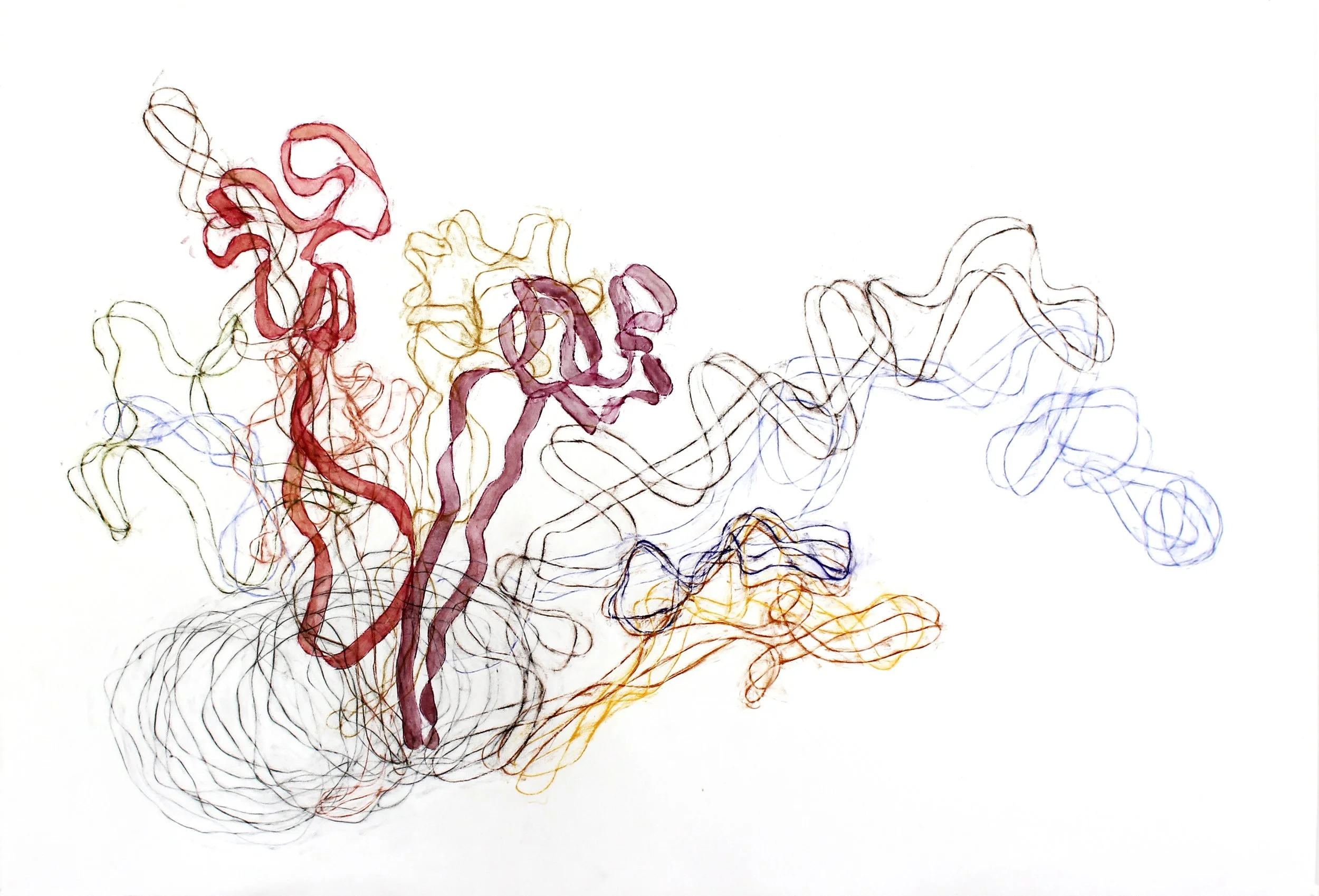
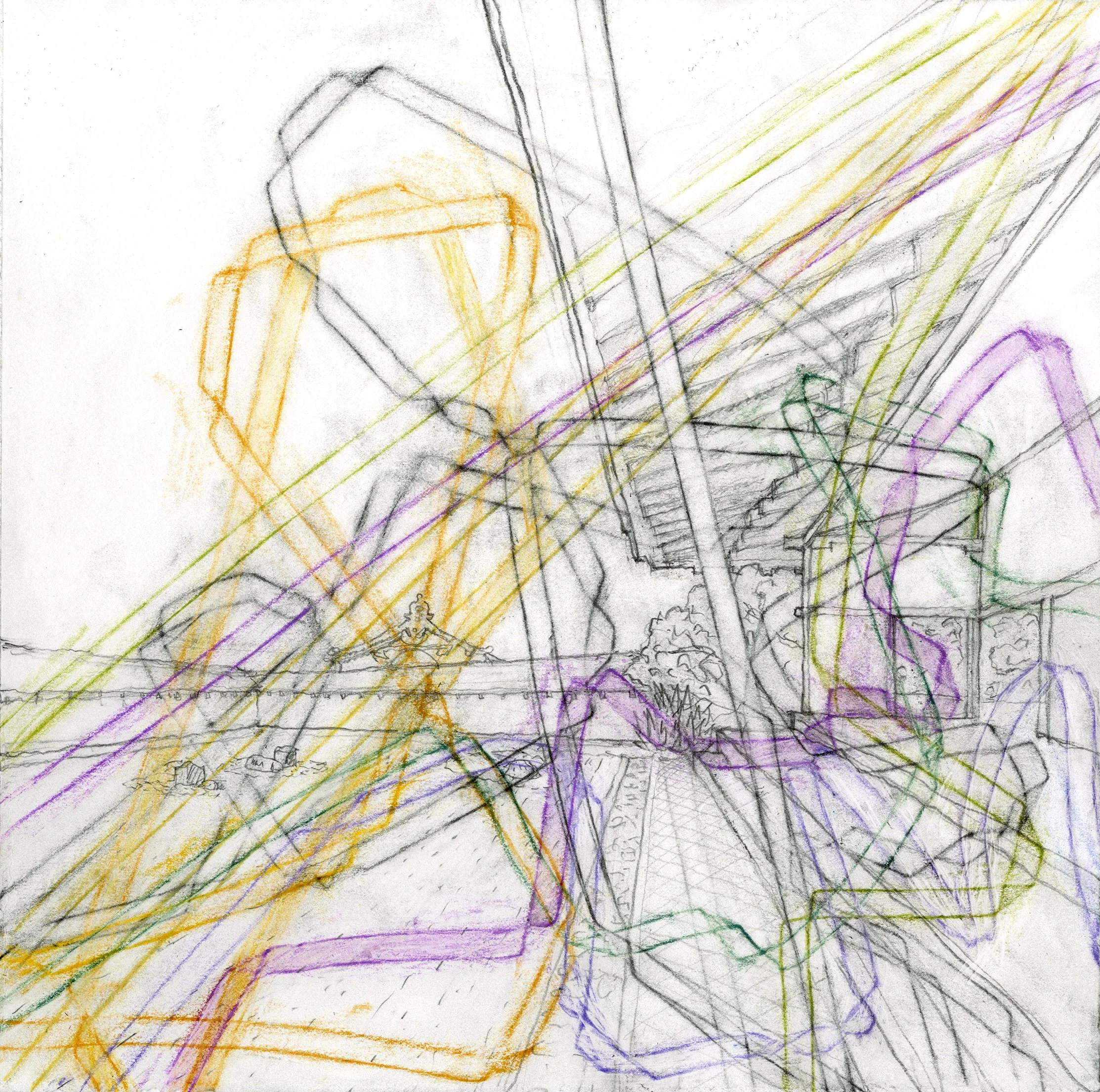
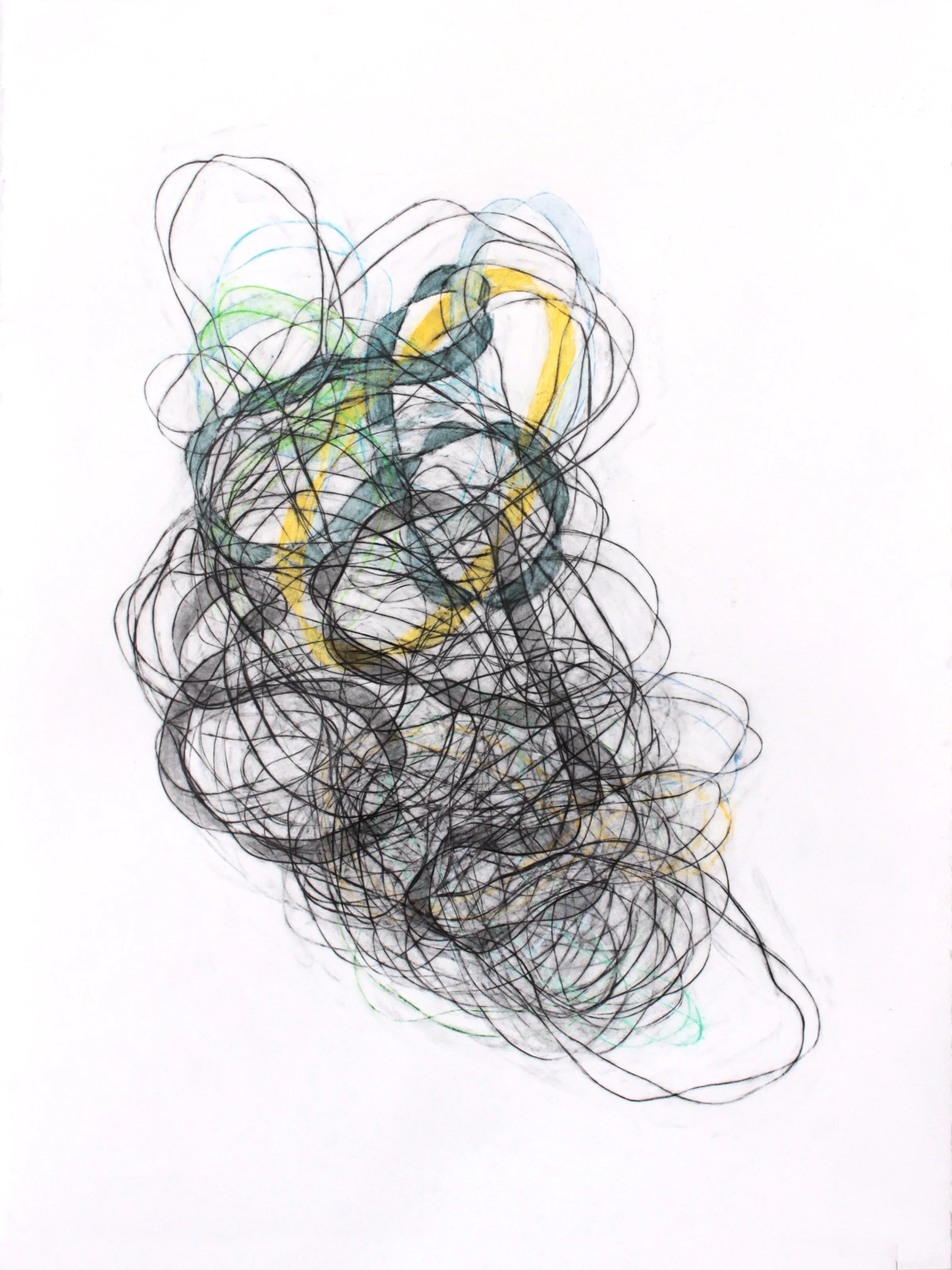
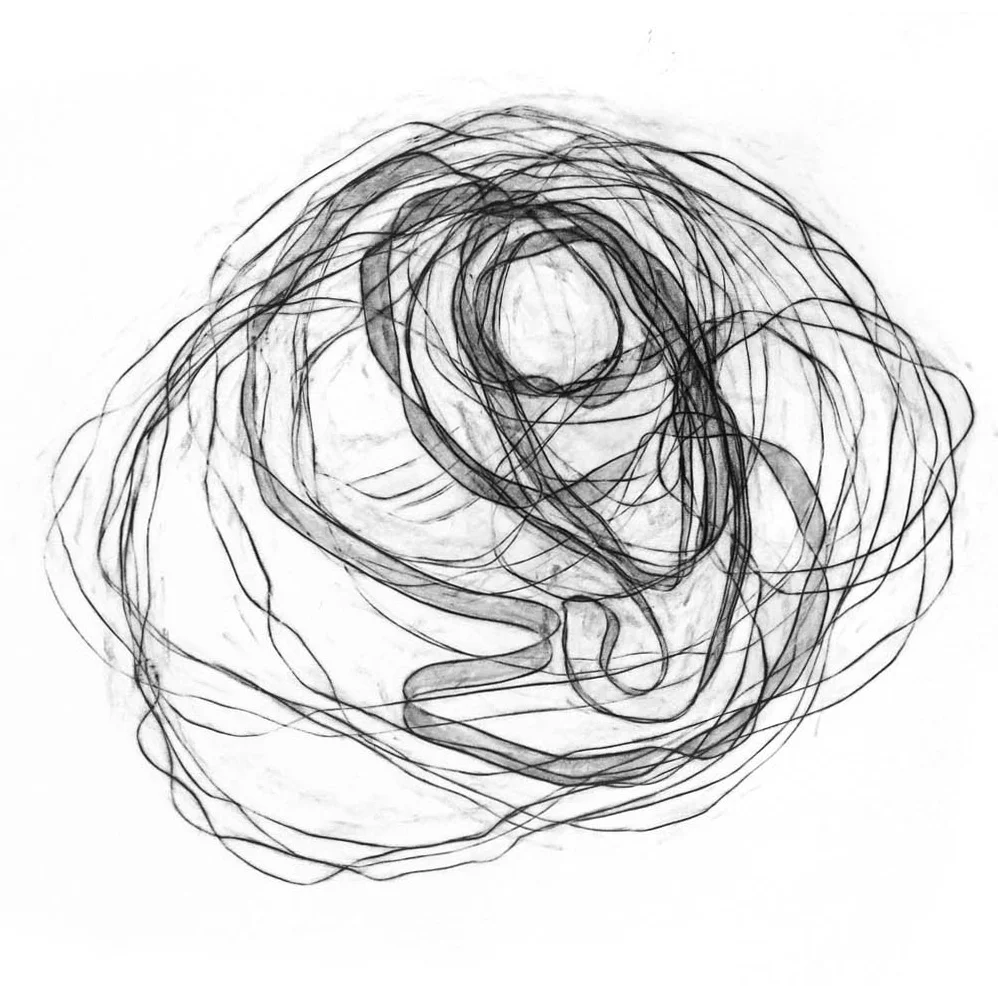
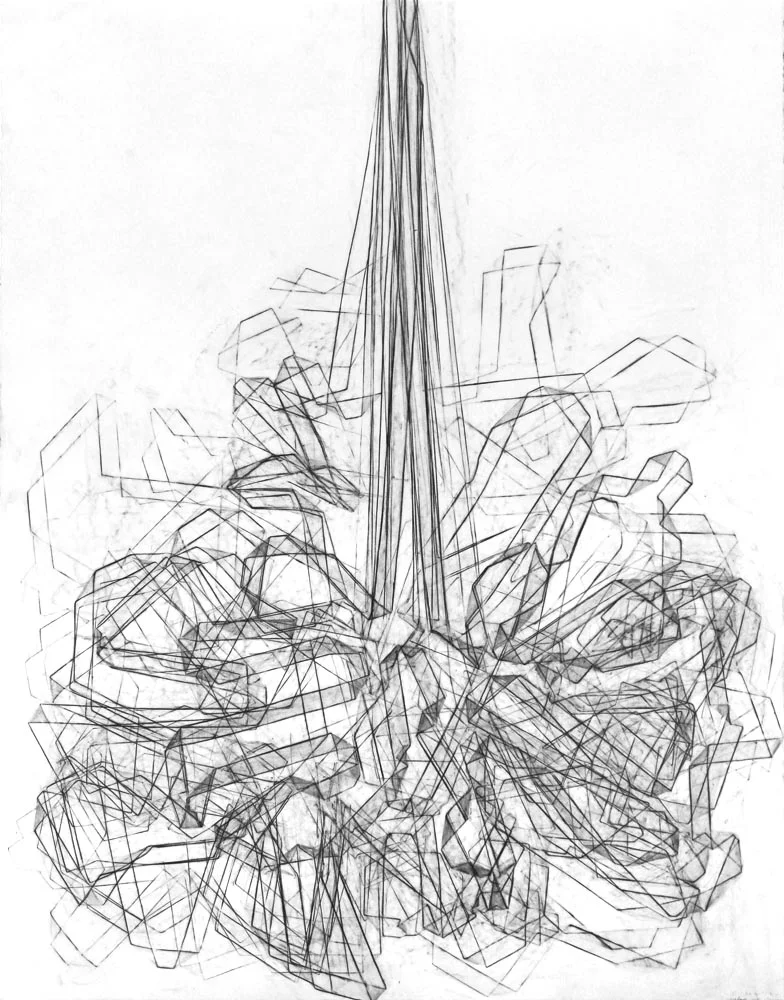
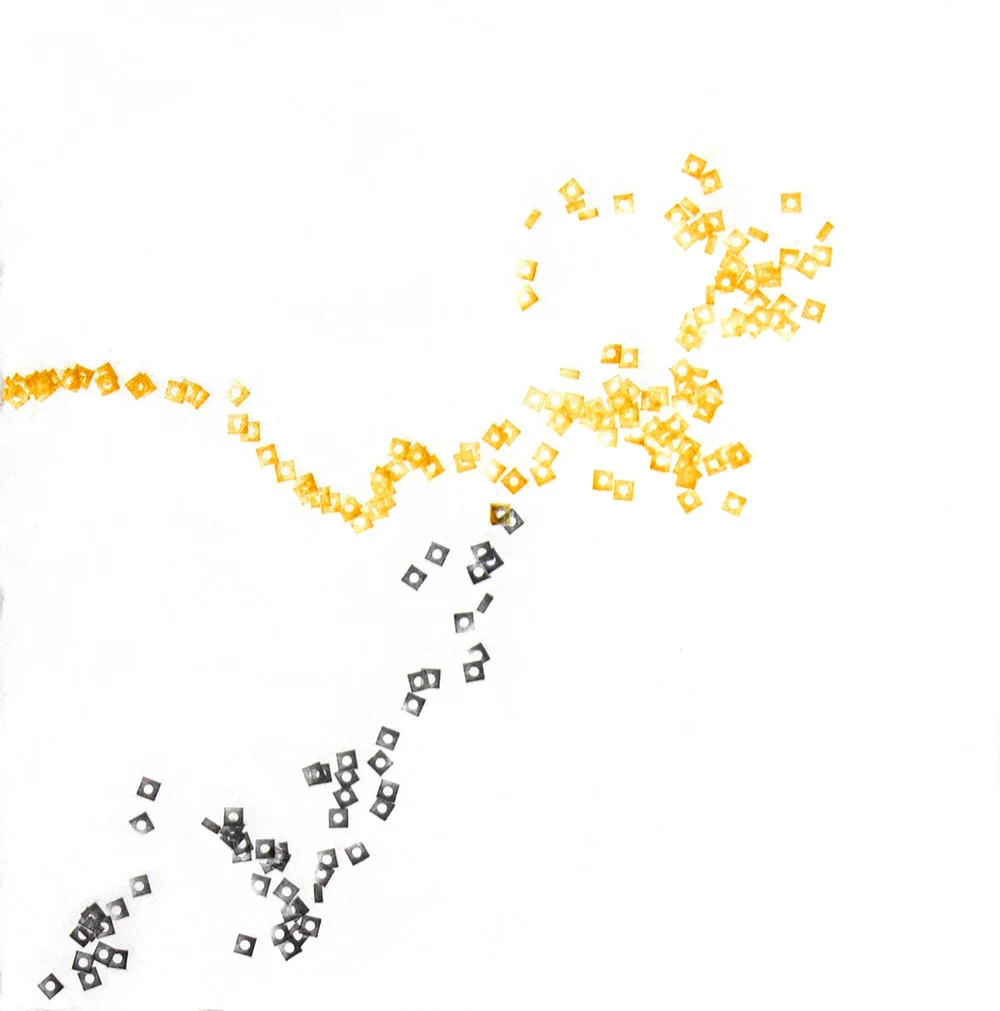
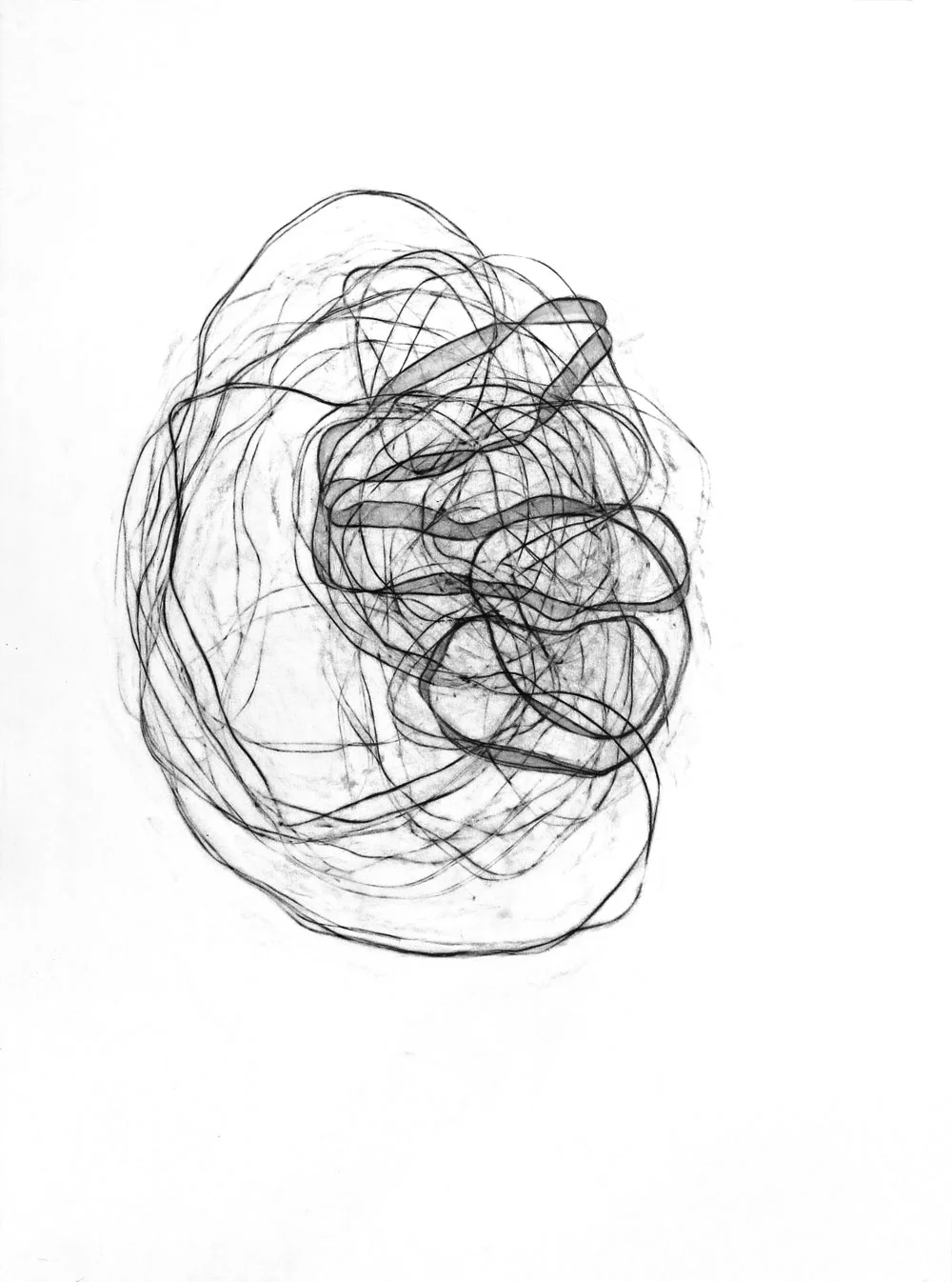
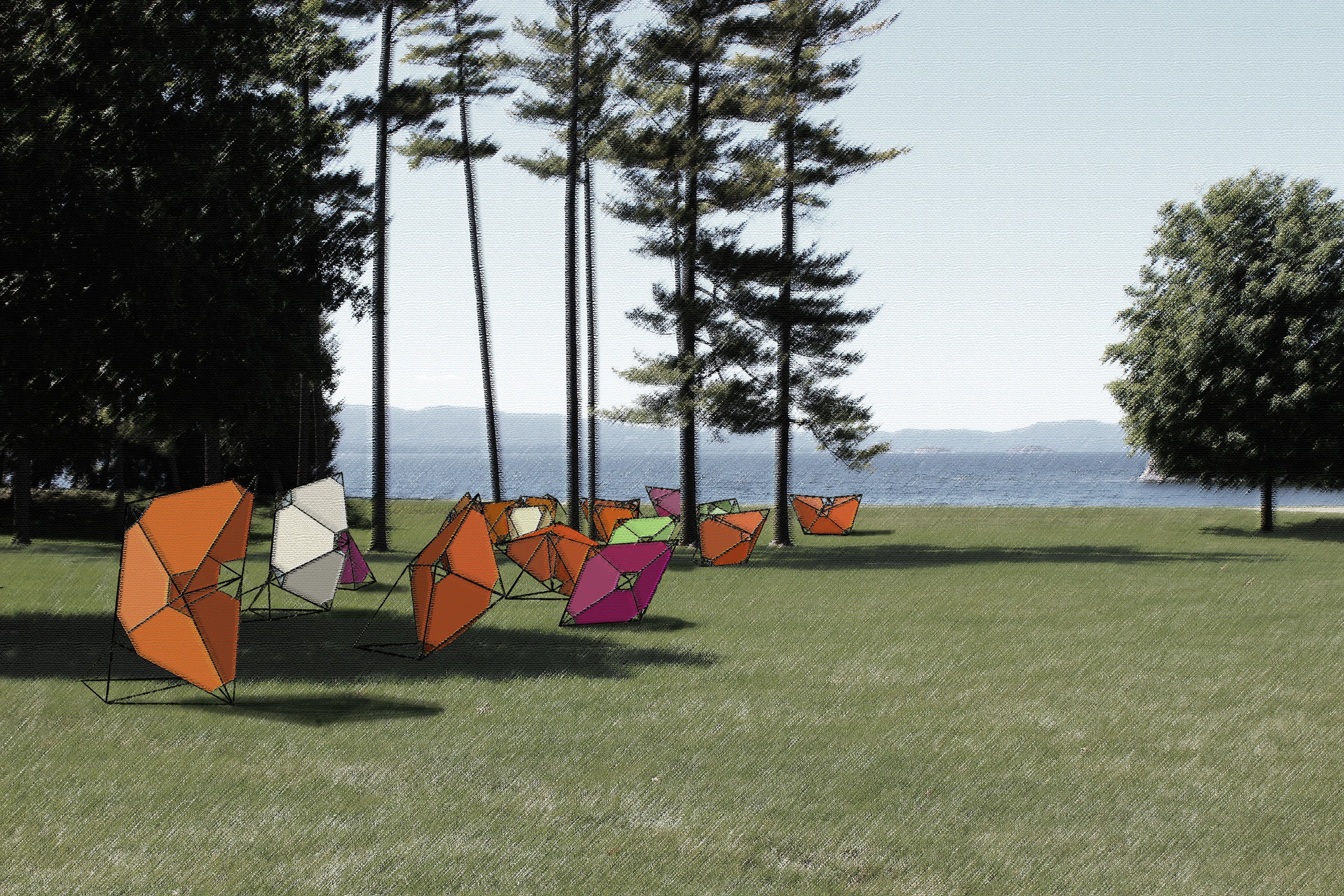
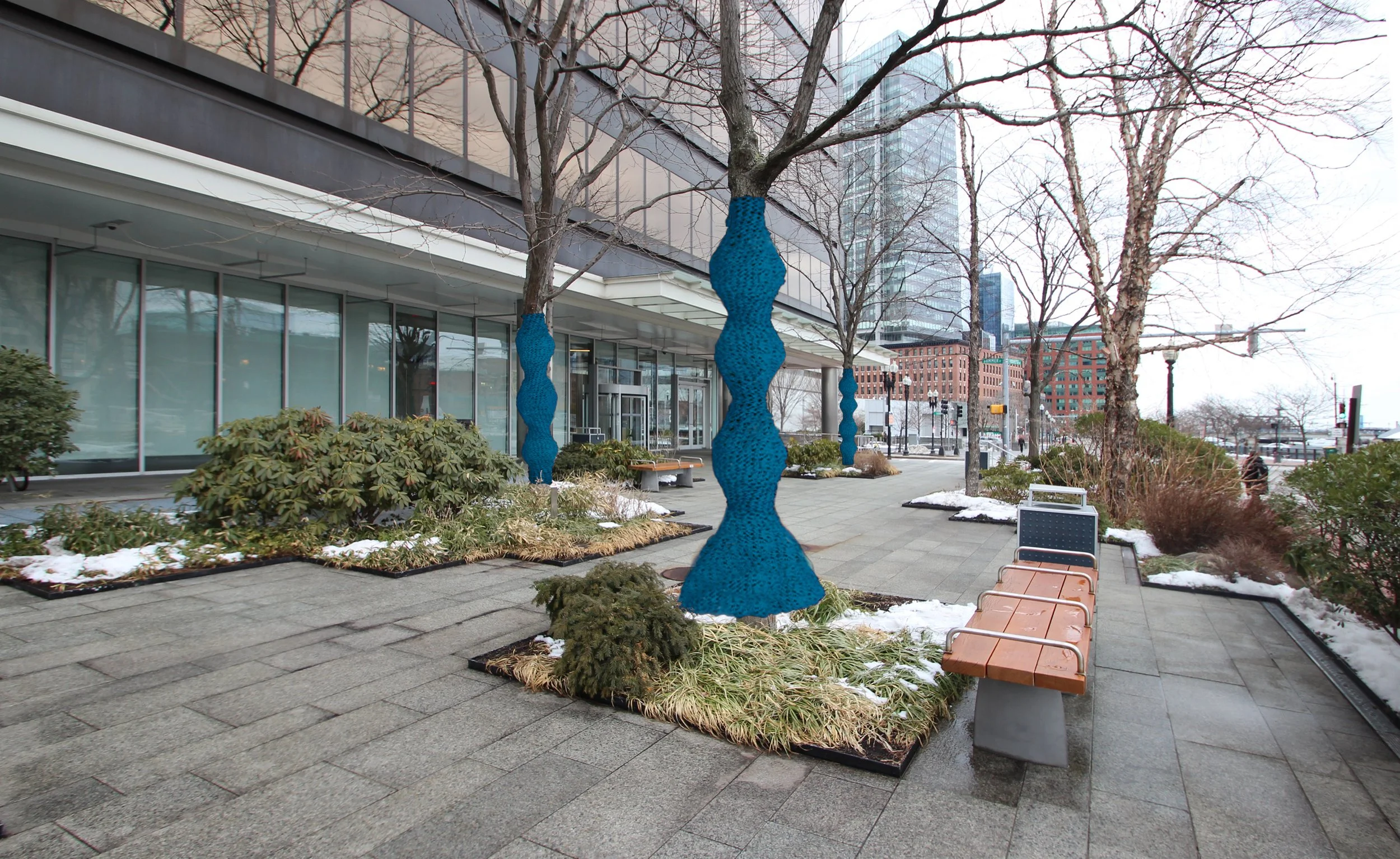
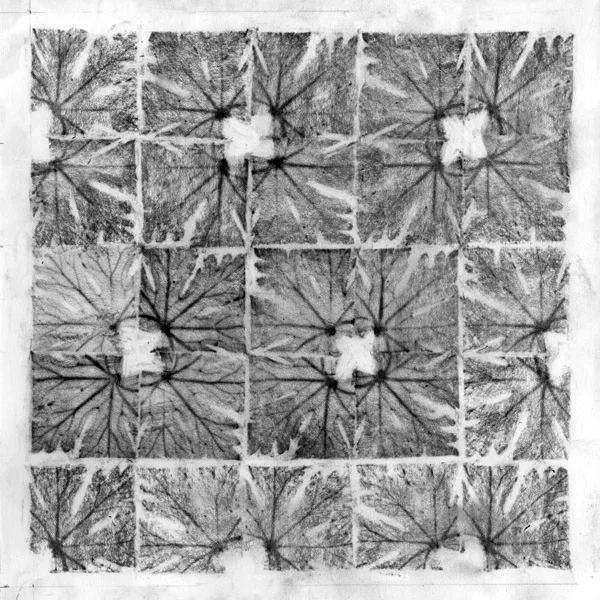
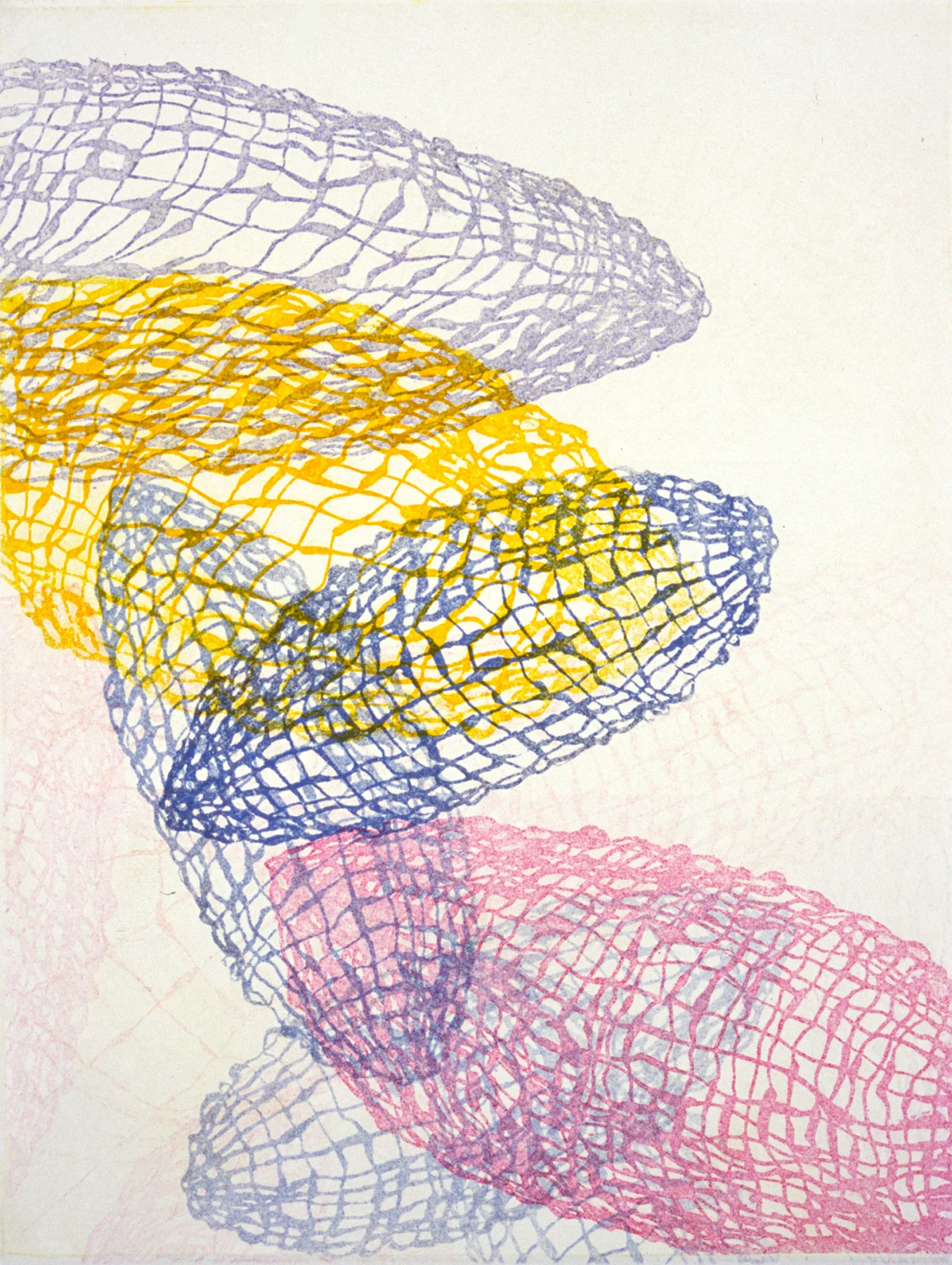
In preparing for this exhibition and developing Phase Change 1, I first sketched the work by hand and later modeled numerous variations of its form, dimensions, and color scheme on the computer. In the final iteration, the height of each tier sewn together to form the cone corresponds to the Fibonacci sequence: a 34-inch base tier followed by tiers measuring 21, 13, 8, and 5 inches. This is significant because the Fibonacci sequence (1, 1, 2, 3, 5, 8, 13, 21, 34, 55, 89...) appears throughout nature. As larger numbers in the sequence are divided by the preceding number, the ratio approaches the golden mean ( 1:1.618), a proportion found in flowers, shells, tree canopies, and the human body as an expression of growth patterns. This underlying sequence and proportion, together with the colors and gradual transformation of the form, echo aspects of the drawings included in this exhibition.
As the flowers collapse over time, so does this installation.
Many thanks to Herrie Son and Danny Sagan who assisted with the fabrication of this piece